China’s naval expansion has moved from a long-term strategic ambition to a measurable reality. While the United States Navy remains the most experienced and technologically sophisticated maritime force in the world, the pace at which China is producing modern destroyers is creating a shift in naval power that few analysts can ignore. If current trends continue, China could soon operate a larger destroyer fleet than the United States, fundamentally altering the balance of power in the Indo-Pacific and beyond.
China’s Rapid Destroyer Production Is Reshaping Naval Power
For decades, the United States enjoyed a substantial advantage in naval warfare, supported by superior technology, global logistics networks, combat-tested doctrines, and unmatched carrier strike capabilities. That advantage remains significant today, but China’s extraordinary shipbuilding momentum is introducing a new strategic variable: scale.
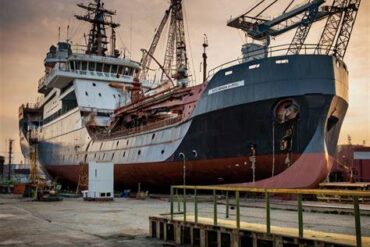
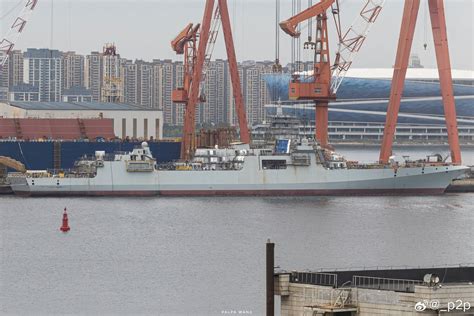
Over the past decade, the People’s Liberation Army Navy (PLAN) has embarked on one of the most ambitious naval modernization programs in modern history. At the center of this effort are two advanced surface combatants: the Type 052D destroyer and the larger, more capable Type 055 destroyer. Together, these warships form the backbone of China’s modern blue-water fleet and represent Beijing’s determination to challenge American naval supremacy.
Publicly available figures indicate that China has commissioned approximately 35 Type 052D destroyers and eight Type 055 destroyers within roughly ten years. This production pace is remarkable not only because of the quantity involved but also because these ships incorporate sophisticated radar systems, long-range missiles, and modern command-and-control capabilities.
During the same period, the U.S. Navy added roughly 18 to 20 new Arleigh Burke-class destroyers. Although the Burke class remains one of the most capable destroyer designs ever built, the production gap highlights a growing concern among defense planners: China is building major warships faster than the United States.
The Rise of the Type 052D and Type 055 Destroyers
The Type 052D has become the workhorse of China’s destroyer fleet. Often compared to modern Western destroyers, the vessel is equipped with advanced phased-array radar systems, vertical launch missile cells, anti-aircraft weapons, anti-ship missiles, and anti-submarine warfare capabilities. Its versatility allows it to perform a wide range of missions, from fleet air defense to escort operations.
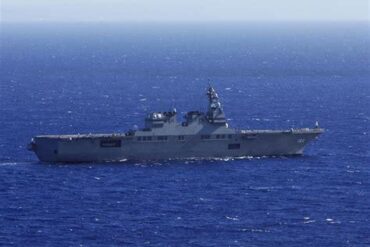
More significant, however, is the emergence of the Type 055. Despite being officially classified as a destroyer by China, many military experts consider it large enough to qualify as a cruiser. With a displacement exceeding that of many Western destroyers, the Type 055 possesses substantial missile capacity and advanced sensor suites designed to support carrier strike groups and long-range maritime operations.
The introduction of these ships demonstrates that China is no longer merely increasing fleet numbers. It is simultaneously improving the quality and sophistication of its naval assets. This dual-track strategy of quantity and capability is what makes China’s naval rise particularly noteworthy.
Why Numbers Still Matter in Modern Naval Warfare
Military history repeatedly demonstrates that quantity can become a decisive strategic advantage. While technological superiority can influence individual engagements, prolonged conflicts often favor nations capable of replacing losses and sustaining operational tempo.
This principle is increasingly relevant in discussions about a potential conflict in the Western Pacific. Various military simulations and war games have suggested that even after suffering significantly higher ship losses than the United States, China could continue fielding substantial naval forces due to the sheer size of its fleet and industrial base.
A larger destroyer force offers multiple operational benefits. It allows for broader regional coverage, greater escort capacity for aircraft carriers, more persistent patrol operations, and increased resilience during wartime. Simply put, a navy with more ships can absorb losses more effectively while maintaining combat effectiveness.
China’s leadership appears to understand this reality. Rather than relying solely on technological breakthroughs, Beijing has focused on creating a sustainable production ecosystem capable of delivering modern warships at an unprecedented rate.
China’s Shipbuilding Industry Is the Real Strategic Weapon
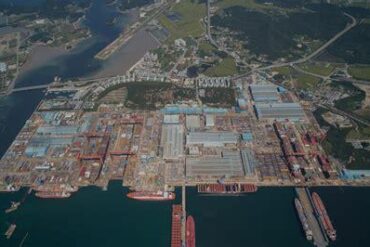
The true foundation of China’s naval expansion lies not exclusively in military planning but in industrial capacity. China possesses the world’s largest commercial shipbuilding industry, and this enormous manufacturing base provides critical advantages for naval construction.
Major state-owned enterprises such as China State Shipbuilding Corporation (CSSC) operate vast shipyards capable of producing both civilian and military vessels. The infrastructure, workforce, supply chains, and engineering expertise developed through commercial shipbuilding create efficiencies that directly benefit naval programs.
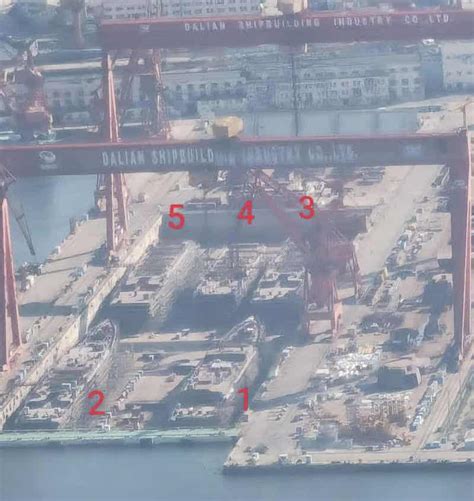
Unlike many Western shipyards that focus on specialized military contracts, Chinese facilities often build commercial and military ships side by side. This integration allows resources, technologies, and industrial processes to be leveraged across multiple sectors.
Another factor contributing to China’s advantage is the relative opacity of its shipbuilding ecosystem. Limited transparency makes it difficult for foreign analysts to accurately assess production capacity, reserve infrastructure, and surge manufacturing capabilities. As a result, some experts believe China’s actual wartime shipbuilding potential could exceed publicly available estimates.
Where the United States Still Holds Critical Advantages
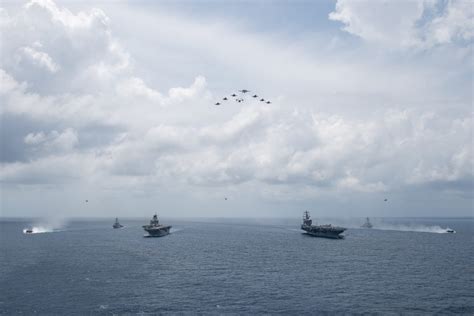
Despite China’s impressive gains, the United States retains several strengths that remain difficult to replicate. The most important is operational experience. The U.S. Navy has spent decades conducting global deployments, combat operations, carrier strike missions, and multinational exercises across every major ocean.
American naval forces also benefit from an extensive worldwide network of bases, logistical hubs, and strategic partnerships. This global infrastructure enables sustained power projection on a scale that no other navy currently matches.
Equally important is the United States’ dominance in undersea warfare. Its fleet of nuclear-powered attack submarines remains among the most formidable military assets ever developed. These vessels provide stealth, endurance, and striking power that can significantly influence naval conflicts.
The United States also maintains a substantial edge in naval aviation and advanced air power. Aircraft such as the F-35 Lightning II and the F-22 Raptor provide capabilities that remain difficult for competitors to match. Strategic assets including the B-2 Spirit and the emerging B-21 Raider further reinforce America’s ability to project power far beyond its shores.
While China’s Chengdu J-20 stealth fighter represents an important milestone in indigenous aerospace development, it has yet to accumulate the operational experience and combat validation associated with America’s fifth-generation aircraft fleet.
The Future Naval Balance May Depend on Industry as Much as Technology
The emerging competition between the United States and China highlights a critical lesson about modern military power: industrial capacity matters as much as technological innovation. Superior platforms remain valuable, but the ability to build, maintain, repair, and replace those platforms at scale may ultimately prove decisive.
China’s destroyer production trajectory suggests that it is preparing for a future in which fleet size, manufacturing resilience, and sustained naval presence become central elements of strategic competition. The United States continues to possess formidable advantages in technology, experience, global reach, and combat capability, but it now faces a competitor capable of producing modern warships at a pace unmatched by any nation in recent decades.
Whether China ultimately surpasses the United States in destroyer numbers remains to be seen. What is already clear, however, is that the global naval balance is entering a new era—one defined not only by the quality of ships at sea, but by the industrial power that builds them.