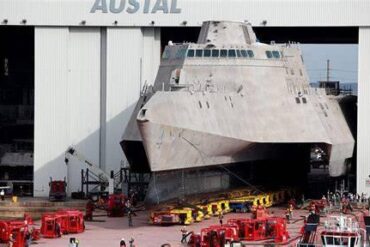
The U.S. government has launched a bold and strategic overhaul of its shipbuilding workforce, unveiling a $14 million initiative aimed at accelerating naval fleet growth to meet the challenge posed by China’s rapidly expanding maritime power. With production bottlenecks and skilled labor shortages hobbling American shipyards, the new program treats workforce development not as a side issue, but as a front-line national security priority.
Strategic Workforce Funding to Bolster Maritime Power
On January 8, 2026, the U.S. Department of Labor announced two major grants totaling nearly $14 million as part of a renewed effort to restore the nation’s maritime dominance. This funding is part of President Donald Trump’s broader campaign to invigorate American naval strength, emphasizing shipyard capacity, industrial throughput, and the human capital required to deliver ships on schedule.
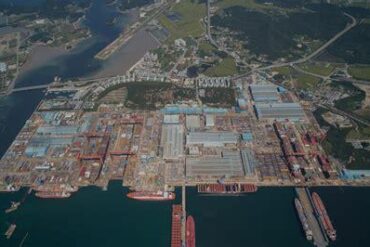
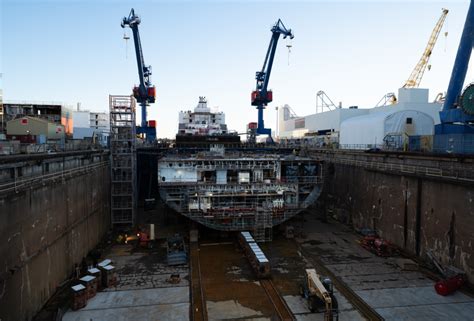
The investments are not scattered but sharply focused. Delaware County Community College, in collaboration with Hanwha Philly Shipyard and South Korean partners, receives $8 million to craft a training and apprenticeship pipeline. Meanwhile, Massachusetts Maritime Academy is awarded $5.8 million to work with Finland’s shipbuilding experts and Bollinger Shipyards. These programs aim to transfer world-class methodologies into the American shipbuilding ecosystem.
Global Expertise Meets Local Execution
Unlike past domestic initiatives, this strategy explicitly borrows from allied expertise, incorporating decades of lessons from South Korean and Finnish shipyards, recognized as global leaders in efficiency, modular construction, and quality control. The training programs are designed to foster a new generation of:
- Skilled welders
- Marine electricians
- Pipefitters
- Production planners
- Supervisors
Rather than attempting to rebuild American shipbuilding traditions from scratch, the plan imports tested systems, aiming to transplant proven training models that have withstood global market volatility.
From Training to Deterrence: The Strategic Pivot
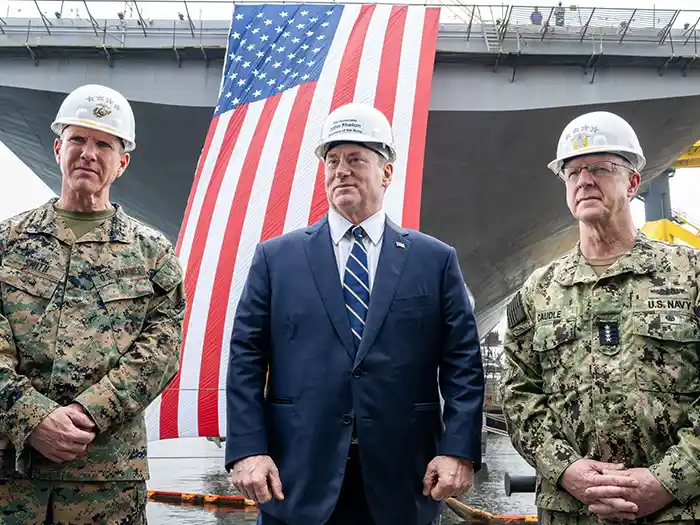
This is not merely a workforce initiative—it is a deliberate element of defense posture. Secretary of the Navy John C. Phelan amplified the announcement, reiterating the administration’s message that industrial output is now a direct measure of deterrence. In the current security climate, fleet production is as much about signaling resolve as it is about replacing aging vessels.
President Trump’s April 2025 executive order laid the groundwork, framing America’s shipbuilding deficit as a national security emergency. With the U.S. responsible for under 1% of global commercial ship production, compared to China’s near-50% share, Washington is now moving aggressively to counter this imbalance with durable investments in infrastructure and labor resilience.
China’s Naval Lead: A Sobering Comparison
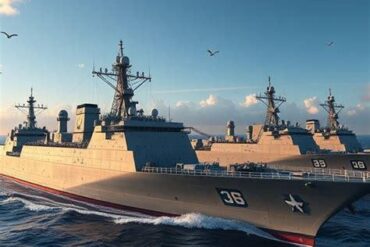
The sense of urgency stems from a stark reality. By 2020, China had overtaken the U.S. in battle force ship numbers. Projections show China reaching 395 ships by 2025, and 435 by 2030. In contrast, the U.S. Navy stood at 296 battle force ships as of late 2024.
While the U.S. still holds distinct advantages in nuclear submarine capabilities and carrier-based aviation, China’s sheer production volume gives it strategic flexibility: faster replacement, rapid expansion, and durable logistics. These dynamics make industrial momentum a decisive variable in long-term naval parity.
Fixing the Labor Bottleneck to Boost Output
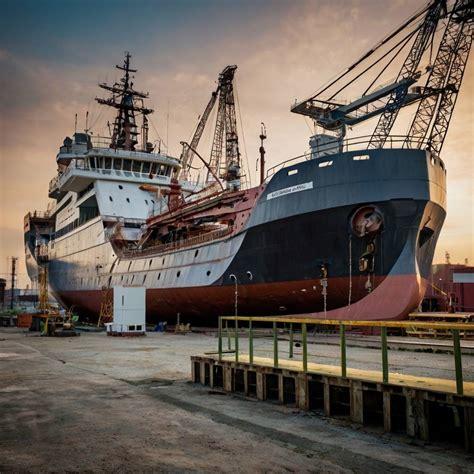
The most pressing constraint isn’t lack of designs or funding—it’s labor. Shortages of qualified tradespeople and foremen create persistent rework cycles, delaying production schedules and inflating costs. The new workforce plan aims to provide predictable pipelines of talent, especially for:
- Ship repairs and maintenance
- Modular assembly processes
- Repeat-build programs
The immediate gains are expected in repair and modernization throughput, where shortages have routinely stretched ship availability windows. As cohorts graduate from apprenticeships and gain experience, new construction timelines will see improved consistency and quality.
Where Gains Are Expected First: Surface and Support Ships
Not all ship types will benefit equally from this workforce surge. The initiative is likely to impact platforms that:
- Utilize mature designs
- Are non-nuclear
- Allow modular assembly
- Can be built at commercial and mid-tier yards
This includes auxiliary vessels, amphibious connectors, and logistics ships, which are vital for sustaining distributed naval operations across the Indo-Pacific. While nuclear platforms like submarines and aircraft carriers remain constrained by specialized facilities and supply chains, simpler platforms can be scaled up more rapidly.
Budget signals from the Pentagon already hint at fleet composition changes, with larger numbers of medium landing ships and supply vessels under discussion. These ships are essential for operational endurance, especially in contested environments like the Taiwan Strait or the South China Sea.
Arctic Naval Capabilities and Strategic Deterrence
One overlooked but increasingly important aspect is the High North. The Arctic’s rising strategic value—due to melting ice, new trade routes, and resource access—demands ice-capable ships and persistent presence. The shipbuilding push, combined with workforce training in Arctic vessel construction and operations, could bolster U.S. capabilities in this emerging theater.
Sealift reliability, icebreaker production, and polar logistics are now viewed as credibility factors in the face of both Russian and Chinese interest in Arctic dominance. A well-trained, flexible workforce will be crucial in adapting to these emerging demands.
Beyond Construction: Tighter Industry Accountability
To ensure return on investment, the administration is coupling the workforce plan with contractor performance oversight. Delays and budget overruns have marred recent shipbuilding efforts. Now, the message is clear: increased funding comes with increased expectations.
The Department of Labor’s funding is seen as the first wave in a layered policy shift. Future moves could include:
- Permanent funding lines for workforce programs
- Integration of allied curricula into national standards
- Streamlined security clearances and qualification pathways
- Legislative incentives for industry reinvestment
The broader objective is to normalize industrial readiness as a core element of U.S. defense policy, treating shipyard output with the same urgency as force deployment or strategic deterrence.
Alliances Anchored in Industrial Cooperation
By aligning training initiatives with allies, Washington is extending its interoperability doctrine into the industrial base. Just as joint military exercises enhance operational cohesion, shared industrial methods foster logistical interoperability, enabling smoother cooperation during multilateral operations.
This also serves as a geopolitical signal: the U.S. is knitting its defense production closer to that of South Korea, Finland, and potentially other partners. As China continues to scale production and expand its maritime influence, the United States is opting for distributed strength through alliance-based capacity building.
The Long-Term Test: Will the Reforms Stick?
This initiative marks a potential turning point in how America approaches naval production. For decades, the U.S. has suffered from boom-bust shipbuilding cycles, unstable funding, and inconsistent training. The success of this plan will depend not only on immediate implementation but on its ability to become institutionalized.
If expanded and embedded, the result could be:
- Shorter delivery timelines for new ships
- More consistent quality across platforms
- Resilient repair capacity during crises
- Scalable industrial responses to future threats
Ultimately, the workforce plan is not just about catching up to China—it’s about changing the tempo and culture of American shipbuilding, transforming it from a reactive system into a proactive engine of deterrence.
The stakes are high, and the challenge is immense. But by investing in its people, importing allied wisdom, and holding its industry accountable, the U.S. is making a strategic bet: that human capital, properly trained and empowered, is the foundation of naval power in the 21st century.