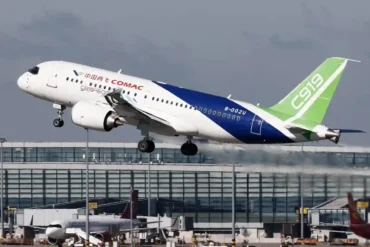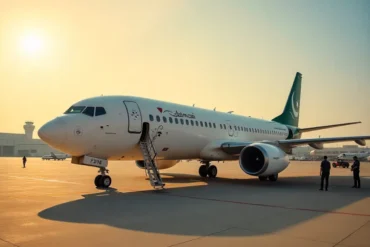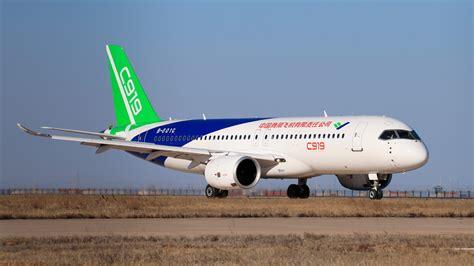
China’s domestically developed COMAC C919 passenger aircraft is preparing to enter a new chapter in its commercial journey as Air China launches the aircraft’s first scheduled international route. Starting August 12, the Chinese flag carrier will deploy the C919 between Beijing Capital International Airport (PEK) and Ulaanbaatar International Airport (ULN), marking the first regular international operation for China’s home-built narrow-body jet.
The milestone represents an important step for Commercial Aircraft Corporation of China (COMAC) as it attempts to establish the C919 as a serious competitor to the world’s dominant single-aisle aircraft, including the Airbus A320 family and Boeing 737 series. Although the aircraft has already operated thousands of flights inside China and currently serves Hong Kong, the Ulaanbaatar route will become its first officially recognized international service connecting mainland China with another country.
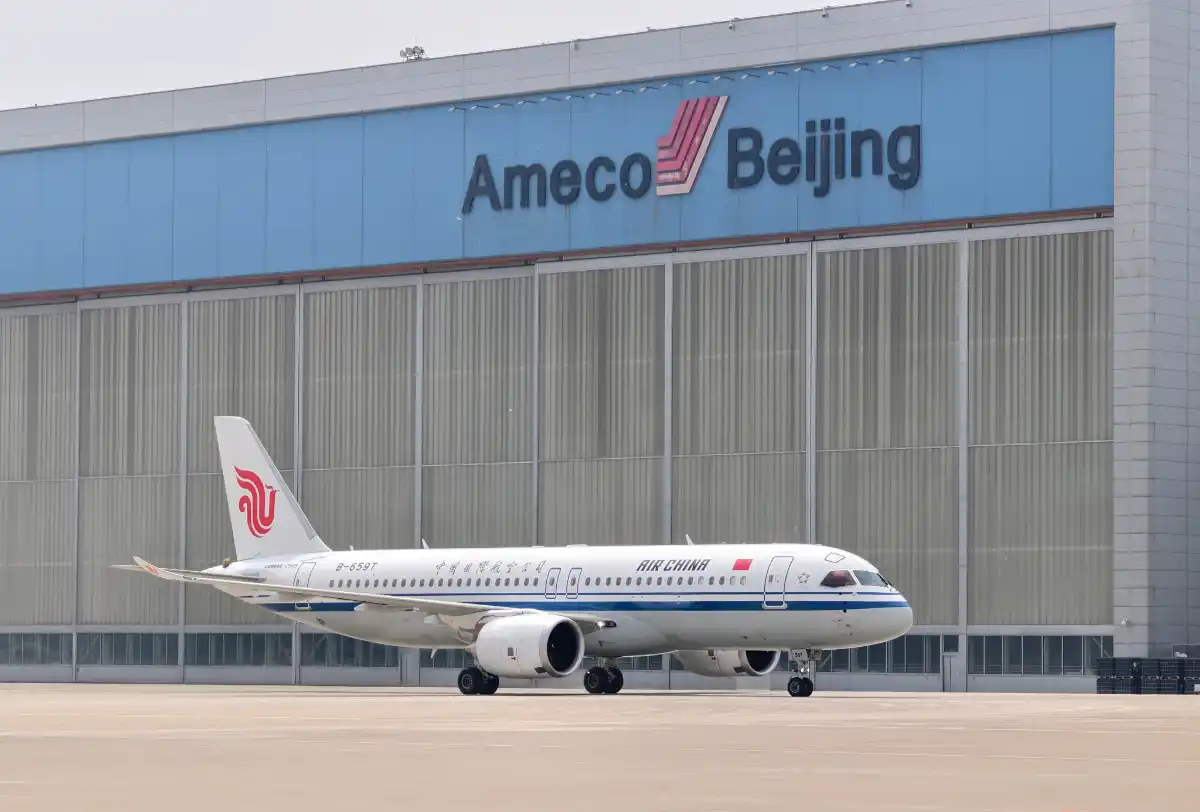
Air China’s C919 Service Connects Beijing and Ulaanbaatar
The new international operation will see Air China use its COMAC C919 fleet on the Beijing-Ulaanbaatar city pair, replacing the Boeing 737 MAX 8 currently assigned to the route. The service will operate daily, offering passengers a new opportunity to experience China’s first independently developed commercial aircraft on an international journey.
The aircraft will operate under flight numbers CA723 and CA724. The outbound flight will depart Beijing Capital Airport at 3:00 PM and arrive at Ulaanbaatar International Airport at 5:15 PM, with an estimated flight time of two hours and 15 minutes. The return service will leave Ulaanbaatar at 6:30 PM and arrive back in Beijing at 8:35 PM, completing the round trip with a flight duration of approximately two hours and five minutes.
The route covers around 724 miles (1,166 kilometers), making it a suitable mission profile for the C919’s capabilities. Air China’s aircraft will feature a two-class cabin layout with 158 seats, including eight business class seats and 150 economy class seats.
A Major Milestone for China’s Aviation Industry
The international debut of the C919 carries significance beyond a single airline route. Since beginning commercial operations in May 2023, the aircraft has primarily served domestic Chinese routes, gradually expanding its presence with the country’s largest airlines.
The first operator of the C919 was China Eastern Airlines, which introduced the aircraft into passenger service after receiving the first delivery from COMAC. Since then, both Air China and China Southern Airlines have added the type to their fleets, making the aircraft increasingly visible across China’s domestic aviation network.
More than 42,000 C919 flights have already been completed since the aircraft entered service, demonstrating growing operational experience and reliability. Around 40 aircraft have been delivered to Chinese carriers, while total orders and commitments have surpassed 1,150 aircraft, reflecting strong domestic support for the program.
Air China currently operates 12 C919 aircraft, giving the carrier an important role in expanding the aircraft’s commercial footprint. The airline’s decision to use the C919 internationally could encourage additional cross-border operations, particularly across nearby Asian markets.
COMAC C919 Development and Competition With Airbus and Boeing
The COMAC C919 program was launched in 2008 with the goal of creating a Chinese alternative to the highly successful Airbus A320 and Boeing 737 families. The aircraft prototype was completed in November 2015, followed by its first flight on May 5, 2017.
After years of testing and certification work, the C919 received its Civil Aviation Administration of China (CAAC) type certificate on September 29, 2022, allowing commercial operations to begin. The aircraft was designed as a modern single-aisle jet capable of serving short- and medium-haul routes.
The C919 uses a combination of Chinese-developed technologies and international aviation components. Its structure relies heavily on aluminum alloys, while propulsion comes from the widely used CFM International LEAP turbofan engine, the same engine family powering many Airbus A320neo and Boeing 737 MAX aircraft.
With a maximum range of approximately 3,000 nautical miles (5,555 kilometers) under typical conditions, the aircraft is designed for regional and domestic operations. This capability makes it well suited for routes throughout Asia, where many flights fall within the C919’s operational range.
The Beginning of COMAC’s International Expansion
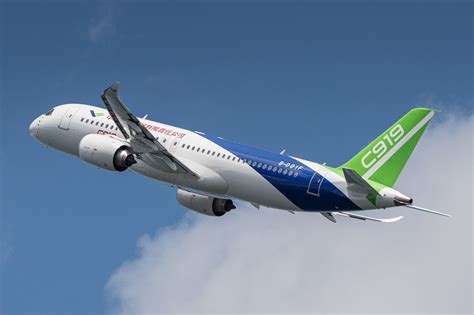
The Beijing-Ulaanbaatar route could become a turning point for COMAC’s global ambitions. While the aircraft has gained strong acceptance among Chinese airlines, expanding beyond the domestic market will be essential for challenging established manufacturers.
Several international airlines have expressed interest in the C919, including carriers such as AirAsia, Garuda Indonesia, Ryanair, Equatorial Congo Airlines, and Kenya Airways, although no confirmed commercial orders have been finalized from these operators.
China’s aviation industry has increasingly focused on reducing dependence on foreign aircraft manufacturers, and the C919 represents a major part of that strategy. By operating the aircraft internationally, Chinese airlines can begin building overseas passenger familiarity and demonstrate the aircraft’s capabilities to global markets.
The successful introduction of the C919 on Air China’s Ulaanbaatar service may open the door for additional international routes throughout Asia. As more aircraft are delivered and operators gain experience, COMAC’s narrow-body jet could gradually move from being a domestic success story into a broader competitor in the global commercial aviation market.