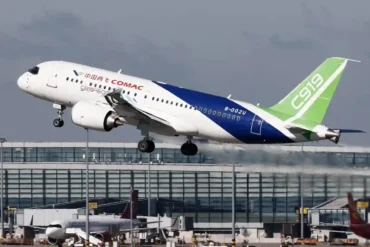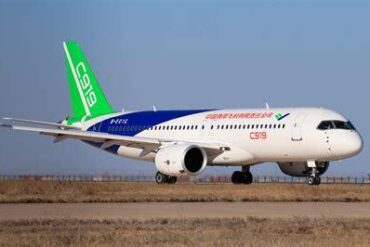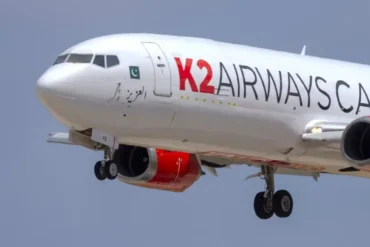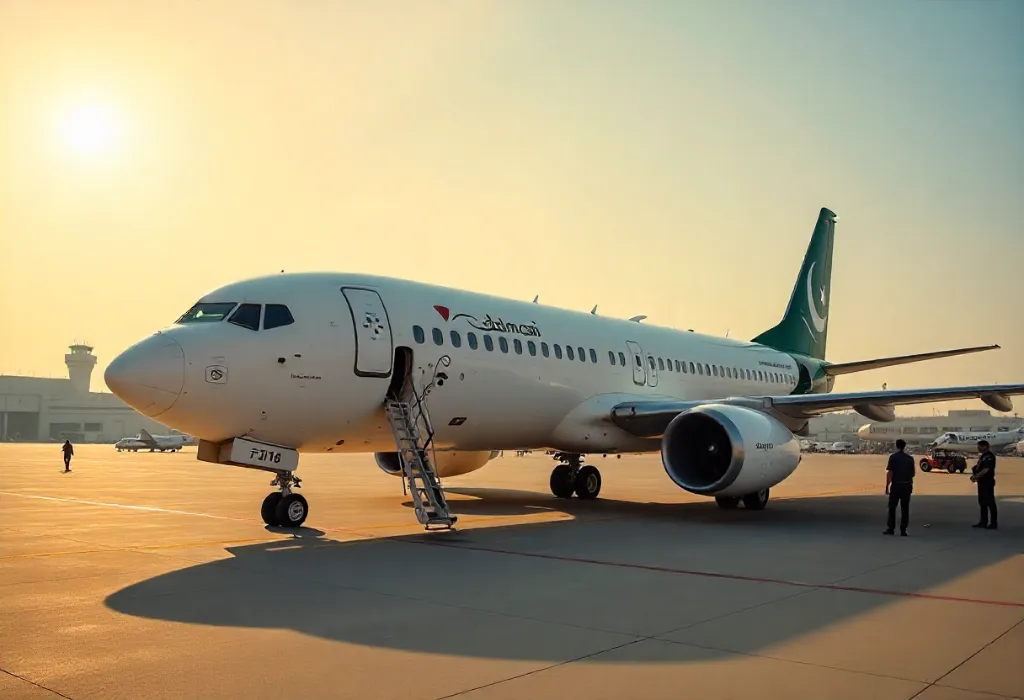
Pakistan’s Air Karachi, a newcomer in the nation’s airline industry, is in advanced talks with COMAC (Commercial Aircraft Corporation of China) to induct the C919, China’s flagship single-aisle jet, into its fleet. This strategic move could position Air Karachi as one of the first foreign carriers to adopt the C919, signaling a potential shake-up in the narrowbody aircraft market long dominated by Boeing and Airbus.
Air Karachi’s Ambitious Launch Plan
Founded in November 2024 and backed by over 100 stakeholders, Air Karachi aims to disrupt Pakistan’s aviation market with a sharp focus on speed, affordability, and competitive service offerings. The airline recently obtained its Regular Public Transport (RPT) license from the Pakistan Civil Aviation Authority (PCAA) and is now targeting its Air Operator Certificate (AOC) as the next milestone. Initial investment has been pegged at Rs 5 billion ($17.6 million), with contributions from prominent Pakistani financiers, including Aqeel Karim Dhedhi and Shaukat Tareen.
The airline’s fleet plan is aggressive. It intends to launch with three aircraft in its first year, expanding to four by the end of the first operational cycle. Routes will initially focus on domestic operations, with international services slated for introduction shortly thereafter. Air Karachi’s Group Chairman underscored that fleet acquisition will be finalized within a month, prioritizing whichever manufacturer — COMAC, Boeing, or Airbus — can deliver aircraft quickly and cost-effectively.
Why the COMAC C919 Stands Out
The COMAC C919 offers compelling advantages for startup carriers. Western manufacturers such as Boeing and Airbus face years-long backlogs, leaving new entrants struggling to acquire jets in time-sensitive windows. By contrast, COMAC boasts shorter lead times and competitive pricing, making the C919 an attractive proposition for Air Karachi.
The C919 is currently certified by China’s civil aviation authority and is actively deployed by major Chinese carriers, including Air China, China Eastern, and China Southern. Although it lacks broader certifications like those from the European Union Aviation Safety Agency (EASA), COMAC is aggressively pursuing international approvals to penetrate European and Southeast Asian markets.
Key specifications of the C919 include:
- Seating capacity: Approximately 158–174 passengers
- Range: Around 4,075–5,555 kilometers
- Engines: CFM International LEAP-1C engines
- Design focus: Fuel efficiency and reduced operating costs for competitive regional routes
Strategic Partnerships and Financing
Air Karachi’s shareholder base, comprised of leading Pakistani bankers, industrialists, and airline veterans, offers both financial stability and industry expertise. This broad investor pool not only underwrites the airline’s Rs 5 billion initial investment but also provides strategic connections for navigating regional aviation markets.
These stakeholders envision Air Karachi as a catalyst for Pakistan’s aviation revival, following the model of AirSial, which successfully transitioned from a domestic startup to an international operator. By aligning with COMAC, Air Karachi could accelerate its launch timeline and secure an early mover advantage in deploying next-generation narrowbody aircraft in Pakistan.
COMAC’s Global Expansion Strategy
COMAC is strategically leveraging the C919 to break the Boeing-Airbus duopoly. Its expansion targets include Southeast Asia, where negotiations are underway with carriers such as Garuda Indonesia, Angkor Air, and SCAT Airlines. In Brunei, startup GallopAir has signed a letter of intent for 30 COMAC jets, potentially becoming the first international C919 operator.
To meet rising demand, COMAC plans to ramp up C919 production to 50 aircraft per year. This scaling effort is supported by recent authorizations for General Electric to continue supplying engines, ensuring reliability and performance.
Implications for Pakistan’s Aviation Market
Air Karachi’s decision to consider the C919 reflects a broader geopolitical and economic shift. By embracing a Chinese-manufactured jet, the airline could deepen Pakistan-China aviation ties and signal a new era of cooperation. The potential induction of the C919 would also diversify Pakistan’s commercial fleet, traditionally dominated by Western manufacturers.
Industry insiders believe Air Karachi’s choice could set a precedent for other South Asian airlines to explore COMAC’s offerings. If successful, this partnership could enhance regional connectivity, provide cost savings, and strengthen China’s position as a credible competitor in the global aviation sector.
Final Thoughts
The upcoming aircraft selection by Air Karachi is more than a procurement decision — it represents the interplay of geopolitics, economics, and market strategy. Opting for the COMAC C919 would not only mark a milestone for Pakistan’s aviation industry but also give China a critical foothold in the international narrowbody jet market.
With ambitious expansion goals, solid financial backing, and a keen eye on market opportunities, Air Karachi is poised to redefine Pakistan’s aviation landscape. The world now watches closely as this startup makes a choice that could influence regional air travel dynamics for years to come.