Iran’s decision to induct 1,000 newly developed drones into its regular army units marks a significant milestone in the country’s military evolution, underscoring how unmanned systems have moved from experimental tools to core instruments of national power. Announced by Iranian state media and confirmed by senior military leadership, the deployment reflects Tehran’s attempt to recalibrate its defense posture in response to escalating U.S. pressure, regional instability, and lessons learned from recent conflicts.
The induction ceremony, overseen by Army Commander-in-Chief Major General Amir Hatami, framed the drone expansion as a direct response to shifting battlefield realities. Iran’s regular army, known as the Artesh, traditionally focused on conventional land, sea, and air operations, but the integration of such a large unmanned force suggests a deliberate move toward distributed, attritable, and scalable combat capabilities. This approach mirrors a broader global trend in which drones are no longer auxiliary assets but foundational pillars of modern military doctrine.
The program also reflects Iran’s growing confidence in its domestic defense industry. Cooperation between the army’s technical specialists and the Ministry of Defense reportedly guided the development process, suggesting that these platforms were designed with operational feedback from field units rather than as purely theoretical prototypes. This kind of iterative design loop—battlefield observation feeding directly into production—mirrors practices seen in high-tempo conflicts and accelerates innovation in unmanned warfare.
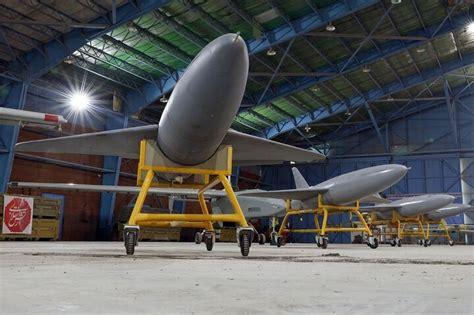
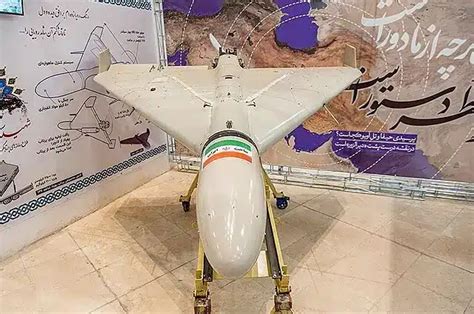
Iran’s drone portfolio is already well-documented in open-source intelligence, providing insight into the types of capabilities likely included in the newly inducted fleet. The Shahed series of loitering munitions, for example, has become emblematic of Tehran’s approach: low-cost, long-range, and designed for saturation attacks. The Shahed-136, widely reported to have ranges exceeding 1,000 kilometers, exemplifies Iran’s strategy of fielding expendable systems capable of striking infrastructure targets deep within adversary territory. Smaller variants like the Shahed-131 offer greater deployability, while newer jet-powered designs such as the Shahed-238 aim to compress defender reaction times by increasing speed and reducing interception windows.
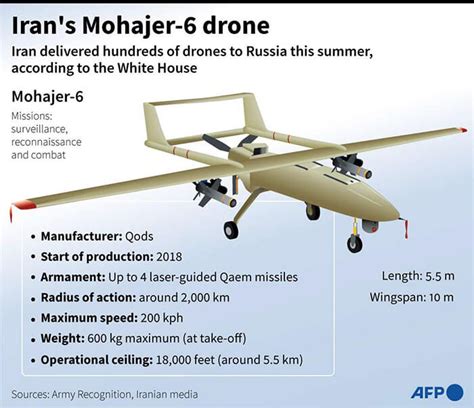
The induction of drones is not limited to offensive strike platforms. Intelligence, surveillance, and reconnaissance (ISR) drones—particularly from the Mohajer family—are critical for battlefield awareness and precision targeting. Systems such as the Mohajer-6 are often cited with endurance exceeding 12 hours and payloads capable of carrying electro-optical and infrared sensors, enabling persistent monitoring of enemy movements. Such platforms serve as the eyes and ears of modern ground formations, linking sensor data directly to artillery, missile units, and command centers.
Electronic warfare (EW) drones add another layer of complexity. Airborne jammers and signal intelligence payloads can disrupt GPS navigation, degrade enemy communications, and expose radar emissions. Even relatively modest EW capabilities can tilt the tactical balance by blinding defenders or forcing them to reveal their positions. In contested environments like the Persian Gulf, where sensor density is high and engagement timelines are compressed, electronic disruption can be as decisive as kinetic strikes.
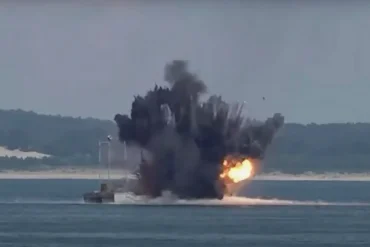
From an operational standpoint, the integration of 1,000 drones fundamentally changes Iran’s force structure. Numbers matter in unmanned warfare. A single sophisticated drone can be valuable, but hundreds or thousands of attritable systems create a different strategic calculus. Saturation attacks can overwhelm air defenses, reconnaissance drones can maintain continuous coverage over wide areas, and EW platforms can operate in swarms to complicate adversary decision-making. The economics of interception become unfavorable for defenders, who must expend costly missiles or reveal sensitive radar systems to counter relatively inexpensive drones.
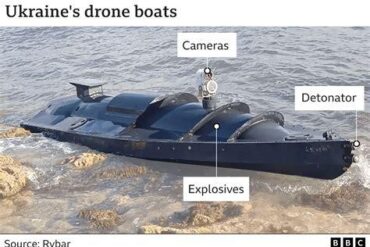
This mass integration also enhances Iran’s maritime posture. Drones can support coastal surveillance, track commercial and military vessels, and provide targeting data for shore-based anti-ship missiles. In strategic chokepoints such as the Strait of Hormuz, persistent drone coverage could give Iran a powerful tool for monitoring traffic and signaling deterrence without deploying large surface fleets. The ability to rapidly scale drone operations during a crisis provides Tehran with a flexible escalation ladder that is harder to counter with traditional force structures.
The timing of the announcement is as revealing as the capability itself. U.S.–Iran relations have remained tense, with renewed rhetoric about military deployments and calls for negotiations under contested terms. Iranian officials have warned of swift and comprehensive retaliation in the event of a strike, while simultaneously signaling conditional openness to diplomacy. The drone induction therefore serves a dual purpose: operational readiness and strategic messaging. By publicly highlighting the scale of its unmanned forces, Iran communicates that any confrontation would involve distributed, hard-to-preempt capabilities rather than easily targeted centralized assets.
Beyond the bilateral U.S.–Iran dynamic, the broader regional implications are significant. Middle Eastern security environments are increasingly shaped by drones, missiles, and electronic warfare systems that blur traditional distinctions between tactical and strategic weapons. Non-state actors have also demonstrated the disruptive potential of low-cost drones, and state actors are now institutionalizing those lessons at scale. Iran’s emphasis on numbers and attrition tolerance suggests a doctrine designed to exploit asymmetries against technologically superior adversaries.
The normalization of large-scale unmanned warfare raises critical questions about crisis stability and escalation control. Drones compress decision timelines, reduce the political cost of employing force, and complicate attribution. A swarm of unmanned systems probing defenses or conducting reconnaissance could be misinterpreted as preparation for a larger attack, triggering rapid escalation. Conversely, the distributed nature of drone operations makes it harder to achieve decisive preemptive strikes, potentially encouraging risk-taking behavior during crises.
Iran’s move also reflects a broader shift in military-industrial strategy. Instead of focusing exclusively on high-end platforms such as advanced fighter jets or large naval vessels, Tehran appears to be prioritizing mass-produced, software-driven systems that can be iteratively improved. This mirrors trends in other technologically adaptive militaries, where software updates, sensor integration, and autonomous functions are becoming as important as traditional hardware upgrades. In this sense, Iran is positioning itself within the emerging paradigm of algorithmic warfare, where data, connectivity, and autonomy define combat effectiveness.
Critically, the effectiveness of these drones will depend on integration with command-and-control networks, logistics chains, and doctrine. A fleet of 1,000 drones is only as powerful as the systems that coordinate them. Iran’s investment in domestic electronics, satellite navigation alternatives, and encrypted communications suggests an awareness of this requirement. However, vulnerabilities remain, particularly against advanced electronic countermeasures and cyber operations. The drone arms race is therefore not just about airframes and payloads but about the invisible layers of software, spectrum management, and data fusion.
The global response to Iran’s drone expansion will likely involve accelerated investment in counter-UAS technologies. Layered defenses combining radar, electro-optical sensors, kinetic interceptors, and electronic jamming will become standard. Yet the cost-exchange ratio remains a persistent challenge. Intercepting a low-cost loitering munition with an expensive missile is strategically unsustainable, pushing defenders to explore cheaper solutions such as directed-energy weapons, rapid-fire guns, and autonomous counter-drone systems.
Iran’s induction of 1,000 drones is therefore not just a national military upgrade; it is a signal flare in the evolving character of warfare. It demonstrates how mid-tier powers can leverage industrial-scale unmanned production to offset conventional disadvantages and shape regional power balances. It also highlights how modern conflicts are increasingly defined by persistence, saturation, and electronic contestation rather than by a narrow competition in manned platforms.
In strategic terms, Tehran’s move reinforces a doctrine of distributed deterrence. Instead of relying solely on ballistic missiles or traditional air and naval forces, Iran is building a layered ecosystem of unmanned systems that complicate adversary planning. These drones can be deployed from dispersed locations, launched in large numbers, and integrated with other strike and reconnaissance assets, creating a web of capabilities that is difficult to neutralize in a single campaign.
As unmanned systems proliferate, the boundaries between tactical skirmishes and strategic conflict continue to blur. A single drone strike can have geopolitical consequences, while swarms of drones can shape the outcome of major battles. Iran’s large-scale integration is a vivid example of this transformation, offering a glimpse into a future where autonomy, mass production, and networked warfare define military power.
Ultimately, the induction of 1,000 drones is both a technological milestone and a strategic statement. It reflects Iran’s assessment that modern warfare rewards flexibility, persistence, and numerical scale, and that unmanned systems provide a cost-effective pathway to these attributes. As global militaries adapt to this reality, Iran’s drone expansion will be studied not only as a regional development but as a case study in how emerging powers are rewriting the rules of conflict in the 21st century.