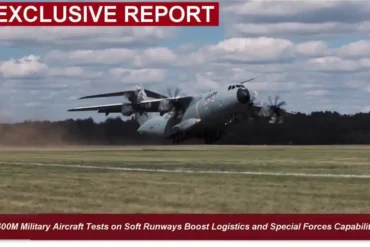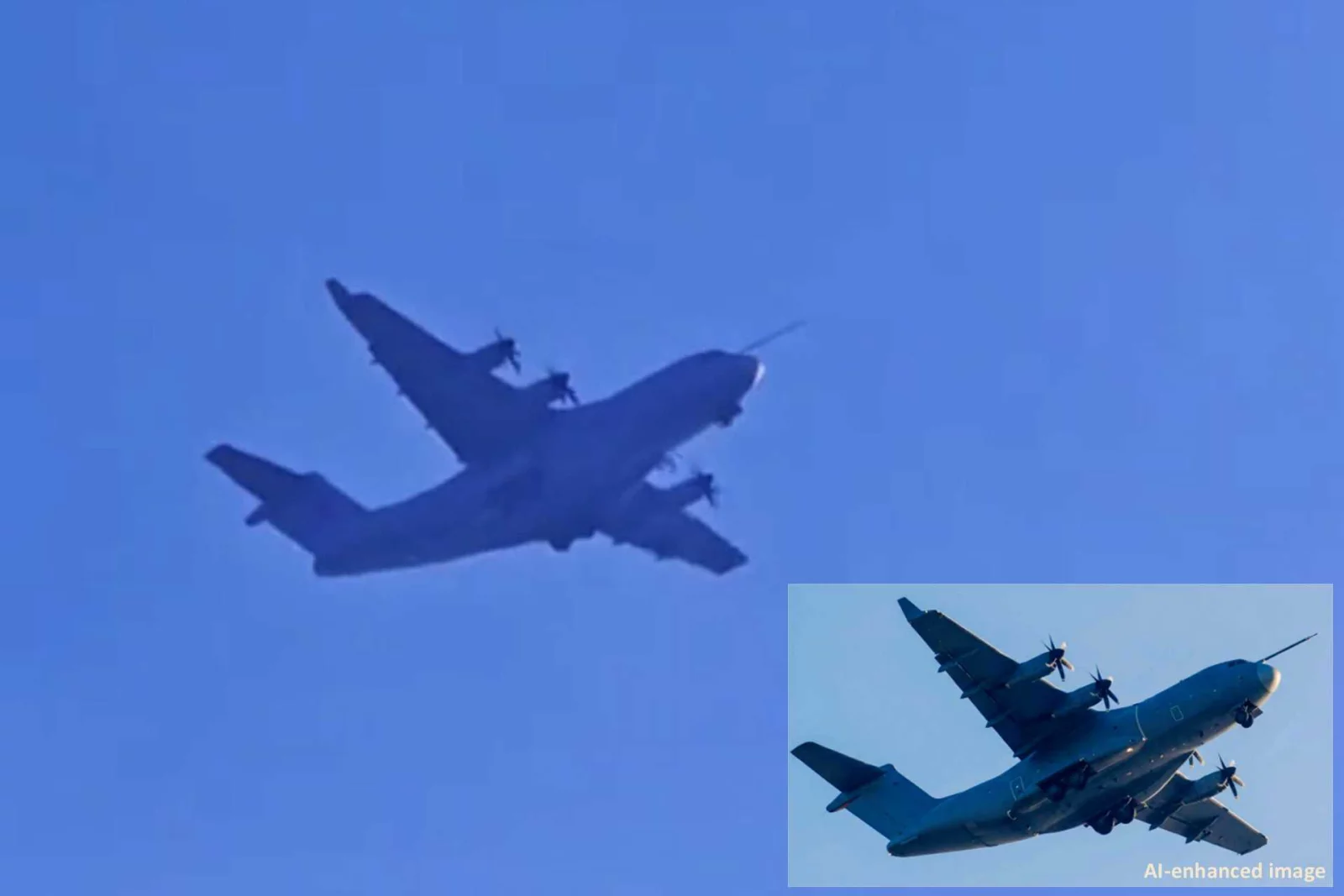
On December 16, 2025, China reached a significant aviation milestone as the Y-30 military transport aircraft reportedly conducted its first-ever flight, marking the end of years of speculation and fragmented updates. The new platform is envisioned as a critical intermediary between China’s existing Y-9 medium-lift aircraft and the larger Y-20 strategic airlifter, addressing key limitations in payload capacity, cargo dimensions, and logistical flexibility.
The Long-Awaited Lift-Off of the Y-30
The Y-30’s first flight, captured in recent footage and confirmed by defense analyst Rupprecht Deino, symbolizes the transition from conceptual development to tangible operational testing. This milestone has strategic implications, given the Y-30’s projected ability to fill a longstanding gap in China’s airlift architecture.
Unlike previous iterations of Chinese transport aircraft based on Soviet-era designs, the Y-30 is an indigenous solution tailored to China’s evolving military logistics. The older Y-8 and its successor Y-9, while upgraded over time, remained constrained by their cargo hold dimensions and legacy designs derived from the Antonov An-12. The emergence of heavier wheeled combat vehicles such as the Type 09 series forced a re-evaluation of what China needed in the field—a transport aircraft not just defined by payload weight, but by spatial volume.
Design Philosophy: A Wider, Smarter Tactical Transport
One of the Y-30’s most defining characteristics is its wider fuselage, allowing it to carry oversized cargo that the Y-9 or even Western equivalents like the C-130J Super Hercules struggle with. In this regard, it mirrors the design evolution seen in international competitors like the Airbus A400M Atlas, which emphasizes cargo bay width as much as load-bearing strength.
The model publicly debuted at Airshow China in Zhuhai in 2014, revealing a high-wing configuration, a T-tail, and four turboprop engines each driving six-bladed propellers. The main landing gear features a body-mounted tandem wheel layout, signaling readiness for rugged and semi-prepared runways.
Filling the Strategic Gap: The Role of the Y-30
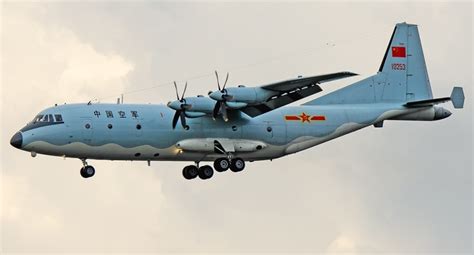
The Y-30 is poised to become a cornerstone of China’s tactical airlift doctrine. It strategically positions itself between the 20-tonne capacity Y-9 and the 66-tonne capacity Y-20, with a target payload of 30 tonnes and a maximum takeoff weight of around 80 tonnes. This gives it a clear operational advantage over medium-lift competitors.
Comparatively:
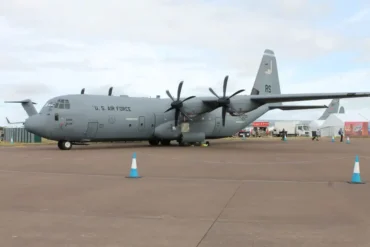
- The C-130J has a payload capacity of 19–21 tonnes.
- The A400M boasts a payload up to 37 tonnes (possibly 40 tonnes in future upgrades).
- The Y-30’s 30-tonne target would place it in an advantageous sweet spot: high-capacity transport from shorter runways without strategic scale overheads.
Variable Propulsion Choices: A Critical Development Puzzle
One of the most intriguing aspects of the Y-30’s development has been the uncertainty surrounding its propulsion system. From early concepts to its maiden flight, Chinese engineers have explored both turboprop and turbofan propulsion routes.
Turboprop options considered include:
- WJ-16, delivering roughly 3,782 kW, and
- WJ-10, estimated in the 5,000 kW range.
These levels suggest a greater aggregate shaft power than the C-130J and closer alignment with the A400M, whose engines produce around 11,000 shp each.
Alternative reports have pointed to a twin-engine turbofan variant, potentially incorporating WS-20 engines, also used in the Y-20. This route would elevate cruise speeds but might compromise the Y-30’s short-field performance, a core requirement for tactical missions.
Performance Metrics and Operational Capabilities
Although performance details remain in flux, recurring data points from various defense forums and Chinese publications sketch a capable and versatile airframe. These include:
- Cruising speed: 600–700 km/h — faster than older An-12s, but slower than jet-powered rivals.
- Range with payload: 6,000–7,000 km — exceeding that of the C-130J.
- Max payload: Up to 35 tonnes in some configurations.
- Endurance: Over 12 hours.
- Personnel capacity: 110+ troops.
- Short takeoff and landing (STOL) capability: ~800 meters.
Material choices remain somewhat uncertain, though there are frequent mentions of composite structural elements, in keeping with global trends toward weight reduction and corrosion resistance.
Historical Timeline: A Decade in the Making
The Y-30’s development narrative is marked by delays, diversions, and design revisions over more than a decade. When a scale model was first unveiled in 2014, expectations set the first flight for around 2020. However, competing projects—such as the rumored Y-19 and the future Y-40—appeared to have drawn resources and focus.
From 2022 to 2025, reports increasingly highlighted renewed activity at Shaanxi Aircraft Corporation (part of AVIC), culminating in the December 2025 flight. Despite this milestone, the program’s production, testing, and deployment pace remains undefined.
Strategic Significance for the PLA and Beyond
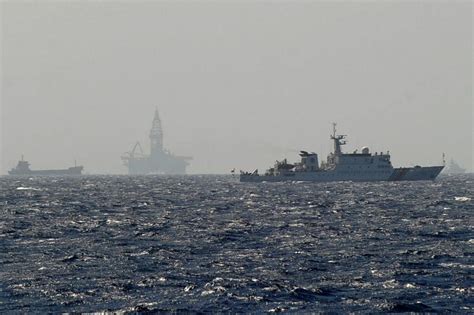
The Y-30’s implications extend well beyond mere fleet modernization. By bridging the gap between medium and strategic transports, it offers the People’s Liberation Army (PLA) a modular, scalable logistics platform. This is especially relevant in theaters such as the South China Sea, Tibet, or even foreign deployments where the use of the larger Y-20 would be logistically excessive.
Furthermore, the Y-30 is expected to be positioned as an export platform, particularly for nations in Africa, Latin America, and Southeast Asia that lack the infrastructure for large airlifters but need a reliable and robust transport solution.
The ability to transport armored vehicles, humanitarian cargo, paratroopers, or disaster relief supplies from austere runways makes the Y-30 a strategic multiplier for any force using it.
Global Competition and Market Impact
Internationally, the Y-30 now enters a competitive yet underserved market segment. While the C-130J and A400M dominate Western inventories, they come with high acquisition and maintenance costs. The Brazilian C-390 Millennium and Japan’s Kawasaki C-2 are newer alternatives but are either limited in production or priced at a premium.
China’s growing defense export ecosystem could see the Y-30 becoming a go-to option for non-aligned nations or traditional buyers of Chinese arms, provided it proves its reliability and performance over time. It may even disrupt long-standing procurement pipelines for mid-sized airlift in developing countries.
What Comes Next: Testing, Deployment, and Production
With the first flight now achieved, the program enters its most critical and high-stakes phase: systems testing, mission simulation, and operational certification. Questions remain about:
- Final propulsion choice and engine supply chain stability
- Cargo handling systems and digital avionics maturity
- Certification timelines for both domestic and export markets
The Y-30’s eventual induction into active service—whether by 2027 or later—will signal whether China has not only closed the design gap but also mastered the industrial and logistical complexities of producing a modern, modular airlift solution at scale.
Its future will rest not just on specs, but on performance under pressure, reliability in harsh conditions, and its ability to integrate within the broader ecosystem of Chinese military hardware.
As China continues its rise as a dominant force in both military and commercial aerospace, the Y-30 stands as a symbol of ambition, technological progress, and a growing appetite to challenge established norms in global military aviation.