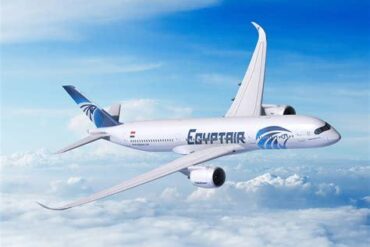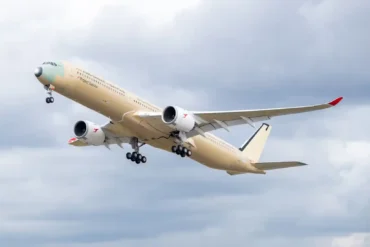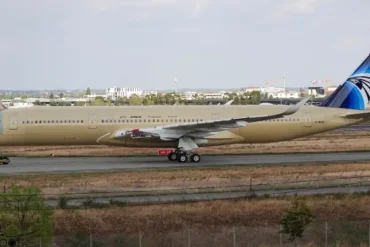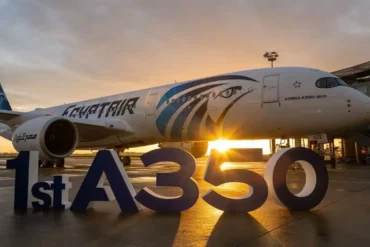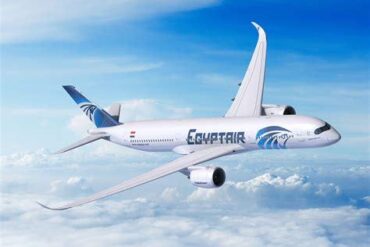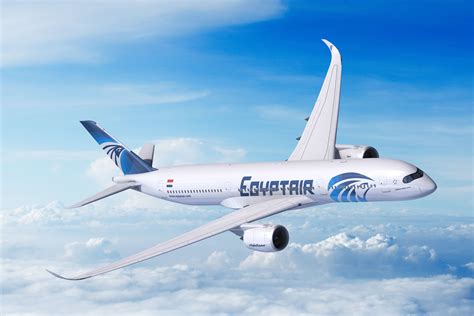
EgyptAir has officially stepped into a transformative chapter of its long-haul evolution as its first Airbus A350-900 completed a successful maiden flight from Toulouse, returning to its point of origin after its first hours in the air. The flight marked the aircraft’s transition from a completed manufacturing project into a living, flying machine, signaling that the Egyptian flag carrier’s newest widebody is nearing operational reality. For an airline with decades of intercontinental experience, this moment represents more than a delivery milestone; it reflects a strategic recalibration toward efficiency, sustainability, and passenger-focused design.
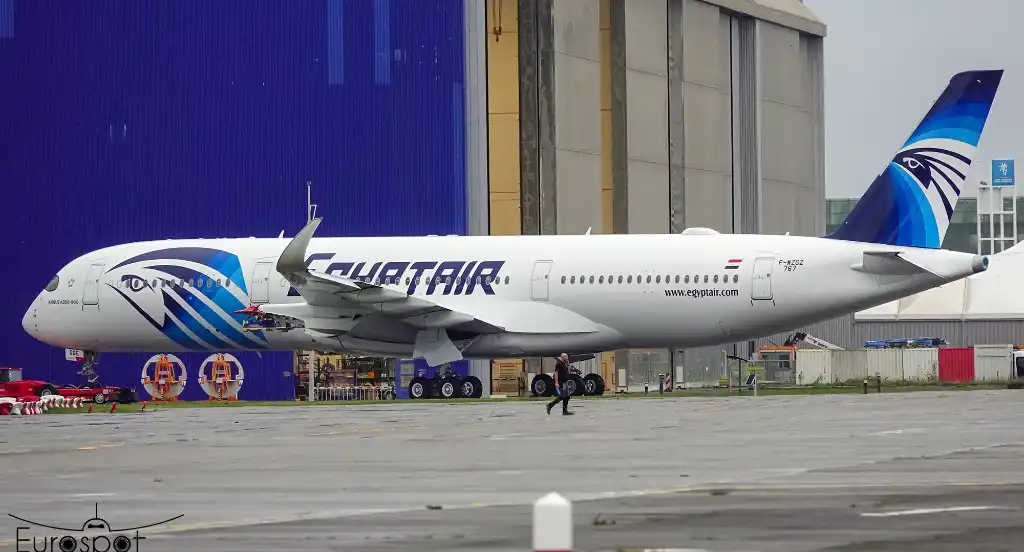
The inaugural flight was conducted from Airbus’s Toulouse delivery center under the manufacturer’s test registration F-WZGZ, a standard practice during early evaluation phases. These initial sorties are designed to validate fundamental flight characteristics, avionics behavior, and system integration following final assembly. Every movement, vibration, and data point is scrutinized, ensuring the aircraft behaves exactly as intended before it ever carries paying passengers across continents.
As EgyptAir prepares to welcome the A350 into its fleet, the aircraft stands as a visible commitment to long-term modernization rather than short-term capacity fixes. The A350-900 brings a blend of advanced materials, refined aerodynamics, and next-generation propulsion that collectively reshape operating economics. Its arrival underscores the airline’s intent to compete aggressively on long-haul routes while aligning with global expectations for reduced environmental impact.
A Maiden Flight That Signals Readiness
The completion of the Toulouse–Toulouse flight confirms that EgyptAir’s first A350 has moved beyond ground testing into active flight evaluation. This phase represents one of the most critical steps in the delivery process, where real-world performance replaces simulations and static checks. Airbus engineers monitor everything from climb profiles to control responsiveness, gradually expanding the flight envelope across subsequent missions.
Following this first flight, the aircraft will undergo a structured series of functional and customer acceptance flights. These sessions verify performance across multiple altitudes, speeds, and configurations while ensuring that airline-specific systems meet contractual standards. Only after every requirement is satisfied will the aircraft be formally handed over, registered as SU-GGE, and prepared for service entry.
Why The Airbus A350 Changes EgyptAir’s Long-Haul Equation
For EgyptAir, the A350-900 introduces a platform that fundamentally redefines long-haul efficiency. Built with a high proportion of carbon-fiber reinforced plastic, the aircraft is lighter and more resistant to fatigue than earlier generations. This structural advantage translates directly into lower fuel burn, extended range, and reduced maintenance demands over the aircraft’s lifecycle.
Powering the A350 are Rolls-Royce Trent XWB engines, engineered specifically for this airframe. These engines deliver exceptional fuel efficiency while maintaining quieter operations and lower emissions. For EgyptAir, this means improved cost control on intercontinental routes and greater flexibility in matching capacity with demand, particularly on long sectors connecting Africa, the Middle East, Europe, and Asia.
Passenger Experience As A Strategic Priority
Beyond economics, the A350’s cabin environment plays a decisive role in EgyptAir’s fleet strategy. The aircraft features higher cabin humidity, lower pressurization altitude, and larger windows, all designed to reduce fatigue on long flights. These elements are not cosmetic; they directly influence passenger comfort and perceived service quality.
The wider fuselage allows for thoughtfully designed cabin layouts, giving EgyptAir the opportunity to refine seating, inflight entertainment, and premium products. While final configuration details are still expected, the platform itself enables a more consistent and competitive onboard experience, aligning with global premium travel standards while enhancing economy-class comfort.
Toulouse And The Path To Delivery
Airbus’s Toulouse facility serves as the nerve center for final assembly, testing, and certification of the A350 program. Aircraft based there undergo intensive system integration, ground runs, and progressive flight tests under close supervision. This environment ensures regulatory compliance while providing a controlled setting for identifying and resolving any anomalies.
Airline crews typically join the process during later acceptance flights, gaining familiarity with handling characteristics and cockpit systems. For EgyptAir, this phase represents the bridge between manufacturer and operator, transforming the aircraft from an engineering product into a fleet asset ready for commercial deployment.
Integrating The A350 Into EgyptAir’s Fleet Vision
EgyptAir has historically maintained a balanced widebody fleet, operating aircraft from both Airbus and Boeing. The introduction of the A350 strengthens Airbus’s role within the airline’s long-haul operations while complementing existing Boeing 777 and 787 aircraft alongside Airbus A330s. This diversified approach provides resilience against market fluctuations and operational constraints.
With its long range and adaptable capacity, the A350 offers EgyptAir the flexibility to optimize established routes and explore new intercontinental opportunities. As additional units join the fleet, the type is also expected to support the gradual retirement of older, less efficient widebodies, aligning fleet renewal with sustainability goals.
A Foundation For Long-Term Growth
The maiden flight of EgyptAir’s first Airbus A350-900 is not an isolated event; it is the visible foundation of a broader growth narrative. By investing in next-generation aircraft, the airline positions itself to navigate rising fuel costs, evolving environmental regulations, and increasingly discerning passengers.
As regulatory approvals, crew training, and final preparations continue, anticipation builds around the aircraft’s entry into service and route deployment. When the A350 begins carrying EgyptAir’s colors across the globe, it will symbolize a calculated commitment to efficiency, comfort, and competitive strength in the modern long-haul arena. Its presence marks confidence, continuity, and ambition shaping EgyptAir’s identity for decades ahead globally future.