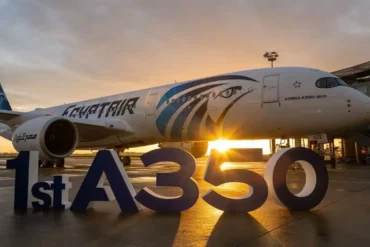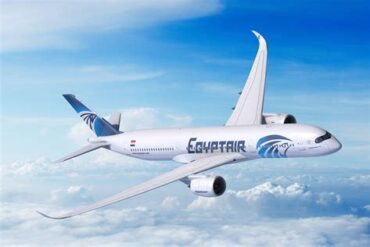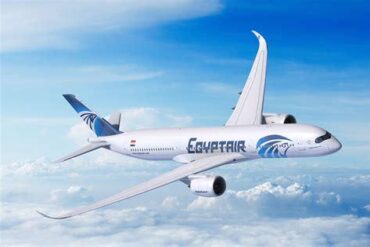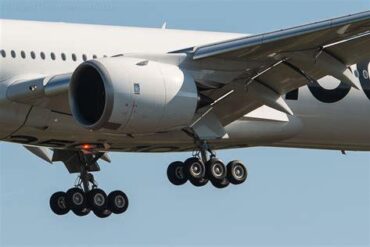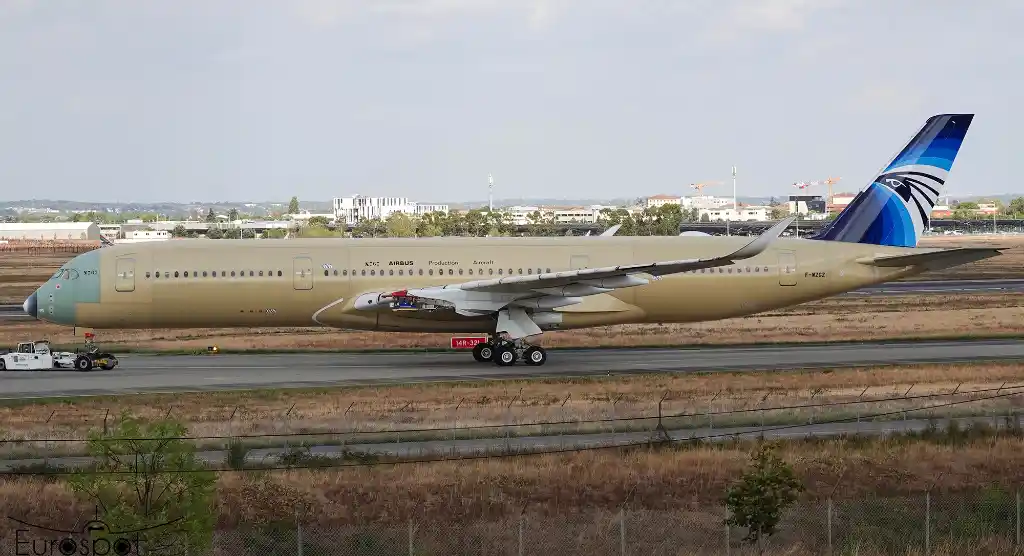
Egyptair is preparing for a transformative leap in its long-haul strategy as its first Airbus A350-900 aircraft enter final assembly and prepare for delivery in the coming weeks. The arrival of these next-generation jets marks a decisive shift for the Cairo-based carrier, unlocking wider access to ultra-long-haul routes—particularly in the United States, where Egyptair plans to push into new major markets including Los Angeles (LAX) and Chicago.
A350-900 Delivery Marks a Turning Point for Egyptair
The airline’s leadership has been candid about the pivotal role the A350-900 will play in reshaping its intercontinental network. Captain Ahmed Adel, Chairman & CEO, emphasized the aircraft’s reliability, advanced technology, and sharp operating economics, all of which position the A350 as a critical asset for expansion. Its blend of lower emissions, long range, and reduced fuel burn per seat creates the economic headroom needed to open routes previously considered out of reach.
Egyptair expects to operate up to eight A350-900s by late 2026, giving the fleet enough depth to support new US gateways while steadily replacing its aging Boeing 777-300ERs. These 777s—averaging about 15 years old—are scheduled to exit the fleet beginning in November 2026.
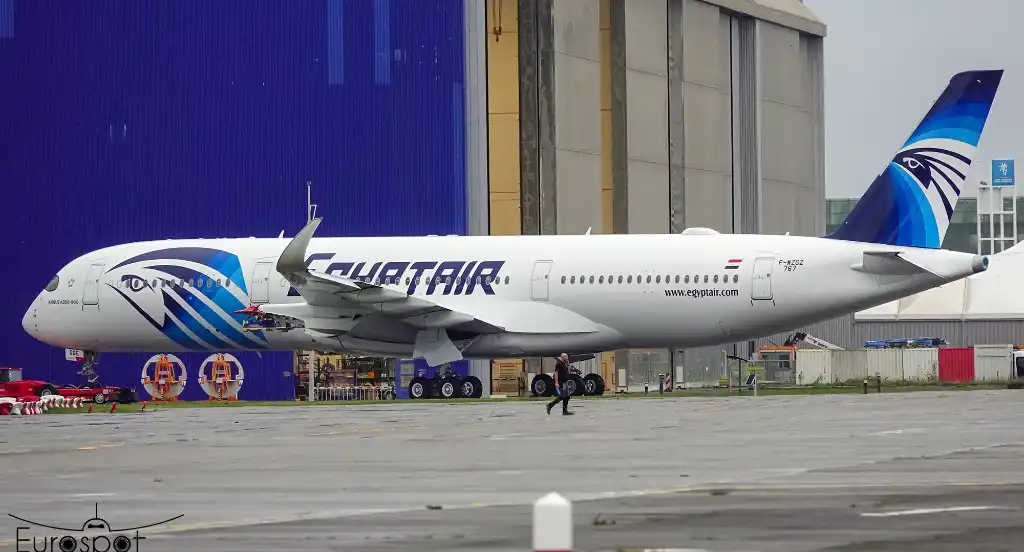
Fleet Expansion Aligns With Rising Transatlantic Demand
Egyptair’s June 2025 order for six additional A350-900s elevated its commitment to 16 aircraft, reinforcing a multiyear strategy focused on modernizing its widebody fleet. This order followed a separate acquisition of 10 Airbus A330-900s in 2023, signaling the airline’s desire to align with advanced, fuel-efficient platforms.
Airbus describes the A350 as capable of flying up to 9,700 nautical miles, though the standard A350-900 variant delivered to most airlines—Egyptair included—achieves roughly 8,500 nautical miles. Even within that range envelope, nonstop connections from Cairo to the western United States become technically feasible, making cities like Los Angeles a practical addition to Egyptair’s network.
Rebalancing the Widebody Mix While Retiring Older Aircraft
Egyptair’s active fleet of 67 aircraft includes 27 widebodies, among them A330s, Boeing 777Xs, and 787-9 Dreamliners. The arrival of the A350-900 will create a unique mid-sized widebody mix, enabling the airline to run thinner long-haul routes without depending on the larger 777-300ER.
Its narrowbody lineup—dominated by Airbus A320-family aircraft and Boeing 737-800s—will soon expand with 18 Boeing 737 MAX 8s beginning in 2025. While this narrowbody influx boosts regional economics, the A350-900 stands as the centerpiece of Egyptair’s transatlantic ambitions.
The US Market Becomes Central to Egyptair’s Future Strategy
Egyptair already serves several North American destinations, including Toronto, New York-JFK, Newark, and Washington-Dulles. It is the only carrier linking Cairo to both Canada and the United States, a rare position that offers immense strategic weight.
Current operations rely mostly on the Boeing 787-9 and 777-300ER. Frequencies remain modest—JFK sees six weekly flights while Newark and Dulles operate fewer. The introduction of the A350-900 is expected to boost frequencies, stabilize schedules, and elevate capacity on high-demand routes.
Why the A350-900 Gives Egyptair a Competitive Edge
The A350-900, powered exclusively by the Rolls-Royce Trent XWB-84 engine, boasts a dispatch reliability rate that rivals or exceeds even legacy workhorses like the Boeing 767. Rolls-Royce has upgraded the engine with an “EP” (Enhanced Performance) version, shaving an additional 1% off fuel burn—an efficiency gain valued at millions annually for the average fleet.
With more cabin width than previous-generation widebodies, the A350 can comfortably seat nine passengers per row or scale up to 10-abreast configurations depending on demand. Airbus claims a 25% reduction in fuel burn compared to older models such as the 777-300ER, a crucial improvement for airlines flying ultra-long-haul.
A Strategic Fit for Egyptair’s Ultra-Long-Haul Vision
The A350-900 slots neatly into Egyptair’s network ambitions: large enough to capture strong US–Egypt demand, but not oversized like the forthcoming Boeing 777X or the retired Airbus A380. This mid-sized sweet spot mirrors broader US airline trends, where carriers increasingly favor smaller, fuel-efficient widebodies over superjumbos.
Egyptair’s move to the A350 also aligns it with regional powerhouses such as Qatar Airways, Turkish Airlines, and Emirates—all major operators of the type. Yet Egyptair maintains a distinct regional position: it is the only airline offering direct routes from Egypt to North America, giving it a natural monopoly on these premium long-haul markets.
Building Toward a Larger Transatlantic Footprint
As the first A350-900s enter service, Egyptair will be positioned to launch its most ambitious North American expansion in decades. By 2026, new Cairo–Los Angeles and Cairo–Chicago operations are expected to begin once the fleet reaches a “viable” size. Along the way, higher frequencies to existing US cities will strengthen customer confidence and enhance Egyptair’s standing within the Star Alliance, where its codeshare with United Airlines plays a growing role.
These developments set up Egyptair for a dramatic step forward: modern, efficient aircraft; renewed global competitiveness; and the long-awaited ability to reach deep into the US West Coast—a capability the airline has pursued for years.
The arrival of the A350-900 signals a new chapter for Egyptair’s long-haul identity, one defined by stronger economics, increased reliability, and broader access to the world’s largest aviation market.