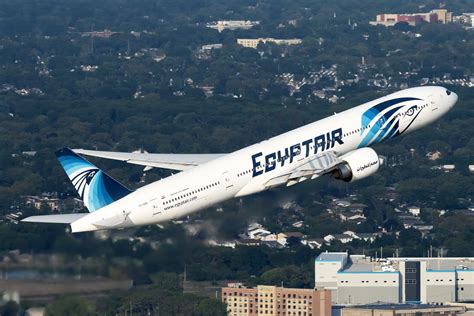
Egyptair, the national flag carrier of Egypt, is a cornerstone of the country’s aviation legacy and an integral player in regional and international air travel. Headquartered in the EgyptAir Administrative Complex at Cairo International Airport, the airline has maintained a reputation built on resilience, national pride, and consistent expansion since its founding in 1932. As a member of the Star Alliance, with a network extending across 81 destinations in 56 countries, Egyptair is a prominent force in African, Middle Eastern, and global skies.
Origins and Formative Years: Misr Airwork (1932–1949)
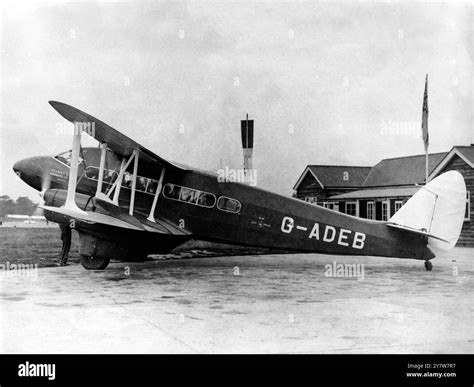
Egyptair’s story began with British aviation entrepreneur Alan Muntz, whose 1931 visit to Egypt sparked plans for launching a national airline. The Egyptian government granted exclusive air transport rights to the venture, and Misr Airlines was officially established on June 7, 1932, with the mission to “promote aviation among Egyptian youth.” With headquarters in Heliopolis and an initial capital of £E20,000, the airline became the seventh-oldest carrier globally.
Initial services linked Cairo with Alexandria and Mersa Matruh, using de Havilland DH.84 Dragons. In 1935 alone, Misr Airlines flew nearly 7,000 passengers and over 21,000 kg of cargo, reflecting its rapid operational momentum. Routes expanded to include Haifa, Gaza, Aswan, Nicosia, and Baghdad, forming the foundation of an expansive regional network.
Nationalization and Rebranding: Misrair to United Arab Airlines (1949–1971)
In 1949, the Egyptian government acquired full ownership, rebranding the airline as Misrair SAE. This era witnessed a modernization drive with new aircraft like Languedocs, DC-3s, and Viscounts, expanding services to Geneva, Khartoum, and Tehran.
Following the formation of the United Arab Republic (UAR) with Syria in 1958, Misrair evolved into United Arab Airlines (UAA). Syrian Airways briefly merged into the company. This phase saw technological advancements, with the acquisition of Comet 4C jets, DC-6s, and Antonov An-24s, while expanding to Moscow, Tokyo, and Lagos. However, multiple fatal accidents and political instability strained operations, culminating in the airline being rebranded as Egyptair in October 1971, following the dissolution of the UAR.
Egyptair’s Emergence and Strategic Growth (1971–2000)
As Egyptair, the company inherited UAA’s assets and fleet, immediately launching an aggressive modernization campaign. The 1970s and 80s brought Boeing 707s, 737-200s, and A300B4s into service. Strategic routes resumed, such as Cairo–Tokyo, and new links to Kinshasa, Vienna, and Milan were introduced.
The Yom Kippur War in 1973 caused temporary disruptions, but Egyptair adapted swiftly. The airline ordered Boeing 727s, 737s, and leased A300s, phasing out older Soviet models like the Tu-154s and Il-62s due to operational inefficiencies.
By the 1990s, the fleet included Boeing 767-200ERs and -300ERs, demonstrating long-haul ambitions. Tragically, Egyptair Flight 990, a Boeing 767, crashed into the Atlantic in 1999, killing all 217 on board. Despite international controversy surrounding the cause, the airline maintained its operational integrity.
Corporate Transformation and Star Alliance Membership (2002–2010)
In 2002, Egyptair underwent a comprehensive restructuring with the formation of the Egyptair Holding Company, granting the airline autonomy from direct government financial support. This restructuring split the company into multiple specialized subsidiaries:
- Egyptair Airlines (passenger)
- Egyptair Cargo
- Egyptair Express
- Maintenance & Engineering (EASA/FAA certified)
- Ground Services
- In-flight Services, Tourism, Medical, and Supplementary Industries
Further bolstering its regional presence, Egyptair launched Egyptair Express in 2006, with Embraer E-170 jets serving secondary domestic and short-haul routes. By 2009, the airline transitioned its entire Cairo hub operation to Terminal 3, supporting Star Alliance’s “Move Under One Roof” strategy.
Egyptair’s entry into Star Alliance in July 2008 marked a turning point, positioning it alongside elite global carriers and unlocking access to seamless code-sharing and international connectivity.
Post-Revolution Era: Crisis, Reform, and Modernization (2011–Present)
The 2011 Egyptian Revolution triggered a turbulent period for Egyptair. The airline incurred losses exceeding $1 billion, stemming from decreased tourism, currency devaluation, fuel inflation, and internal strikes. Operational setbacks were compounded by incidents like the Metrojet 9268 disaster over Sinai, after which Russia suspended Egyptair flights until 2018.
Despite adversity, Egyptair persevered. In 2012, the airline embraced cultural inclusivity by allowing hijab-wearing flight attendants, a first in its history. In response to operational challenges, Egyptair merged Egyptair Express and began integration of Cargo and Ground Services divisions.
Safety remained under scrutiny after two major events in 2016: the hijacking of Flight 181 to Cyprus and the crash of Flight 804 in the Mediterranean, which killed all 66 onboard. Investigations cited both mechanical failure and, controversially, a cockpit fire caused by a pilot’s cigarette and oxygen leak, according to France’s BEA.
Fleet Strategy: Modern, Fuel-Efficient and Expanding
Egyptair’s current fleet, as of July 2025, reflects a calculated emphasis on efficiency and long-haul competitiveness:
- Airbus A320neo (8 aircraft, 142 seats)
- Airbus A321neo (7 aircraft, 182 seats)
- Airbus A330-200 (5 aircraft; 2 to be converted for cargo)
- Airbus A330-300 (4 aircraft)
- Boeing 737-800 (30 aircraft)
- Boeing 787-9 Dreamliner (8 aircraft)
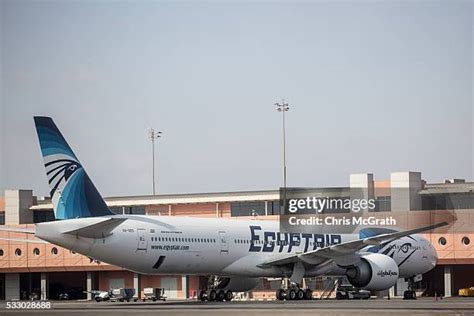
- Boeing 777-300ER (5 aircraft)
Future orders include:
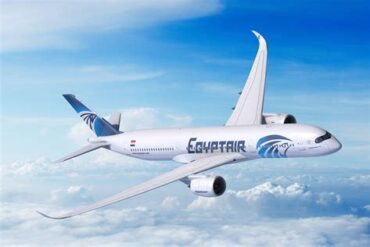
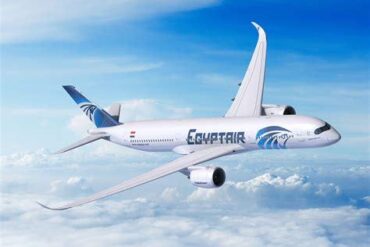
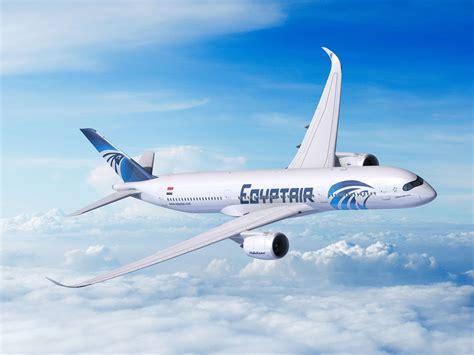
- 16 Airbus A350-900 (deliveries from 2025)
- 18 Boeing 737 MAX 8 (deliveries from 2025)
This fleet strategy supports both regional frequency and long-haul endurance, ensuring global network sustainability while reducing carbon footprint.
Destinations, Network Power, and Strategic Alliances
Egyptair’s operational reach covers 81 global destinations, with Cairo as the epicenter. Strategic secondary hubs in Alexandria and Sharm El Sheikh further bolster connectivity. The airline’s code-sharing agreements with United Airlines, Lufthansa, Air Canada, Turkish Airlines, and others—combined with its Star Alliance membership—offers passengers vast global reach and reciprocal benefits.
Notably, after the GCC diplomatic crisis in 2017, Egyptair halted services to Qatar—resuming them in 2021 after the Al-‘Ula accord. In 2020, the airline entered a partnership with Ghana’s government to help establish a new national airline, expanding Egyptair’s West African influence.
Corporate Ownership and Financial Performance
Egyptair is 100% owned by the Egyptian government, though the creation of the holding company in 2002 gave it private-sector-like autonomy. Despite financial headwinds post-2011, including significant multi-year losses, the airline has continued to stabilize operations and invest in future capabilities. In FY 2007, revenues hit $1.143 billion with continued capital investments across its subsidiaries.
Key investments include:
- Air Cairo (60%)
- Smart Aviation (13.33%)
- Air Sinai (100%)
- CIAF-Leasing (20%)
Brand Identity: Horus and National Symbolism
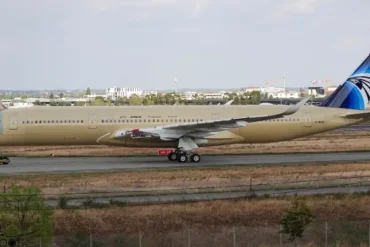
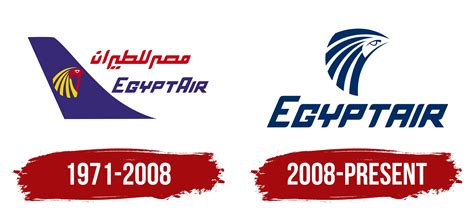
The airline’s logo—Horus, the falcon-headed sky god—encapsulates Egyptair’s cultural symbolism. Originally introduced in the 1970s with vibrant red and blue plumage over a golden backdrop, the livery evokes heritage, strength, and aspiration. Horus continues to be proudly displayed across its entire fleet, embodying the company’s mission to project Egypt’s identity across the skies.
Conclusion
Egyptair’s evolution from a British-Egyptian joint venture in 1932 to one of Africa and the Middle East’s most iconic national carriers reflects a legacy of resilience, national pride, and strategic aviation leadership. Through war, revolution, tragedy, and reform, Egyptair has remained airborne, continuously adapting to geopolitical and commercial challenges. With a renewed focus on fleet modernization, alliance integration, and sustainable profitability, the airline is poised to cement its position as a global ambassador of Egyptian excellence in the skies.