Condor Flugdienst GmbH, widely known simply as Condor, stands as one of Germany’s most enduring and resilient leisure carriers. Established in 1955 and taking flight for the first time in 1956, Condor has carved a reputation not only for connecting Germans with sun-soaked destinations across the Mediterranean and the Canary Islands but also for stretching its wings across long-haul routes to Africa, Asia, the Americas, and the Caribbean. Headquartered in Neu-Isenburg, with its principal hub at Frankfurt Airport, Condor remains synonymous with dependable holiday travel.
From Humble Beginnings to Market Domination (1955–1979)
Founded as Deutsche Flugdienst GmbH, Condor began its journey with a modest fleet of three Vickers Vikings. Backed by major post-war entities—Norddeutscher Lloyd, Hamburg America Line, Lufthansa, and Deutsche Bundesbahn—its inaugural tourist flight took passengers to the Holy Land in 1956. By 1960, Lufthansa assumed full ownership, setting the stage for rapid expansion. A pivotal move occurred in 1961 with the absorption of Condor-Luftreederei, prompting the now-familiar rebranding to Condor.
By 1962, Condor commanded 63% of Germany’s leisure travel market, a testament to its efficient operation and rising popularity. As early as 1966, it ventured into long-haul services, targeting vacationers eyeing distant destinations. A watershed moment arrived in 1971 when Condor became the first leisure airline to operate the Boeing 747, revolutionizing the concept of affordable long-distance leisure travel.
Innovation and Expansion (1980–1999)
The 1980s and 1990s marked an era of experimentation and diversification. In 1989, the airline pioneered “Condor Individuell”, a direct seat sales initiative that bypassed traditional tour operators—an early nod toward the à la carte travel model we see today.
Strategic acquisitions bolstered Condor’s capabilities. The integration of Südflug during the early 1990s enabled the addition of Boeing 757 and 767 aircraft, introducing two-class cabins that elevated passenger experience. Meanwhile, the carrier diversified investments by acquiring stakes in other tour operators and forming a shareholding in SunExpress, enhancing network depth.
A symbol of creativity and visibility, Condor celebrated its 40th anniversary in 1996 with a uniquely painted 757 designed by James Rizzi, solidifying the airline’s playful brand identity. That same year, Condor became the launch customer for the Boeing 757-300, continuing its legacy as a forward-looking carrier.
In 1998, Condor launched the low-cost subsidiary Condor Berlin and placed orders for Airbus A320-200s, embracing the short-haul efficiency of the Airbus family. This period culminated in the airline’s merger into C&N Touristik, forming a vertically integrated tourism conglomerate.
Corporate Reorientations and Ownership Changes (2000–2009)
The new millennium brought significant shifts in ownership and branding. By 2003, Condor was rebranded under the “Thomas Cook powered by Condor” identity, reflecting its full integration into the Thomas Cook AG tourism empire. However, this was short-lived; by 2004, the airline reinstated its classic Condor branding, highlighting the strength and recognition of its legacy name.
An ambitious takeover attempt by Air Berlin in 2007 was later called off in 2008, a decision that perhaps spared Condor from the financial fate that eventually befell Air Berlin. These years were marked by cautious navigation through shifting alliances and turbulent market dynamics.
Modernization Amid Turbulence (2010–2020)
In the 2010s, Condor pursued modernization to maintain its relevance. It embraced the Airbus A320 family for European routes and entered codeshare agreements with Volaris in 2012, followed by WestJet in 2013, expanding its transatlantic and Latin American connectivity.
As part of Thomas Cook Group Airlines, Condor underwent a major long-haul cabin refurbishment in 2014, enhancing inflight experience with new entertainment systems and improved seat configurations. Yet despite these upgrades, financial headwinds remained. By 2017, the airline was posting losses amid rising fuel costs and aggressive competition.
The collapse of Thomas Cook Group in 2019 threatened to ground the airline permanently. However, Condor survived thanks to a €380 million bridge loan from the German government and protective shield proceedings—an extraordinary move that underscored the airline’s national significance.
An attempted acquisition by LOT Polish Airlines in 2020 was scuttled by the COVID-19 crisis, placing Condor once again in a precarious position, but its brand value and resilience were far from extinguished.
A New Chapter: Recovery and Reinvention (2021–Present)
The turning point arrived in May 2021, when Attestor Capital, a UK-based asset manager, acquired a 51% stake in Condor and injected much-needed capital. This strategic partnership laid the groundwork for a comprehensive fleet renewal and brand revival.
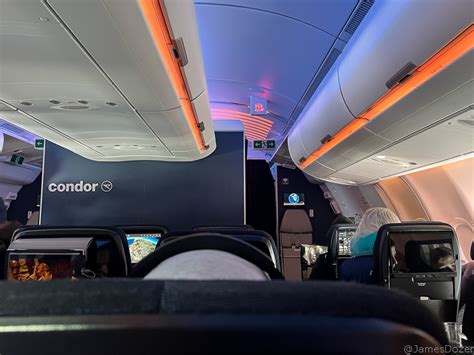
In December 2022, the airline received the first of 21 Airbus A330-900neos, dramatically upgrading its long-haul offering. These aircraft feature state-of-the-art Business Class cabins with 1-2-1 lie-flat beds, 4K entertainment screens, Wi-Fi, and Premium Economy seating, placing Condor’s onboard experience among the best in its class.
Further fleet updates followed in 2022 with orders for Airbus A320neo and A321neo aircraft, ensuring continued efficiency and environmental compliance for medium-haul routes.
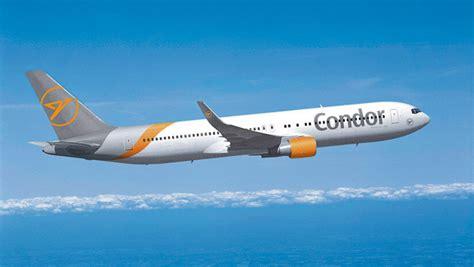
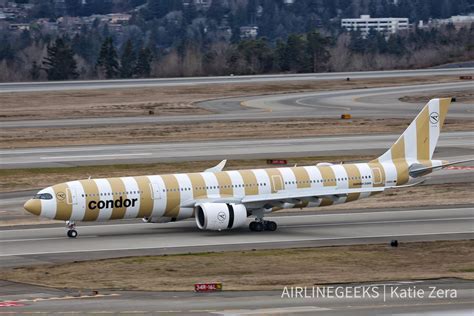
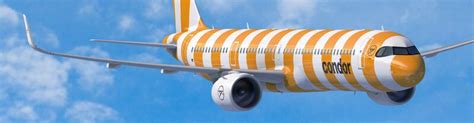
In a bold move, Condor unveiled a striking new livery featuring colorful vertical stripes in yellow, blue, green, beige, and red, symbolizing beaches, oceans, and vacation vibes. This design, radical and polarizing, is a visual commitment to its leisure-first identity and departure from the conservative liveries of traditional airlines.
Operational Scope and Strategic Alliances
Today, Condor connects travelers to 94 destinations worldwide, with significant presences in Mediterranean leisure hotspots, Canary Islands, and intercontinental destinations in the Americas, Africa, and Asia. While Frankfurt remains the central hub, it also operates medium-haul services from other German cities and Zurich, Switzerland.
The airline maintains active codeshare agreements with leading carriers including Alaska Airlines, Emirates, Marabu, and WestJet, in addition to interline partnerships with over 20 global airlines. These collaborations greatly expand itinerary flexibility and global reach, allowing passengers to book seamless journeys beyond Condor’s direct network.
Fleet Modernization and Cabin Enhancements
As of May 2025, Condor operates a fleet of 56 aircraft, including:
- Airbus A320-200 / A320neo
- Airbus A321-200 / A321neo
- Airbus A330-900neo
- Boeing 757-300
Retired aircraft range from Vickers Vikings to Boeing 767s, reflecting the airline’s evolution from piston-powered origins to ultra-modern widebodies. The focus is now on reducing emissions, improving fuel efficiency, and offering consistent inflight products across aircraft types.
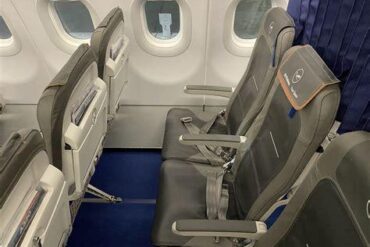
The flagship A330-900neo features a premium long-haul configuration with Business Class suites, each with aisle access, lie-flat seating, and mood lighting, along with Premium Economy and Economy cabins designed to maximize space and comfort.
Branding Through Special Liveries
Over the years, Condor has become known for creative and thematic special liveries. These include:
- Retro color schemes celebrating aviation heritage
- Charity liveries supporting humanitarian causes
- Anniversary and commemorative designs, such as the Rizzi jet and themed aircraft
These liveries serve both as branding tools and cultural touchstones, reinforcing Condor’s playful and family-friendly persona.
Incidents and Safety Record
While Condor has generally maintained a solid safety record, a few incidents are notable in its history:
- 1958: A Viking aircraft made a forced landing without fatalities.
- 1960: A Convair made an emergency landing resulting in loss of life.
- 1970: Mid-air collision involving a Piper Cherokee, highlighting the risks of mixed traffic zones.
- 1988: Flight 3782 crashed on approach due to pilot error, claiming 16 lives.
- 1992: A Boeing 767 experienced a wing strike during takeoff with no injuries.
- 2015: A ground-handling incident with an A321 injured a technician during towing.
These events underscore the importance of continuous safety improvements, which Condor has implemented through stringent training and upgraded navigation systems.
Future Outlook and Strategic Challenges
Looking ahead, Condor plans to refine its route network, including the termination of services to Cuba and some North American cities in 2025, citing insufficient demand and airport infrastructure issues. This reflects a broader shift in leisure travel patterns and competitive pressures from low-cost carriers and transatlantic rivals.
Yet, with a rejuvenated fleet, ambitious branding, and a focused leisure travel model, Condor is well-positioned to thrive in a post-pandemic era where personalized, value-driven travel is gaining traction. As environmental scrutiny intensifies, its investment in new-generation aircraft further reinforces its commitment to sustainable aviation.
In an industry marked by volatility and transformation, Condor remains a steadfast symbol of German leisure aviation, marrying tradition with innovation, and continuing to connect generations of holidaymakers with the world.