The Boeing 737 has become one of the most recognizable and successful commercial aircraft families in aviation history. Since entering service in the late 1960s, the narrowbody jetliner has evolved through several generations, including the Original series, Classic family, Next Generation (NG) variants, and the latest 737 MAX models. Throughout this long development cycle, Boeing has continuously improved the aircraft’s efficiency, range, passenger capacity, and operating economics while preserving a common design philosophy that allows airlines to transition between variants with minimal disruption.
However, the 737’s remarkable longevity also created engineering compromises. Unlike a clean-sheet aircraft designed around modern requirements from the beginning, every new generation of the 737 had to work within the limitations of an airframe architecture that originated more than half a century ago. Engineers successfully expanded the aircraft’s capabilities, but stretching the original platform introduced challenges in areas such as aerodynamics, ground handling, and weight distribution.
One of the most interesting examples of these limitations is the aircraft’s increased susceptibility to becoming tail-heavy, particularly among longer variants such as the Boeing 737-900ER. While aircraft tipping backward is relatively rare, the 737’s design characteristics make certain versions more vulnerable when loading and unloading operations shift the aircraft’s center of gravity.
Why The Boeing 737-900ER Is More Vulnerable to Tail-Heavy Conditions
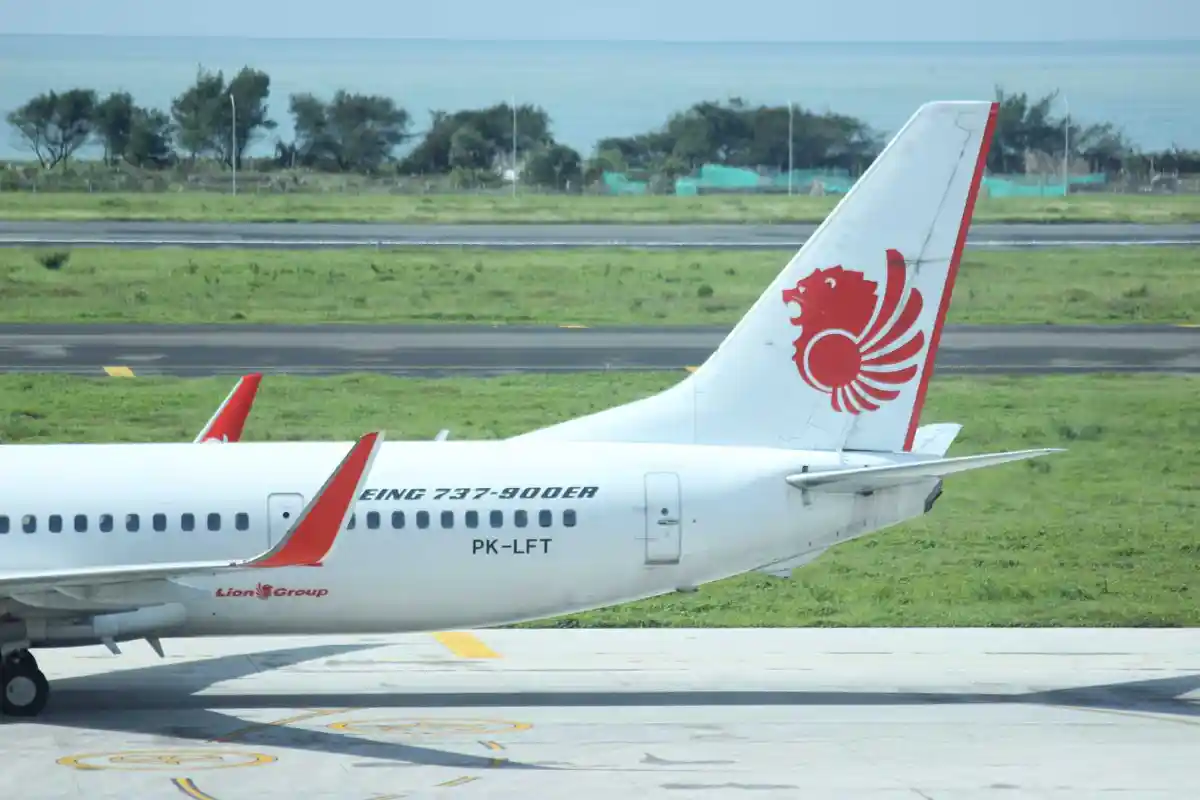
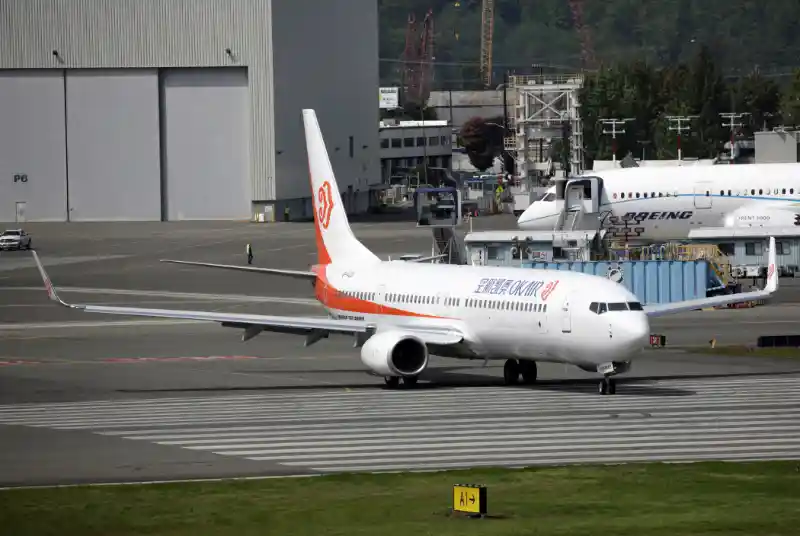
The 737-900ER represents the extreme end of Boeing’s effort to stretch the original 737 platform. Designed to provide airlines with more capacity while maintaining the economic advantages of the 737 family, the aircraft became the longest member of the Next Generation series.
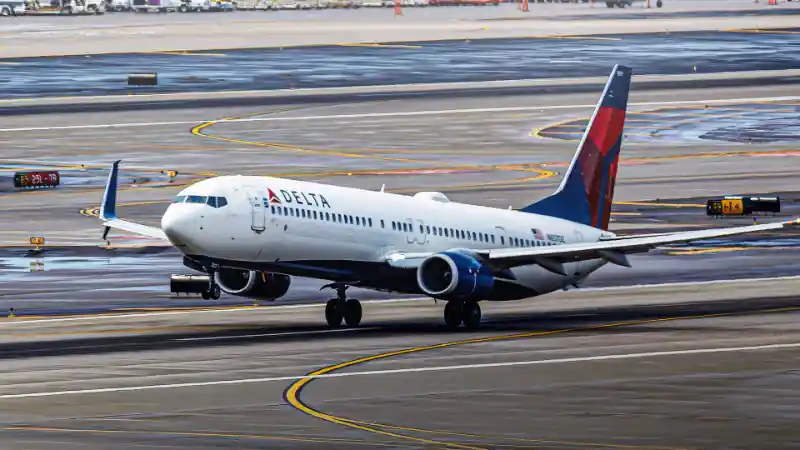
The aircraft has a fuselage length of approximately 138 feet 2 inches (42.1 meters), making it significantly longer than earlier versions such as the 737-700 and 737-800. The 737-700 measures around 110 feet 4 inches, while the 737-800 stretches to approximately 129 feet 6 inches. Although the 737-900ER offered airlines additional passenger capacity and improved range, extending the fuselage changed the aircraft’s balance characteristics.
Aircraft stability on the ground depends heavily on the relationship between the center of gravity (CG) and the position of the main landing gear. The main landing gear acts as a pivot point. For the aircraft to remain stable while parked, the center of gravity must stay ahead of that pivot point.
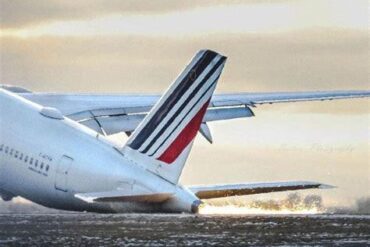
When the center of gravity moves too far aft, the aircraft can become unstable. The weight behind the main landing gear creates a downward force that lifts the nose gear from the ground, eventually causing the aircraft to rotate backward onto its tail.
This principle applies to all aircraft, but the risk increases when a design places more weight farther behind the main landing gear. The 737-900ER’s longer fuselage means that a greater portion of the cabin, structure, and potential passenger weight is located aft of the aircraft’s pivot point.
How Stretching The 737 Fuselage Changed Its Weight Balance
Creating a longer version of an existing aircraft is not simply a matter of adding additional fuselage sections. Every modification affects the aircraft’s center of gravity, structural loads, and operational characteristics.
For the 737-900ER, Boeing needed to increase passenger capacity while maintaining compliance with evacuation requirements. The aircraft received additional Type II doors behind the wings, allowing it to carry more passengers. Boeing also redesigned the rear pressure bulkhead by flattening its shape, creating additional interior space for another row of seats.
These modifications improved the aircraft’s commercial capability, but they also moved more structural and passenger weight toward the rear of the aircraft. As a result, the available margin before reaching an aft center-of-gravity condition became smaller.
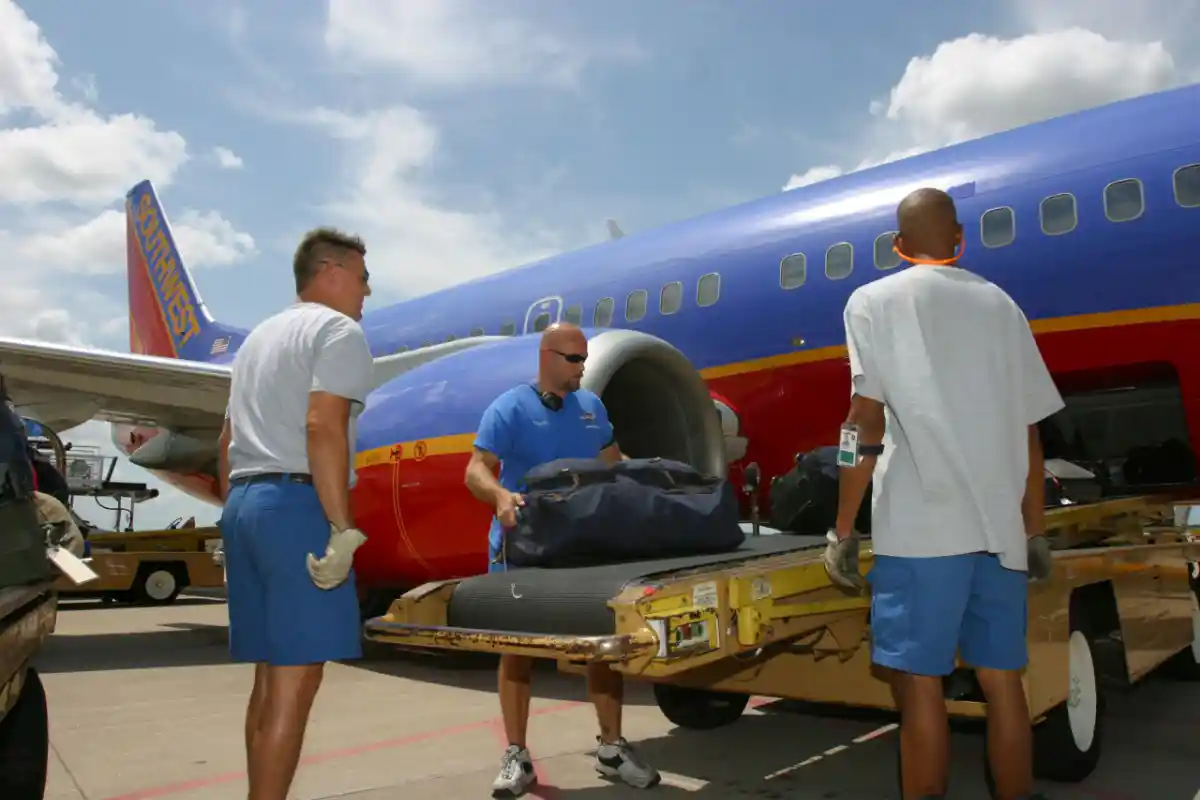
The issue is especially noticeable during ground operations because the aircraft’s weight distribution can change rapidly. A fully loaded aircraft in flight is carefully balanced through detailed weight and balance calculations. However, during boarding, unloading, and baggage handling, the distribution of weight can temporarily shift outside the ideal range.
For example, if passengers leave through the forward doors while baggage remains in the rear cargo compartment, the aircraft may become increasingly tail-heavy. Similarly, removing heavy cargo from forward compartments before unloading aft baggage can shift the center of gravity backward.
The Physics Behind Aircraft Tipping Backward
An aircraft tipping backward may appear surprising because commercial jets weigh tens of thousands of kilograms. However, weight alone does not determine stability. The location of that weight is far more important.
The basic physics is similar to balancing an object on a pivot point. If the majority of the mass remains ahead of the pivot, the object stays stable. If the mass moves behind the pivot, the object rotates backward.
For a commercial aircraft, engineers establish strict center-of-gravity limits to prevent this situation. Airlines calculate passenger distribution, fuel quantity, cargo placement, and baggage loading patterns before every flight.
During normal operations, these procedures prevent problems. However, unusual circumstances can create temporary instability, especially during aircraft servicing.
The Boeing 737-900ER’s design means that it has less tolerance for certain loading situations compared with shorter aircraft. The longer rear fuselage creates a larger moment arm behind the main landing gear, meaning that weight positioned at the back has a greater effect on aircraft balance.
This does not mean the 737-900ER is unsafe. Rather, it means ground crews must pay closer attention to weight distribution during specific phases of airport operations.
Real-World Examples Of Boeing 737 Aircraft Tipping Onto Their Tails
Aircraft tipping incidents are uncommon, but several events involving Boeing 737 variants have demonstrated why careful ground procedures are necessary.
In 2016, a Ukraine International Airlines Boeing 737-900 tipped backward after forward cargo was removed from the aircraft. The incident highlighted how quickly a change in weight distribution can affect a stretched narrowbody aircraft.
Another widely discussed case occurred in 2021 when a United Airlines Boeing 737-900ER carrying the USC football team tipped backward during passenger disembarkation after arriving in Lewiston, Idaho. Images shared online showed the aircraft resting on its tail while passengers exited the forward door.
The aircraft did not experience major damage, and no injuries were reported. However, the incident demonstrated that even modern commercial aircraft can become unstable when weight shifts occur at the wrong moment.
In 2025, another example involved a GetJet Airlines Boeing 737-800 operating a Wizz Air flight from Gdańsk, Poland, to Haugesund, Norway. During passenger unloading and baggage operations, the aircraft tipped backward and required inspection before returning to service.
Although the 737-800 is shorter than the 737-900ER, the incident showed that tail-heavy situations are not limited to one specific variant. Any aircraft with a suitable combination of fuselage length, loading condition, and weight distribution can experience the same physical effect.
How Airlines Prevent Boeing 737 Aircraft From Becoming Tail-Heavy
Airlines and ground handling teams use several procedures to prevent aircraft from tipping backward. One of the most visible solutions is the use of a tail stand, sometimes called a pogo stick.
A tail stand is a support device placed underneath the rear fuselage area. It provides an additional contact point with the ground, preventing excessive rotation if the center of gravity shifts too far aft during loading or unloading.
Although tail stands are more commonly associated with cargo aircraft and military transports, some commercial aircraft require them under certain conditions. The Boeing 737-900ER is among the passenger aircraft that may need this additional protection depending on operational circumstances.
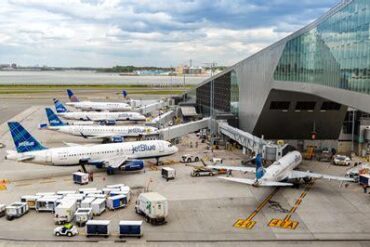
Other aircraft families, including some variants of the Airbus A320 family, can also experience similar challenges. In 2023, a JetBlue Airbus A321 reportedly tipped backward at New York’s John F. Kennedy International Airport during passenger disembarkation, showing that the phenomenon is not unique to Boeing aircraft.
In addition to using physical supports, airlines rely on detailed loading procedures. Ground crews follow aircraft-specific manuals that define where baggage should be loaded first, when passengers should board or exit, and how cargo removal should be managed.
The Same Design Stretch That Created Tail-Heavy Risks Also Created Tailstrike Challenges
The Boeing 737-900ER’s longer fuselage introduced another challenge beyond ground stability: a greater risk of tailstrikes during takeoff and landing.
A tailstrike occurs when the rear underside of the aircraft contacts the runway as the pilots rotate the aircraft nose upward. Because the 737-900ER has a longer fuselage, the distance between the main landing gear and the tail is increased, reducing the clearance available during rotation.
As pilots raise the nose during takeoff, they must carefully manage pitch angle. The aircraft needs enough rotation to generate lift but must avoid exceeding the maximum attitude before the tail contacts the runway.
This represents another example of how extending an existing aircraft design can create secondary effects. The same fuselage stretch that allowed Boeing to increase passenger capacity also changed the aircraft’s geometry and operating margins.
Why The Boeing 737’s Long Evolution Created Engineering Trade-Offs
The Boeing 737 family’s success comes from its ability to adapt. Airlines around the world value the aircraft because it offers excellent reliability, efficient operations, and strong fleet commonality. These advantages explain why thousands of 737 aircraft remain in service decades after the original model entered commercial operations.
However, the aircraft’s long history also means engineers have repeatedly pushed an older platform into new roles. Each stretch, modification, and upgrade improved capability but introduced new considerations.
The 737-900ER is a clear example of this balancing act. Boeing successfully created a high-capacity narrowbody aircraft capable of carrying more passengers while preserving the economic benefits of the 737 family. Yet the longer fuselage placed more weight behind the main landing gear, reducing the aircraft’s margin against tail-heavy conditions during ground operations.
Ultimately, the Boeing 737 is not uniquely flawed. Aircraft from many manufacturers can experience balance issues when weight distribution changes. The difference is that the 737-900ER’s combination of a stretched fuselage and original platform architecture makes the effect more noticeable.
The aircraft remains one of the safest and most widely operated jetliners in aviation history. Its tail-heavy tendency is not a sign of poor design, but rather an example of the engineering compromises involved when a successful aircraft family continues evolving for more than five decades.