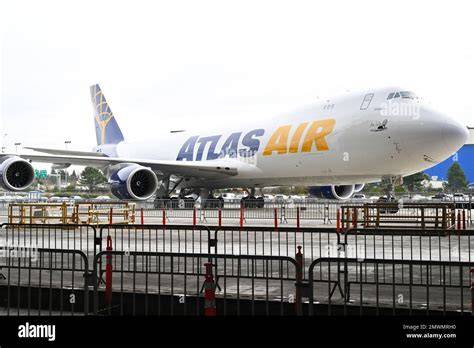
For more than thirty years, Atlas Air built its identity around a single airframe family from a single manufacturer. The carrier grew from a niche operator into the world’s largest heavy cargo airline by betting everything on Boeing widebody freighters, and the bet paid off spectacularly. Its flightline became a rolling museum of American aerospace dominance: ranks of 747-400s, a smaller cadre of stretched 747-8Fs, a workhorse fleet of 767-300s, and a growing contingent of 777s. When Boeing delivered its last-ever passenger-bound 747 in 2021, leaving a void across global air freight, Atlas remained the largest operator of the jumbo to this day. That resolve looked permanent. Then, in a single stroke, it was not.
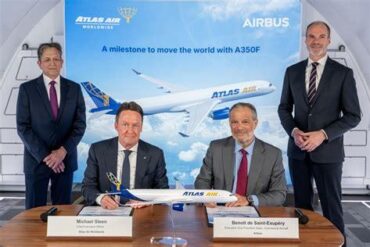
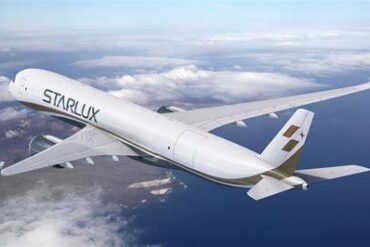
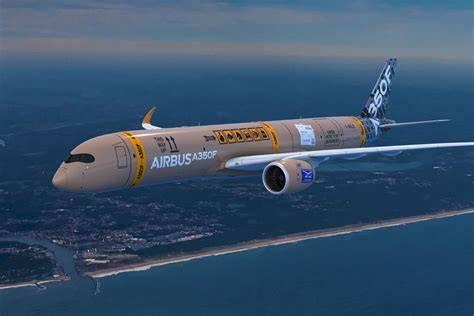
The turning point arrived in March, when Atlas placed a firm order for 20 Airbus A350F next-generation freighters, with options covering 20 more. By October, the airline had layered in another 20 purchase rights, pushing its potential commitment to as many as 60 aircraft. The order represents the first non-Boeing widebody purchase in the company’s modern history and marks a genuine rupture in one of aviation’s most durable supplier relationships. The decision was not impulsive. It was the product of a 777-8F program that kept slipping, a 747 fleet aging toward mandatory retirement, and a competitive landscape in which early delivery slots are the scarcest currency in the industry.
A Fleet Built Entirely Around One Manufacturer
As of 2026, Atlas operates 113 aircraft, and every single one of them is an all-Boeing widebody cargo jet. That uniformity is no accident. It is the technical and cultural backbone of the carrier’s business model. Atlas holds roughly 13% of the global widebody freighter fleet, making it the single largest heavy air cargo operator on the planet. Its relationship with Boeing began in the early 1990s, when the company made the 747 jumbo the foundation of the international supply chains that would eventually define its brand. Buying, maintaining, and above all flying one manufacturer’s designs created enormous economies of scale in training, tooling, and spares, and it gave Atlas unrivaled expertise in the aircraft the world needed for oversized cargo.
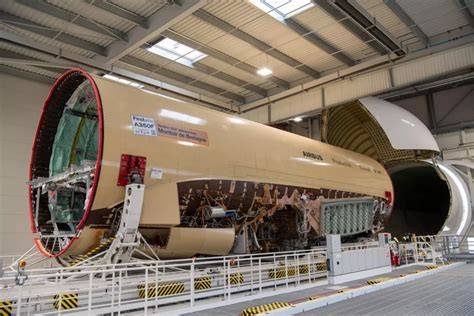
The fleet breakdown reveals precisely how deep the Boeing commitment runs. Atlas flies 59 747s, including the final production airframe ever built by the manufacturer, a symbolic capstone to a three-decade partnership. Within that total sit 35 older 747-400s that are approaching the end of their economically useful lives, alongside 14 advanced 747-8s that remain among the youngest and most capable freighters in existence. The rest of the flightline comprises 23 767-300s and 11 777s, twin-aisle jets that handle the bulk hauling on medium and long routes. Supplementing the widebody core are eight converted 737-800 narrowbodies operated on behalf of Amazon’s domestic shipping network, a smaller but strategically important slice of the business. Finally, there is the specialized subfleet that no other airline can match: the four 747-400 Large Cargo Freighters known as Dreamlifters, the aircraft Boeing uses to ferry huge 787 components between manufacturing sites around the world.
That all-Boeing flightline is precisely why the Airbus decision carries consequences far beyond one airline’s procurement spreadsheet. Every cost structure, every training program, every maintenance procedure, and every scheduling assumption at Atlas has been calibrated to Boeing aircraft for a generation. Introducing a European airframe is not a swap; it is the construction of a parallel operating universe.
Why Atlas Could No Longer Wait On The 777X
The mechanics behind the 777X delays explain why Atlas had to look elsewhere for its most urgent fleet modernization programs, and why a future Boeing partnership remains entirely probable. The carrier found itself unable to secure strict guarantees about delivery schedules from Boeing for the arrival of its first 777-8F jets, for the simple reason that the variant has not yet been fully certified by the Federal Aviation Administration. Early projections imagined a commercial debut for the freighter around 2027. The schedule has since slid relentlessly to the right, and the baseline passenger 777-9 has absorbed a decade of intense scrutiny, design modifications, and FAA flight-test halts. Because the 777-9’s entry into service has slipped into 2027, the 777-8F program was automatically pushed back with it. Current estimates now peg its debut at around 2029 or 2030.
For an airline facing the retirement of 35 aging 747-400s, a delivery date three to four years distant is not a plan; it is a liability. The financial arithmetic of switching suppliers is painful in its own right. Transitioning even partially to Airbus costs hundreds of millions in pilot training, duplicate tooling, and separate parts inventories, all while navigating the procedural friction of introducing a second regulatory and engineering culture. Atlas accepted that cost deliberately, and it has also structured its strategy to leave room for the 777-8F to integrate into later rounds of fleet renewal. But if the airline exercises all of its options, the A350F will replace almost half of its Boeing lineup, an outcome that permanently rebalances the relationship.
A Second Supplier, Not A Straight Replacement
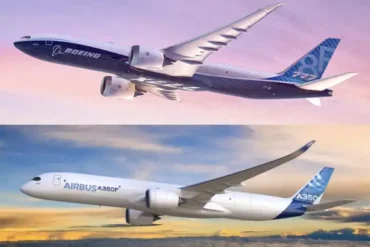
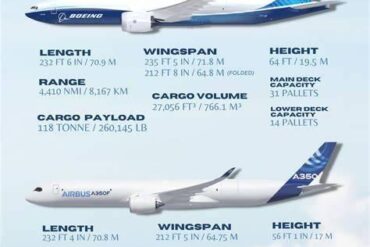
The Airbus A350F will be the superior weight lifter of the two next-generation designs, but it will also carry less internal volume than the 777-8F. The Boeing offers a significantly wider cross-section and more total main-deck volume. Once certified, it would also represent a straightforward transition for Atlas’s large pool of existing Boeing pilots, a consideration that shouldn’t be underestimated when flight crew pipeline is tight. For e-commerce giants such as Amazon Air and DHL, clients Atlas flies for on many missions, cargo space is frequently about volumetric room rather than raw payload. A light package that fills a fuselage by volume before it reaches the weight limit generates the same revenue as a heavier pallet that weighs out first, without the fuel burn.
That commercial reality means Atlas will likely need the 777-8F to satisfy clients whose packages “cube out” the smaller Airbus frame too quickly. The delayed Boeing remains the more efficient choice for high-volume, low-density freight. Meanwhile, the FAA recently offered Boeing a lifeline in the form of a special exemption permitting continued construction of up to 35 current-generation 777 Freighters beyond the strict 2027 or 2028 ICAO global emissions deadlines. Speculation within the cargo industry strongly suggests that Atlas is positioning to take a major slice of those 35 slots. If it does, it creates a bridge fleet that renews the 777 line for decades and could evolve seamlessly into 777-8F orders once those airframes age out.
The Nose Door Gap And The Limits Of Side Loading
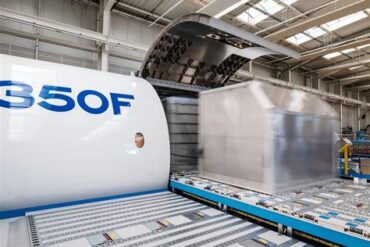
One of the reasons the 747 Freighter became an industrial icon is its hinged nose, a design that allows the entire forward section to swing upward. Combined with an elevated cockpit, it enables straight-in, linear loading along the full length of the main deck. That geometry is indispensable for outsized cargo, and oil and gas industrial ventures alongside defense contracts make up a large portion of the regular business for heavy air freight. Neither the A350F nor the 777-8F offers a nose-loading door, a gap that is shaping up to be a quiet crisis across the sector.
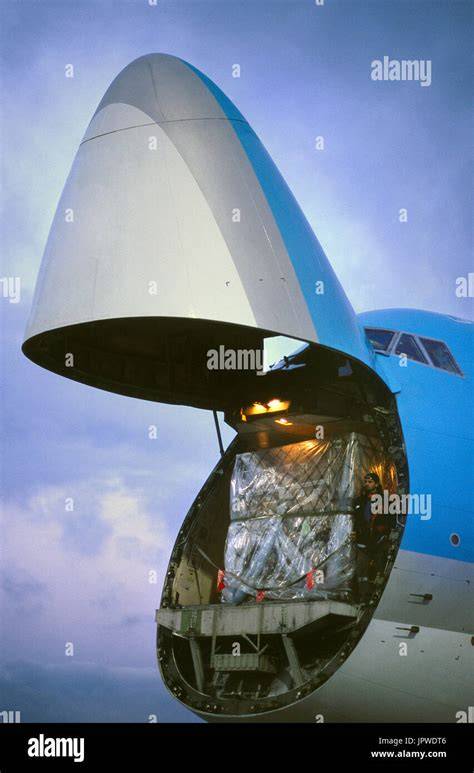
The core problem with an all-side-door fleet is the 90-degree turn required to reach the main deck. Cargo like an oil drill or a helicopter that slides straight into a 747 will jam against the opposite wall of an A350F or 777-8F before it can complete the turn. Airbus engineered the largest main-deck cargo door in commercial history for the A350F, roughly 15% wider than previous-generation jets, to accommodate the kind of massive items that once required nose loading. The 777-8F counters with a wider interior cross-section that comfortably fits industry-standard ten-foot-tall containers, making it the cube-out king for high-volume parcels. Yet even with an ultra-wide side door, single-piece items over 50 feet long simply cannot make the turn. Atlas has already accepted the final production 747-8Fs, which arrived in early 2023, and those young airframes will absorb every hyper-long, unpivotable load, preserving a front-loading monopoly that could stretch into the 2050s.
What Early Delivery Slots Actually Buy
Production slots for widebody freighters are severely limited, and global e-commerce traffic is growing at a rate that traditional fleets cannot match. The October addition of 20 purchase rights, stacked on 20 firm orders and 20 options, gives Atlas a decisive advantage over operators still queuing for capacity. The airline simply does not have to wait at the back of a decade-long line. By exercising its options, it can scale its Airbus fleet to a maximum of 60 aircraft and answer immediate client demand. With ICAO rules halting production of current-generation 777 and 767 freighters for most markets within the next one to two years, a severe capacity shortage is already forming, and rivals like Cargolux, FedEx, and Qatar Airways Cargo are competing hard for every available frame.
By locking up 40 options, Atlas effectively hoarded valuable positions on the Airbus line. Even if it never takes all of them, it has blocked direct competitors from securing early delivery dates during the 2028 to 2032 window, when the 777-8F’s absence leaves buyers bottlenecked. The strategic dividend runs deeper still. Holding a massive Airbus backlog gives Atlas permanent leverage at the negotiating table; if Boeing wants its business in the 2030s, it will have to offer deep discounts and favorable contract terms to win the carrier back.
What Still Has To Go Right
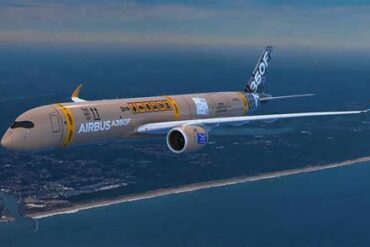
The A350F began its flight test program on September 29, when prototype airframe MSN700 departed Toulouse for a targeted 400-hour certification campaign. That milestone followed multiple schedule adjustments since 2021, with the initial entry-into-service goal sliding into the second half of next year. By committing to the platform, Atlas exchanged the development volatility of an unflown 777-8F for a timeline supported by an active prototype and measured flight hours. It is a gamble on evidence rather than promises.
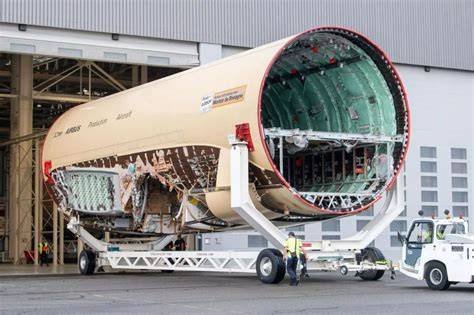
As the global fleet of 747Fs slowly contracts over the coming 30 years, heavy logistics will be forced to adapt to the new side-door reality. The most demanding industrial clients in oil, gas, and aerospace will rebuild supply chains around modular components assembled on site rather than shipping intact single-piece structures. Atlas has positioned itself to serve both eras at once: a wide-door Airbus fleet for standard pallet volume, 777 bridge aircraft for e-commerce density, and a young 747-8F subfleet holding the line on the outsized loads that made the jumbo an industry legend. The strategy is expensive, logistically complex, and long overdue. It is also the clearest statement yet that in a duopoly, loyalty is a luxury only airlines with spare time can afford.