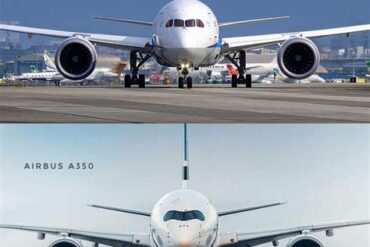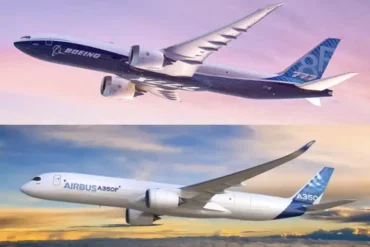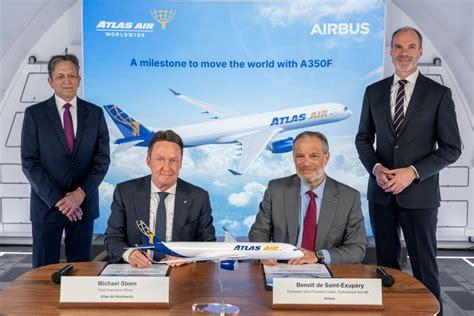
For decades, Atlas Air built one of the most Boeing-heavy fleets in commercial aviation. Its cargo network grew around the Boeing 747 freighter, later supported by the 777 and 767, creating a highly standardized operation capable of moving enormous volumes of freight across continents. That strategy made practical sense for a company whose business depends on aircraft utilization, maintenance efficiency, crew flexibility, and dependable access to spare parts. Yet Atlas Air is now making a remarkable change. The world’s largest widebody cargo operator has ordered 20 Airbus A350F freighters, with options for another 20, breaking an all-Boeing fleet strategy that had defined its operations for decades.
The decision is particularly significant because Atlas is not simply adding a different aircraft type for a specialized role. The Airbus order represents a major step in the company’s long-term fleet replacement strategy. Its aging 747 freighters cannot remain the backbone of the network indefinitely, while Boeing’s 777-8F has experienced development and schedule delays. For a cargo operator managing more than 110 aircraft and a substantial share of the global widebody freighter market, waiting indefinitely for a future Boeing aircraft creates a serious planning problem. Airbus, meanwhile, has offered Atlas a clearly defined path toward the next generation of cargo aircraft.
Atlas Air’s Boeing Fleet Has Reached a Turning Point
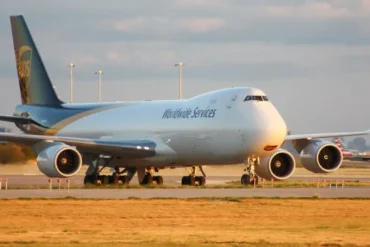
Atlas Air’s relationship with Boeing was built around the unique capabilities of large commercial freighters. The 747 freighter became especially important because its size, payload capability, long range, and nose cargo door made it exceptionally useful for heavy and oversized shipments. The aircraft helped Atlas develop a global network serving logistics companies, freight forwarders, manufacturers, governments, and other customers that require reliable high-capacity air transportation.
But the strengths that made the 747 so valuable have become increasingly difficult to reconcile with modern operating economics. Many of Atlas Air’s 747-400 freighters are now approaching the later stages of their service lives. Older aircraft require increasingly expensive maintenance and consume substantially more fuel than newer-generation designs. Every additional year of operation can therefore increase the financial pressure associated with keeping these aircraft productive.
The problem is not simply age. The regulatory environment surrounding aviation emissions is also changing. International standards are putting greater pressure on operators to reduce fuel consumption and emissions, making older widebody freighters increasingly difficult to justify on purely economic grounds. An aircraft that was once unmatched in cargo capability can still be useful, but its high fuel burn becomes a disadvantage when fuel prices fluctuate and customers demand competitive transportation costs.
Boeing’s decision to end 747 production means Atlas cannot simply replace retiring aircraft with new examples of the same type. The manufacturer has effectively moved the industry into a post-747 era, leaving operators dependent on newer platforms for long-term fleet renewal. For Atlas, that makes the timing of Boeing’s next-generation freighter programs especially important.
Boeing’s 777-8F Delay Created a Fleet Planning Gap
The Boeing 777-8F was expected to provide a modern successor for operators seeking long-range, high-capacity freighter performance. For an airline already deeply integrated with Boeing aircraft, it would have been the natural choice. Atlas could have preserved its existing training systems, maintenance infrastructure, technical expertise, and operational commonality while replacing older 747s with a newer generation of freighters.
The difficulty is timing. The 777-8F is now expected around 2028, later than originally anticipated. For a passenger airline, a delayed aircraft program can be frustrating. For a cargo company with aircraft approaching retirement, it can affect an entire fleet plan. Freighters are not interchangeable pieces of equipment that can simply be replaced whenever a new model becomes available. Atlas has to coordinate aircraft retirements, capacity requirements, maintenance planning, customer contracts, network schedules, and future demand years in advance.
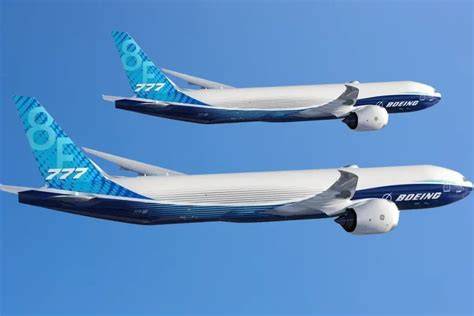
That creates a difficult gap between the aircraft Atlas needs to retire and the aircraft Boeing can deliver. Continuing to operate older 747s for longer could preserve capacity, but it would also extend exposure to higher fuel consumption and maintenance costs. Buying additional used aircraft could provide a temporary solution, but it would not deliver the efficiency gains of a modern freighter. Waiting for the 777-8F would leave Atlas more dependent on an uncertain production timeline.
The A350F gives Atlas another route forward. Its deliveries are scheduled from 2029 through 2034, creating a structured replacement window that extends deep into the next decade. The Airbus aircraft therefore does not necessarily represent a rejection of Boeing’s freighter technology. Instead, it gives Atlas a second source of future capacity at a time when fleet timing has become more important than maintaining complete manufacturer uniformity.
Why the Airbus A350F Fits Atlas Air’s Future
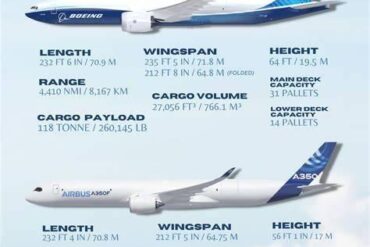
The A350F has been designed specifically for the changing economics of long-haul air cargo. Based on the A350 platform, it combines a modern composite-intensive structure with newer engines, updated systems, and a large cargo volume. Airbus expects the freighter to carry roughly 111 tonnes of payload and fly up to approximately 4,700 nautical miles, depending on configuration and operating conditions.
Those numbers are important because cargo airlines do not evaluate aircraft only by purchase price or maximum payload. They must consider how much cargo can be moved while consuming fuel, how efficiently the aircraft can be maintained, and how effectively it can fit into a global logistics network. Fuel can represent one of the largest costs in cargo operations, so reducing fuel burn can have a substantial impact across thousands of flight hours.
The A350F’s extensive use of advanced materials is central to this proposition. Around 70% of the aircraft’s airframe is expected to consist of advanced materials, including composites and titanium. Lower structural weight can translate into improved fuel efficiency while retaining the strength required for intensive freighter operations.
Airbus has also positioned the aircraft as a major improvement over older freighters in fuel consumption and emissions. The manufacturer has cited reductions of up to 40% in fuel burn and CO₂ emissions compared with older-generation freighters, depending on the reference aircraft and operating mission. For Atlas, whose fleet includes aircraft derived from an earlier era of aviation, that efficiency gap can become economically meaningful.
The A350F Is More Than a 747 Replacement
It would be easy to describe Atlas Air’s Airbus order simply as a replacement program for its 747 fleet, but the strategic implications are broader. A modern freighter has to support changing cargo patterns, not merely replicate the capabilities of an aircraft introduced decades earlier.
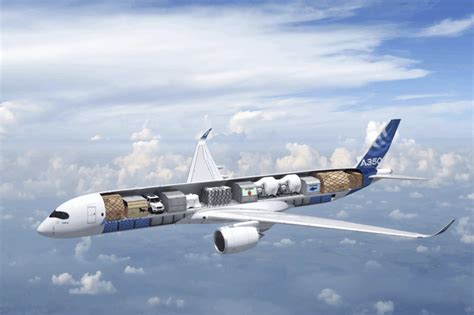
The A350F is designed around the standardized cargo equipment used throughout the international air freight industry. Its main deck can accommodate approximately 30 large containers, while the lower deck can handle up to 40 LD3 containers. The aircraft also features a large main-deck cargo door with a clear opening of roughly 169.5 inches, providing the access necessary for a broad range of freight.
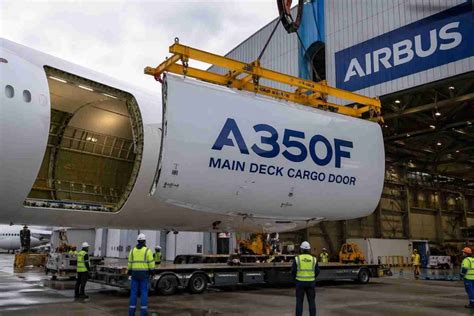
That flexibility matters to Atlas because its customers do not all ship the same kind of cargo. Global logistics networks must handle everything from e-commerce packages and industrial components to high-value equipment and unusually large shipments. The ability to combine high payload with long-range performance gives the A350F a role across multiple segments of the freight market.
The aircraft is also approximately 232 feet long, with a wingspan of about 212 feet. Its size places it firmly within the large widebody freighter category, but its modern aerodynamic design and lightweight structure allow it to deliver capabilities that would be difficult to achieve economically with older aircraft.
Breaking Up an All-Boeing Fleet Reduces Risk
Atlas Air’s all-Boeing strategy once provided obvious advantages. Pilots and maintenance personnel could work within a common manufacturer ecosystem, while spare parts, training, technical procedures, and fleet planning could be streamlined. Operating 747, 767, and 777 freighters from the same manufacturer created an integrated structure that reduced some of the complexity associated with multiple aircraft families.
However, fleet commonality also creates concentration risk. If an airline relies almost entirely on one manufacturer, delays in a major aircraft program can affect a large portion of its long-term strategy. Atlas’ current situation demonstrates that problem clearly. Its aging 747s need eventual replacement, while the Boeing aircraft intended to occupy an important next-generation role has encountered delays.
Adding Airbus aircraft changes that equation.
The A350F will require Atlas to develop new pilot training, maintenance capabilities, spare-parts systems, and operational expertise. Those costs are real, and a mixed fleet is inherently more complicated than an all-Boeing operation. But diversification can provide something that fleet commonality cannot: greater procurement flexibility.
Atlas can now evaluate future aircraft according to capacity, economics, delivery schedules, technology, and regulatory requirements rather than being tied almost entirely to a single manufacturer’s product pipeline. That gives the company more options when future fleet decisions arrive.
Atlas Air Is Planning Beyond 2030
Atlas has committed to 20 A350Fs, with options for another 20 aircraft. Deliveries are scheduled between 2029 and 2034, giving the company a long runway for fleet modernization rather than forcing an abrupt transition.
The order also makes Atlas the first United States operator to select the A350F and one of the most important early customers for Airbus’ new freighter. Its commitment gives the program significant credibility in the world’s largest air cargo market and places Atlas in a position to help establish the aircraft within American logistics networks.
The timing is especially relevant as global freight patterns continue to evolve. E-commerce, international manufacturing, express logistics, and complex supply chains have all increased the importance of reliable air cargo capacity. Atlas does not operate like a conventional passenger airline that sells seats directly to travelers. Its aircraft support a much larger logistics ecosystem, meaning fleet availability can have consequences for freight forwarders, retailers, manufacturers, and other transportation partners.
The 20 firm aircraft therefore represent more than a simple purchase. They create a future capacity plan that can be expanded if market conditions justify exercising the additional options.
Boeing Still Matters to Atlas Air
Despite the headline-grabbing shift to Airbus, Atlas Air has not suddenly abandoned Boeing. The company will remain heavily invested in Boeing aircraft for years. Its existing fleet includes a large number of 747, 777, and 767 freighters, and the infrastructure supporting those aircraft will continue to form an important part of its operation.
The Airbus order is better understood as a diversification strategy than a clean break. Atlas needs aircraft now and in the coming decade, while Boeing’s next-generation freighter program has not aligned perfectly with that requirement. Airbus has provided an alternative that allows Atlas to begin planning around a modern freighter while continuing to operate its established Boeing fleet.
That distinction is important because aircraft procurement is ultimately a long-term capital decision. An operator of Atlas’ scale cannot make fleet choices based purely on manufacturer loyalty. Aircraft must arrive when needed, perform economically, comply with future regulations, and generate sufficient value across their operational lives.
A Major Signal For The Global Freighter Market
Atlas Air’s A350F order could influence the wider cargo market because it demonstrates how quickly fleet priorities are changing. The industry once depended heavily on aircraft such as the 747 because their payload and range capabilities were difficult to replace. Today, newer twin-engine freighters can deliver much of that capability with significantly improved fuel efficiency.
For cargo operators facing aging fleets, rising fuel costs, emissions requirements, and uncertain aircraft delivery schedules, those economics are difficult to ignore. Atlas has effectively chosen to sacrifice some of the simplicity of an all-Boeing fleet in exchange for greater access to modern capacity and a broader procurement strategy.
The result is a significant moment in the evolution of air freight. Atlas Air’s decision to order 20 Airbus A350Fs shows that timing, efficiency, and long-term fleet resilience can outweigh decades of manufacturer loyalty. Boeing remains deeply embedded in Atlas’ operation, but Airbus has secured a foothold in one of the world’s largest cargo fleets. As the 747 era gradually fades and next-generation freighters take over, that decision could prove to be one of the clearest signs yet that the future of global air cargo will belong to aircraft that can combine payload, range, efficiency, and regulatory readiness in a single platform.