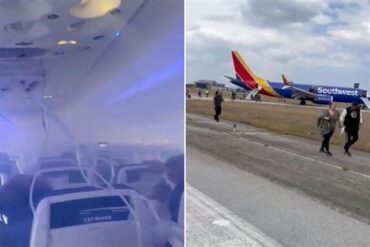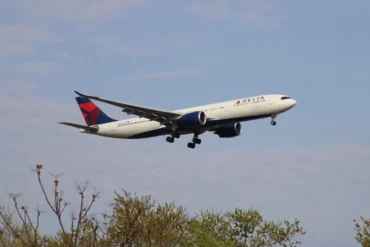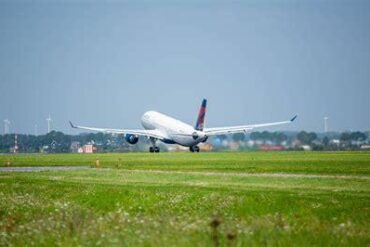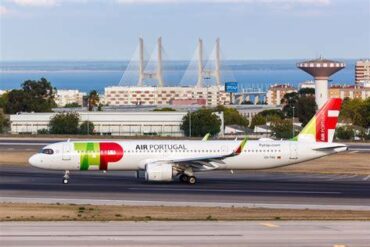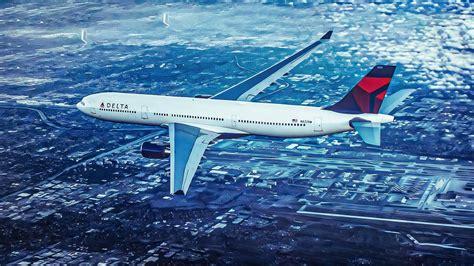
A Delta Air Lines Airbus A330-300 carrying 283 passengers and 13 crew members was forced to make an emergency landing in Portugal after smoke filled the cabin during a transatlantic flight from Barcelona to Boston. Delta Flight 251 was operating from Josep Tarradellas Barcelona–El Prat Airport to Boston Logan International Airport on Sunday when the crew declared an emergency over the Atlantic and diverted to Porto.
The aircraft, an Airbus A330-300 registered N824NW, was directed toward Francisco Sá Carneiro Airport in Porto after the pilots reported the cabin smoke. The aircraft had been flying away from northeastern Spain when the situation developed, turning what had been a routine crossing of the Atlantic into a precautionary diversion. Smoke or fumes in an aircraft cabin are treated seriously because the crew cannot immediately determine whether the source represents a mechanical problem, contaminated air, or a potentially hazardous substance.
Flight tracking data indicates that Delta 251 departed Barcelona at approximately 3:15 p.m. local time and reached Porto at around 5:45 p.m., giving the flight roughly two and a half hours of elapsed time before landing in Portugal. Air traffic control recordings shared on social media indicated that multiple people were affected during the diversion, with two flight attendants reportedly using supplemental oxygen while the aircraft continued toward Porto.
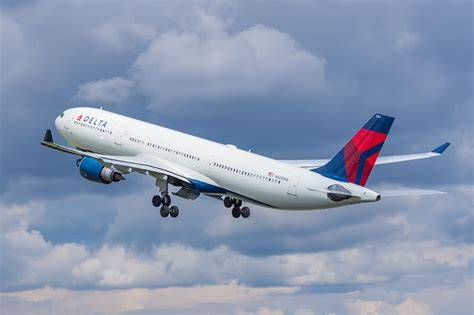
Delta A330 Lands Safely After Cabin Smoke Emergency
Portugal’s Emergency and Civil Protection Authority said that eight passengers were treated and released after the aircraft landed. Three additional passengers were transported to a local hospital for further medical attention, bringing the total number of affected passengers to 11. The incident resulted in three hospitalizations, although the available information did not indicate that the aircraft itself sustained significant damage.
Delta described the event as a mechanical issue and confirmed that the aircraft landed safely. The airline apologized to passengers for the disruption and said it was working to transport them to Boston as safely and quickly as possible. Delta did not initially provide a detailed explanation of what mechanical component caused the smoke or fumes, leaving the precise source subject to further investigation.
The aircraft involved, N824NW, was built in 2015 and is powered by two General Electric CF6-80 engines. The CF6 family has a long history in commercial aviation and has powered several widebody aircraft, including variants of the Airbus A300, A310 and A330, as well as Boeing 747 and 767 models and the McDonnell Douglas DC-10 and MD-11.
How Smoke Can Enter an Aircraft Cabin
Modern commercial aircraft rely on sophisticated environmental control systems to regulate cabin temperature, ventilation and pressure. One important component is the bleed air system, which uses compressed air associated with the engines for several aircraft functions.
Under certain mechanical conditions, oil or other contaminants can enter areas of the engine where they should not be present. A damaged or deteriorated carbon seal, for example, can potentially allow engine oil to reach the compressor section. If contaminated air subsequently enters the aircraft’s air-conditioning system, passengers and crew may notice unusual odors, haze, smoke or fumes inside the cabin.
The difficulty for flight crews is that the source and nature of cabin fumes may not be immediately identifiable. A visible haze, strong odor or reports of symptoms such as headaches, nausea or irritation can therefore prompt pilots to treat the situation conservatively. Declaring an emergency and diverting to a suitable airport provides access to emergency services while reducing the time passengers and crew remain exposed to an unknown condition.
Delta Incident Adds To Recent Fume Concerns
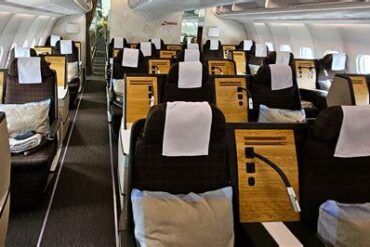
The Porto diversion comes amid several other recent reports involving smoke or unusual fumes on widebody aircraft. A Delta Airbus A330neo operating from Boston to London Heathrow was recently forced to return after passengers and crew reported a mysterious odor. Earlier, a Swiss International Air Lines A330-300 flying from Zurich to New York diverted to Bangor, Maine, after smoke was reported in the business-class cabin.
Cabin fume events have also attracted attention from flight attendants and aviation researchers because of the potential health effects associated with exposure to contaminated air. In 2015, an FAA report found that reported aircraft fume events occurred at a rate of fewer than 33 per million departures, illustrating that such incidents remain relatively uncommon compared with the enormous number of commercial flights operated worldwide.
For Delta Flight 251, the immediate priority was getting the aircraft safely onto the ground and providing medical assistance to affected passengers. The emergency landing at Porto accomplished that objective, while the subsequent technical inspection should help establish exactly what produced the smoke and whether any aircraft system requires further maintenance before the A330 returns to service.