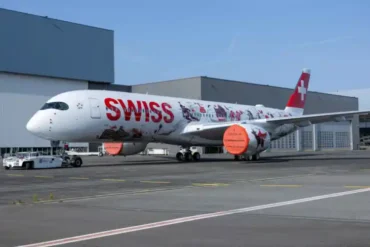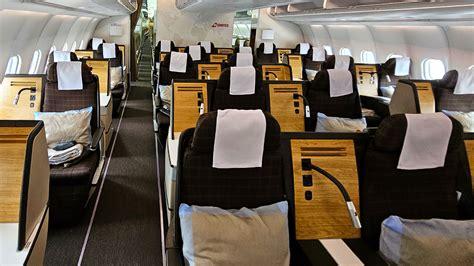
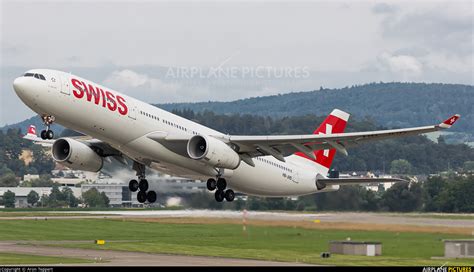
A SWISS Airbus A330-300 operating flight LX16 from Zurich to New York JFK was forced to make an emergency diversion to Bangor International Airport in Maine after smoke was reported inside the business class cabin during the transatlantic journey. The incident occurred as the aircraft was approaching the eastern coast of North America, prompting the crew to declare an emergency and select Bangor as the nearest suitable airport.
The flight had been operating normally for most of its scheduled route from Switzerland to the United States. The aircraft departed Zurich Airport (ZRH) on Monday, July 27, slightly behind schedule, before climbing to its cruising altitude between 36,000 and 38,000 feet. After crossing Europe and entering the North Atlantic airspace, the aircraft continued westbound toward New York before the situation changed near Nova Scotia.
Approximately five hours into the planned eight-hour flight, the crew began descending over the Canadian province of Nova Scotia. The aircraft subsequently transmitted the international emergency code Squawk 7700, signaling a general emergency to air traffic controllers. Shortly afterward, the pilots requested clearance to divert to the closest airport capable of handling the situation, turning south toward Bangor, Maine.
Smoke Reported Inside SWISS Business Class Cabin During Transatlantic Flight
According to reports, smoke had spread through the business class cabin of the Airbus A330, creating a potentially serious situation onboard. Initial reports suggested a possible cockpit fire, although SWISS has not confirmed the exact source of the smoke. The airline and aviation authorities are continuing investigations to determine what caused the incident.
The flight crew responded quickly by following established emergency procedures. Modern commercial aircraft are equipped with extensive warning systems and operational protocols designed to help pilots manage unexpected events, including smoke detection, cabin issues, and possible fire-related emergencies.
After receiving the emergency request, ground emergency teams at Bangor International Airport (BGR) were placed on standby. The airport is frequently used for transatlantic diversions because of its long runway, relatively low traffic levels, and availability of US Customs and Border Protection facilities, making it a practical alternative for aircraft crossing the Atlantic.
The Airbus A330 landed safely at Bangor approximately six hours after departing Zurich. Emergency responders surrounded the aircraft after arrival, and runway operations were temporarily restricted while crews inspected the airplane. Fire department personnel examined the aircraft and reported no signs of active fire or heat damage.
All 208 Passengers and Crew Members Safe After Emergency Landing
The aircraft was carrying 208 passengers and crew members, and all occupants were able to leave the aircraft safely. No injuries were reported following the diversion, highlighting the effectiveness of the crew’s response and the emergency preparation of both the airline and airport teams.
SWISS acknowledged that an unexpected diversion can be stressful for passengers, particularly during a long international flight. The airline stated that teams in Switzerland and the United States were working with Bangor International Airport to arrange onward transportation for affected travelers.
Passengers originally scheduled to arrive in New York experienced significant delays as SWISS arranged a replacement aircraft. The flight eventually reached its destination more than five hours later than planned.
The Federal Aviation Administration (FAA) and SWISS have both begun reviewing the circumstances surrounding the event. Investigators will examine aircraft systems, maintenance records, operational data, and passenger reports to identify the source of the smoke.
Aircraft Involved: SWISS Airbus A330-300 HB-JHK
The aircraft involved in the diversion was HB-JHK, an Airbus A330-343X operated by SWISS. The widebody aircraft is approximately 14 years old and carries the name Herisau, after the municipality that serves as the capital of Switzerland’s Appenzell Ausserrhoden canton.
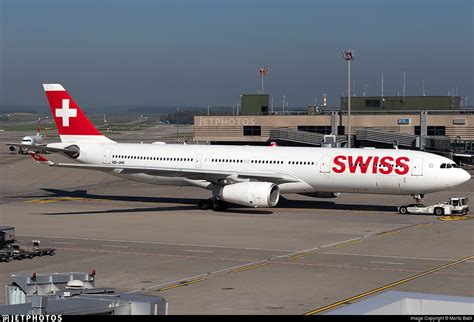
HB-JHK completed its first test flight in December 2011 under Airbus test registration F-WWYI before being delivered to SWISS on January 11, 2012. The aircraft is configured with seating for 236 passengers and is powered by two Rolls-Royce Trent 772B-60 engines.
The A330-300 remains a major part of many international airline fleets because of its combination of range, passenger capacity, and operational reliability. SWISS uses the type extensively for long-haul routes connecting Switzerland with destinations across North America, Asia, and other regions.
Bangor’s Role as a Key Airport for Atlantic Flight Diversions
The diversion once again demonstrated the importance of strategically located airports along major international flight paths. Bangor International Airport has historically served as a valuable emergency alternative for aircraft crossing the Atlantic because it can accommodate large commercial jets while providing essential passenger processing facilities.
For airlines operating long-distance routes between Europe and North America, unexpected events such as medical emergencies, technical concerns, or smoke warnings require rapid decision-making. Flight crews must balance passenger safety, aircraft capability, weather conditions, and airport availability when selecting a diversion location.
In the case of SWISS flight LX16, the crew’s decision to divert to Bangor allowed the aircraft to land safely while emergency teams were ready to respond. The aircraft remains under inspection as investigators work to understand the cause of the smoke event and determine whether any maintenance actions are required before it returns to service.