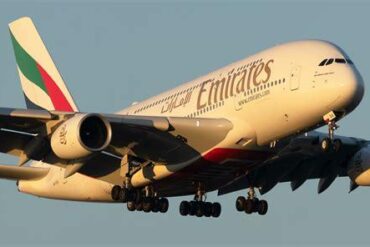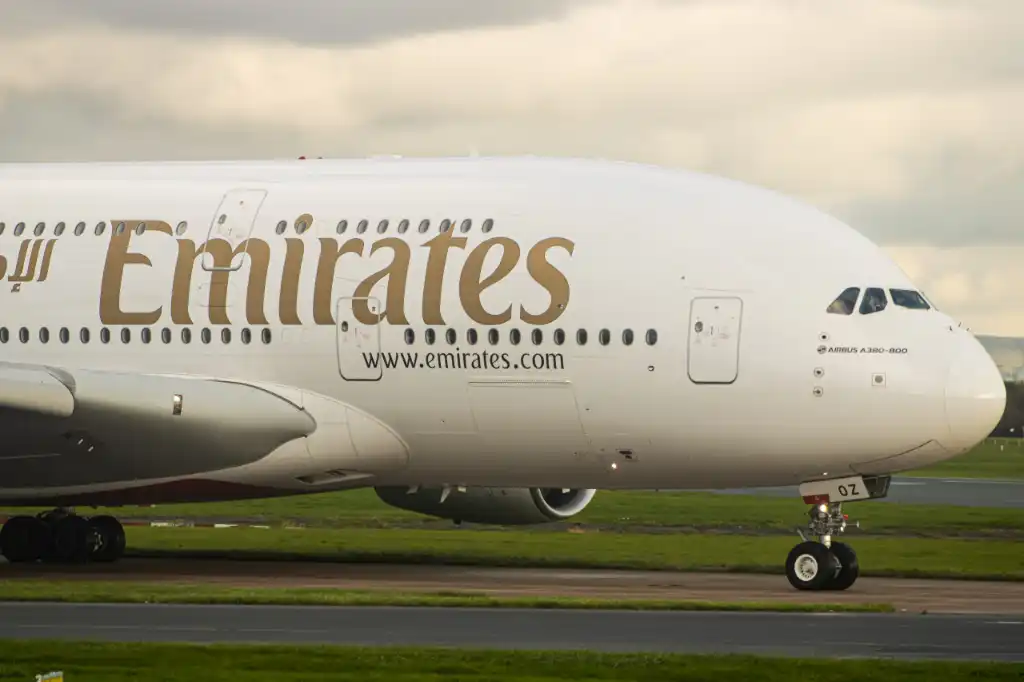
The Emirates Airbus A380 diversion to Ghana unfolded as a high-stakes exercise in aviation decision-making, unfolding far from the airline’s usual mega-hub choreography. On Friday, January 9, Emirates flight EK261, operating from Dubai to São Paulo, was cruising smoothly over Africa when cockpit alerts indicated intermittent smoke detection in the aircraft’s forward cargo compartment. For a jet carrying hundreds of passengers across oceans, smoke warnings are never trivia. They are treated as time-sensitive signals demanding calm precision, conservative judgment, and immediate options.
The aircraft involved, Airbus A380-861 registration A6-EUG, had departed Dubai International Airport at 9:51 a.m., slightly behind schedule. By the time the warning appeared, the double-decker had already crossed much of the African continent and was approaching a critical phase of the route. Continuing westward toward the South Atlantic would have dramatically reduced diversion options capable of handling the world’s largest passenger aircraft. The captain’s calculus was blunt and professional: land early, land safely, and land somewhere structurally prepared.
That decision pointed the aircraft toward Kotoka International Airport in Accra, an airport rarely visited by the A380 and one that instantly became the safest practical alternative. The jet touched down at approximately 4:30 p.m. local time, completing a landing that marked only the third A380 arrival in Ghana’s aviation history. For passengers, the descent into Accra was unexpected. For aviation observers, it was quietly historic.
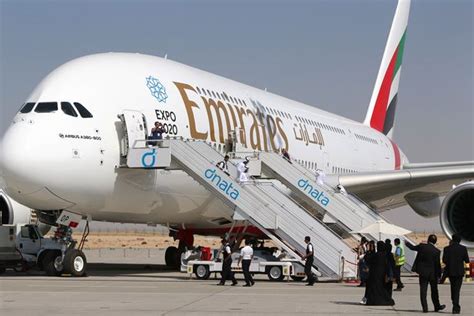
Once on the ground, the incident transitioned from airborne risk management to technical scrutiny. Emirates maintenance teams conducted a detailed inspection of the forward cargo systems. The findings brought relief rather than escalation: the smoke indication was traced to a system malfunction, not an active fire or thermal event. This distinction matters. Modern widebody aircraft rely on layered sensor networks designed to err on the side of caution, sometimes flagging anomalies that ultimately prove benign. The system worked exactly as intended, prompting decisive action without compromising safety.
Cleared for continued operation, the aircraft departed Accra at 7:31 p.m., resuming its transatlantic journey. EK261 arrived at São Paulo/Guarulhos International Airport at 11:24 p.m., roughly six hours behind schedule. While delays rippled through passenger connections and the return sector experienced knock-on disruptions, the operational narrative remained clear: safety took priority, and the flight concluded without injury or damage.
The diversion underscores the unique operational realities of the Airbus A380, an aircraft whose sheer scale shapes every contingency plan. Finding a suitable diversion airport is not a trivial exercise. Runway length, pavement strength, gate compatibility, emergency response readiness, and maintenance access all factor into the decision. Accra met those criteria, validating investments made years earlier to modernize Kotoka International Airport and quietly positioning it among a select group of A380-capable facilities.
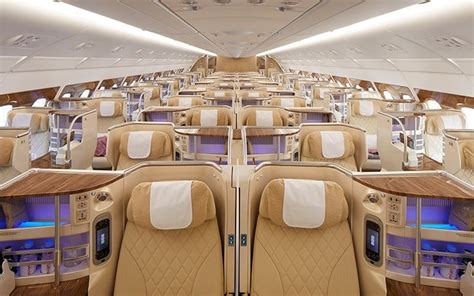
Aircraft specifics further highlight the magnitude of the operation. The jet, powered by four GP7270 engines, features a high-density yet premium-heavy configuration: 14 First Class suites, 76 Business Class seats, 56 Premium Economy seats, and 341 Economy seats. Delivered to Emirates in October 2016, A6-EUG represents the mature phase of the A380 program, incorporating reliability improvements born from years of global service.
For Accra, the arrival carried symbolic weight. The airport first welcomed an Emirates A380 in 2018 during a one-off demonstration flight celebrating terminal upgrades. A second appearance came in 2022 when British Airways made a technical fuel stop en route between Johannesburg and London. Each event attracted aviation enthusiasts, cameras, and local pride. This latest arrival, though unscheduled, reaffirmed Accra’s capability under real-world operational pressure rather than ceremonial showcase.
From an airline perspective, the diversion reflects Emirates’ safety-first operating philosophy, especially on ultra-long-haul routes. Smoke indications, even intermittent ones, are treated as potential precursors rather than inconveniences. The decision to divert before crossing the Atlantic eliminated exposure to limited diversion options and reinforced a principle deeply embedded in commercial aviation: the earliest safe landing is often the best landing.
For passengers, the experience was inconvenient but instructive. Delays are visible; risk mitigation is not. Yet the quiet professionalism behind such decisions is what sustains aviation’s safety record. The Emirates Airbus A380 diversion to Ghana was not a failure of systems but a demonstration of them working together—technology, training, infrastructure, and judgment aligning to turn uncertainty into a controlled outcome.
In the end, the massive double-decker lifted off from Accra as smoothly as it had arrived, leaving behind a rare footprint in Ghanaian aviation history and a reminder that even in an age of routine global connectivity, the unexpected still demands respect, preparation, and humility at 35,000 feet.