World War II warships did not rely on one universal fuel. By the 1940s, the dominant answer for major surface combatants was fuel oil, while diesel powered many submarines and smaller vessels, gasoline drove fast patrol craft, and coal survived mainly in older or specialized ships.
The transition away from coal had already transformed naval warfare before World War II. Oil-fired boilers required less labor than coal furnaces, could be refueled more efficiently, and gave designers greater freedom to build faster ships with longer ranges. By the outbreak of war, most modern fleets had largely embraced petroleum-based propulsion.
This petroleum system shaped naval strategy, because fleets needed oil supplies, tankers, storage facilities, and forward bases to keep warships operating overseas.
Fuel Oil Powered Most WWII Warships
Heavy fuel oil was the principal fuel for many battleships, cruisers, destroyers, carriers, frigates, and corvettes. Refined from crude oil, it was burned inside boilers to create steam, which then drove turbines connected to the ship’s propeller shafts. The system was mature, powerful, and well suited to vessels that needed to maintain high speeds over long distances.
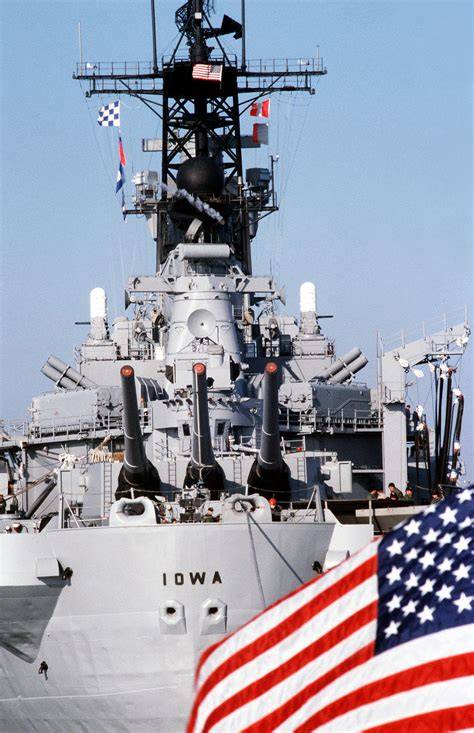
The USS Iowa-class battleships could carry roughly 2.5 million gallons of fuel oil, giving these fast battleships the endurance needed for Pacific operations. An Essex-class aircraft carrier carried about 1.5 million gallons of fuel oil, alongside approximately 240,000 gallons of aviation gasoline for its aircraft. These figures show why fuel logistics were as important as guns, armor, and aircraft.
The U.S. Navy commonly used Naval Special Fuel Oil (NSFO) during World War II. It remained a major naval fuel standard for decades, illustrating how deeply oil-fired steam propulsion was embedded in American fleet operations. Fuel oil also offered a major practical advantage over coal because fewer sailors were needed to handle it, reducing labor demands during prolonged operations.
Diesel Fuel Powered Submarines
Submarines followed a different propulsion pattern. German U-boats and Allied submarines generally used diesel engines while operating on the surface. Those engines provided mechanical propulsion and could also generate electricity to recharge the submarine’s batteries. When submerged, however, conventional diesel engines could not operate because they required atmospheric oxygen.
Instead, submarines switched to electric motors powered by batteries. This arrangement allowed them to travel underwater without continuously exposing themselves through exhaust or requiring air for combustion. The tradeoff was limited submerged endurance, which made efficient battery management essential to submarine tactics.
Gasoline And Coal Had Specialized Roles
Small, fast craft had different requirements. American PT boats commonly used high-octane aviation gasoline, including 100-octane fuel, because their powerful gasoline engines demanded a fuel capable of supporting high performance. Gasoline helped these boats achieve the speed needed for torpedo attacks, patrol missions, and rapid maneuvering.
Coal had largely disappeared from modern frontline fleets, but it had not vanished completely. Older vessels and unusual training ships could still burn coal, including two converted U.S. Navy paddle-wheel steamers used during World War II. The USS Texas, the last U.S. Navy battleship to use coal, had already been converted to oil-fired boilers in 1925.
Ultimately, WWII naval propulsion reflected a broader technological transition. Fuel oil dominated major surface warships, diesel-electric systems powered submarines, gasoline served specialized fast craft, and coal survived as a legacy technology. Behind every fleet movement was an immense logistical network devoted to producing, transporting, storing, and delivering the fuel that made global naval warfare possible.