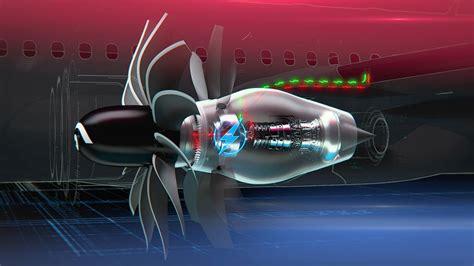
The evolution of the diesel jet engine is a fascinating journey that intertwines the quest for efficiency, safety, and technological innovation in aviation history. As we trace the timeline from the early 20th century to the cutting-edge advancements of today, it becomes clear that diesel technology has played a significant, though often overlooked, role in shaping aerial propulsion systems.
Origins and Early Developments of Diesel-Powered Aircraft Engines
In the late 1920s and 1930s, engineers sought alternatives to gasoline engines, motivated by the need for better fuel efficiency, reduced fire hazards, and improved operational safety. The introduction of the Packard DR-980 radial diesel engine marked a pivotal moment, powering the first successful diesel-powered flight in a Stinson SM-1DX on September 18, 1928. The key benefits — lower flammability, higher fuel density, and the elimination of toxic lead additives — positioned diesel engines as a promising technology for aviation.
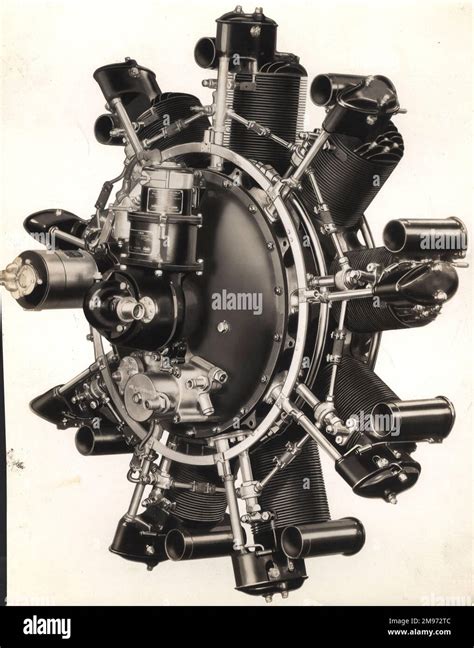
During this period, numerous experimental designs emerged. Notable among them were the Beardmore Tornado engines that powered the British R101 airship, providing not just thrust but also the unique capability of reversible operation for enhanced maneuverability. The German manufacturer Junkers also developed the innovative two-stroke, opposed-piston Jumo 205 and 207 engines, which achieved moderate success in specialized platforms like the BV 138 flying boat. Despite their ingenuity, these engines were not robust enough for the rigors of World War II combat aviation.
Other key examples include the Napier Culverin, a licensed build of the Jumo 204, and the use of Daimler-Benz diesels in Zeppelins. In the Soviet Union, the Charomskiy ACh-30 diesel engine powered the Tupolev Pe-8 and Yermolaev Yer-2 bombers, demonstrating the widespread international interest in diesel technology during the interwar and early wartime periods.
The Post-War Decline and Challenges Facing Diesel Aviation Engines
Despite early promise, the post-WWII era saw the dominance of turboprops and jet engines, leading to a decline in diesel aircraft engine development. The fundamental issue was the diesel engine’s inherently lower power-to-weight ratio, which became a critical disadvantage as aviation demanded faster, lighter, and higher-performing aircraft.
The British attempt to bridge this gap with the Napier Nomad, an innovative hybrid between a diesel piston engine and a turboprop, showcased incredible efficiency. However, its bulky size and complexity led to its cancellation by 1955. As general aviation stagnated through the 1990s, few new diesel engine designs emerged, leaving the sector largely dormant.
The Diesel Revival: New Technologies and Economic Pressures
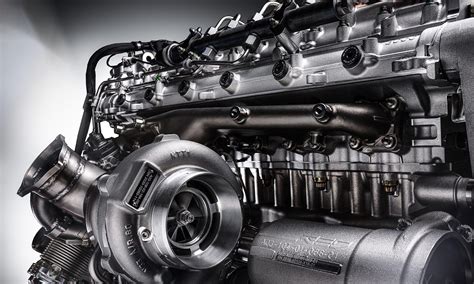
The early 2010s heralded a diesel aviation renaissance. Soaring avgas costs, concerns over fuel availability, and remarkable advances in automotive diesel technologies — particularly in common-rail direct injection, turbocharging, and FADEC (Full Authority Digital Engine Control) — reignited interest in diesel-powered flight.
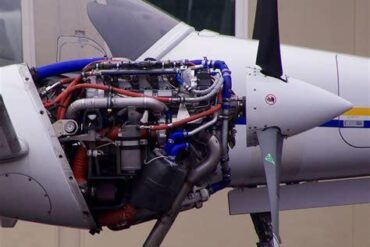
Modern diesel engines not only run on widely available jet fuel but also exhibit significantly improved power-to-weight ratios. While heavier than avgas engines, simulations and real-world operations suggest that aircraft equipped with diesel engines achieve longer ranges at medium payloads, an appealing proposition for general aviation and remote operators.
Applications of Diesel Engines in Aviation: From Airships to Modern Aircraft
Diesel engines have proven especially advantageous for airship operations. The Beardmore Tornado engines installed in the R101 airship not only powered forward thrust but also enabled quick reversals — switching directions in under 60 seconds — a crucial feature for docking and maneuvering.
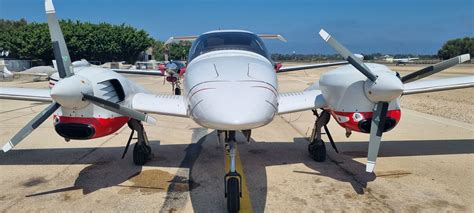
In modern fixed-wing aviation, diesel engines have found homes in general aviation aircraft where efficiency and fuel flexibility are paramount. Training schools, remote area operators, and military trainers have increasingly adopted diesel-powered aircraft, drawn by operational savings and logistical simplicity.
Leading Certified Diesel Aircraft Engines
The past two decades have witnessed the certification of several notable diesel aircraft engines by EASA and FAA, including:
- Technify Motors TAE 125 series (114–125 kW)
- DieselJet TDA CR 1.9 8V/2.0 16V (118–142 kW)
- Austro Engine E4/E4P (123–132 kW)
- SMA SR305-230/-260 (169–194 kW)
- Technify Centurion 3.0/4.0 (221–257 kW)
- RED A03 V12 (368 kW)
- DeltaHawk DH180 (180 HP, FAA certified May 2023)
Each engine family brings unique strengths, from compact designs ideal for retrofits to high-output powerplants for heavier platforms.
Major Diesel Engine Manufacturers Shaping the Market
Several pioneering manufacturers continue to refine and expand diesel aviation technology:
Technify Motors (formerly Thielert)
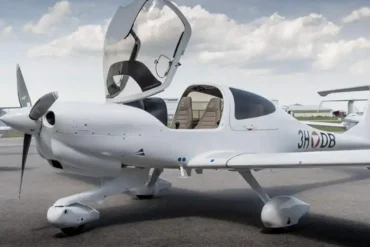
Technify produces the renowned TAE 110/125 series and Centurion V6/V8 engines. With power outputs ranging from 81 hp to 345 hp, these engines feature common-rail injection, turbochargers, and FADEC systems. They serve as original equipment in aircraft like the Diamond DA40-TDI and DA42, and also as retrofit options for Cessna and Piper aircraft.
SMA Engines
SMA’s SR305-230/-260 four-cylinder engines offer between 169 and 260 hp, boasting FAA and EASA certification. The firm plans to launch the SR460 six-cylinder engine and has demonstrated a 1.5 hp/lb weight-to-power ratio engine, signaling ambitious advancements.
Austro Engine
As a subsidiary of Diamond Aircraft, Austro Engine manufactures the E4/E4P four-cylinder diesels (165–177 hp) and is developing a new six-cylinder 280 hp engine for the larger Diamond DA50.
DieselJet s.r.l.
DieselJet focuses on the TDA CR 1.9 and 2.0 16V engines, producing between 160 and 193 hp, with plans for a 3.0 24V 320 hp powerhouse.
RED Aircraft
Germany’s RED Aircraft offers the high-powered A03 V12 (500 hp) and is working on the A05 V6 (300 hp), leveraging common-rail and FADEC technologies to push diesel aviation capabilities to new heights.
DeltaHawk Engines
Specializing in two-stroke, V-4 turbocharged engines, DeltaHawk’s designs support dry-sump lubrication, allowing orientation-independent operation — a significant boon for aerobatic and special mission aircraft. Their DH180 received FAA certification in May 2023.
Experimental and Emerging Diesel Technologies
Research into alternative diesel architectures remains robust. Notable experimental programs include:
- Two-stroke designs: Such as the Wilksch WAM-120/160 and Diesel Air Limited’s prototypes.
- Opposed-piston concepts: Including the Powerplant Developments Gemini series and Superior Air Parts Gemini Diesel.
- Four-stroke innovations: Like the Engineered Propulsion Systems Graflight V8, featuring steel pistons designed for a 3,000-hour TBO.
- Automotive-derived powerplants: Featuring efforts such as the Raptor 105, FlyEco three-cylinder hybrid, and others adapted for aviation needs.
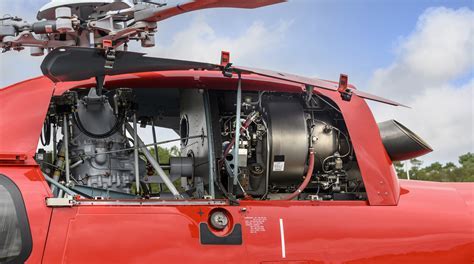
One groundbreaking demonstration came from the Teos/Austro AE440, a 330 kW V8 high-compression diesel installed in a H120 helicopter, successfully flown on November 6, 2015, achieving an impressive 200 g/kWh fuel consumption.
Conclusion: Diesel’s Enduring and Expanding Role in Aviation
Diesel engines in aviation have undergone a dramatic evolution, from their early promise in airships and pioneering aircraft to their modern resurgence as efficient, reliable, and versatile powerplants. The intersection of fuel economy, technological maturity, and environmental considerations positions diesel propulsion as a critical component of future aviation strategies, particularly for general aviation, training, special missions, and remotely operated applications.
As advancements continue and new models emerge, the diesel jet engine is poised not only to sustain its place in aviation but also to broaden its reach, offering compelling alternatives in an era increasingly defined by cost-efficiency and sustainability.