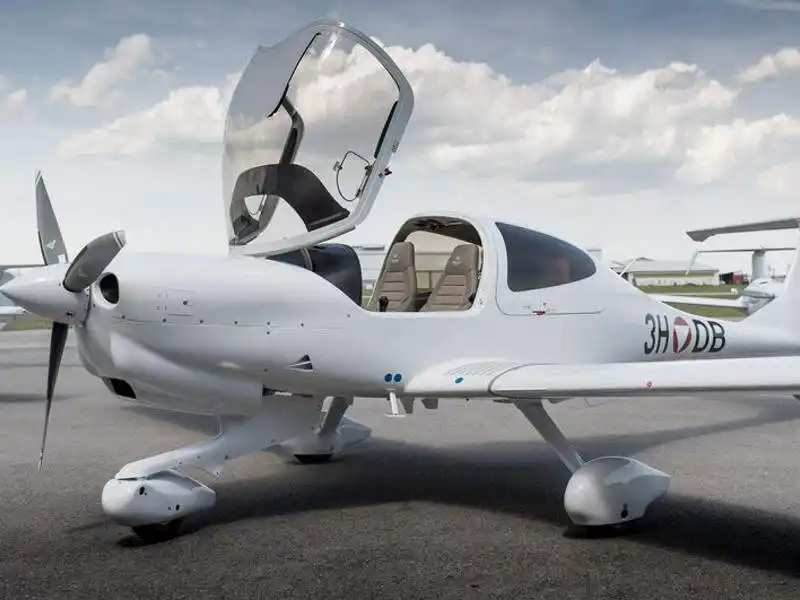
The Diamond DA40 NG represents a bold step forward in general aviation—a refined diesel-powered evolution of the DA40 lineage that redefines what a modern single-engine aircraft can be. Combining European engineering, automotive-derived reliability, and North American manufacturing prowess, the DA40 NG is positioned not merely as an alternative to gasoline models but as a compelling answer to the evolving demands of training fleets and private owners alike.
With its roots in Austria but its future firmly planted in North America, the DA40 NG is more than an updated airframe—it’s a culmination of years of engineering development. The result is an aircraft with smoother handling, impressive fuel economy, and cutting-edge avionics, wrapped in a sleek, modern package.
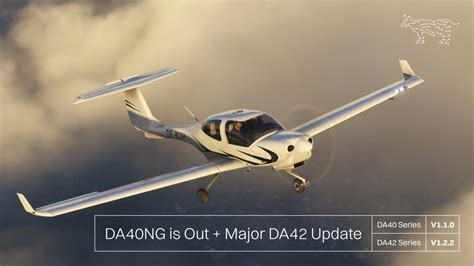
A Decade in the Making: The Rebirth of the DA40 NG
Although the DA40 NG made its first appearance in 2002, the model has undergone such a significant overhaul in recent years that it would be reductive to view it as a simple iteration of the original. What we are seeing now is essentially a DA40 NG 2.0, redesigned to meet the expectations of a broader, more performance-conscious market.
In 2020, Diamond Aircraft’s acquisition by Wanfeng Aviation Industry marked the beginning of a new era. Under its new Chinese ownership, the production of the DA40 NG shifted from Austria to London, Ontario, aligning with Diamond’s strategic emphasis on modernizing its production capabilities and capturing growth in both Western and Eastern aviation markets.
The North American factory became the launchpad for new DA40 NG production, allowing Diamond to integrate Garmin G1000 NXi avionics, updated airframes, and refined systems into the aircraft. These changes helped the DA40 NG shed much of its past baggage—including early concerns tied to the failed Thielert diesel engines—and emerge as a truly world-class single-engine piston aircraft.
The Austro Advantage: Powerplant Excellence
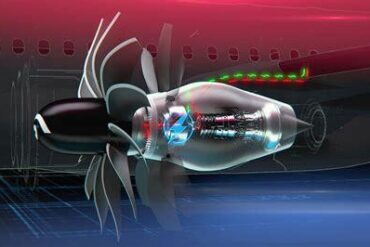
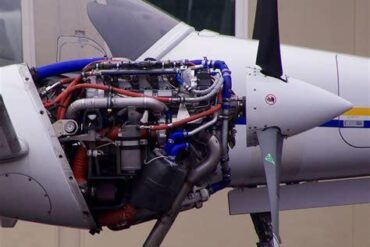
At the heart of the DA40 NG lies the Austro AE300 engine, a turbocharged, four-cylinder, 168-horsepower diesel engine derived from the Mercedes-Benz OM640. This isn’t merely a repurposed automotive powerplant—Austro has re-engineered it for aviation use, creating one of the most efficient and refined diesel engines in general aviation.
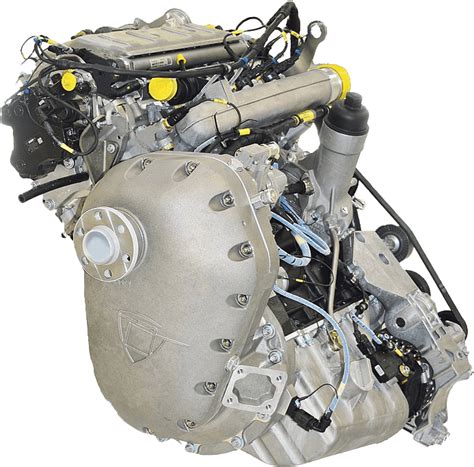
The AE300’s advantages over the conventional Lycoming IO-360 used in the DA40 XLT are striking:
- Fuel Efficiency: At 9,500 feet, it burns just 5.1 gallons per hour at economy cruise. That’s almost half the burn rate of many competing piston aircraft.
- Smooth Operation: Thanks to its advanced dual EECU (electronic engine control units), the engine starts effortlessly, idles quietly, and delivers jet-like fadec-style management.
- Reliability: With a lineage connected to mass-produced automotive engines, and an overhaulable cast-iron block, the AE300 brings industrial-level durability to personal aviation.
Even with a max endurance of over 7 hours and 41 gallons of onboard fuel, the DA40 NG maintains a useful load of 950 pounds—respectable by any standard.
Aerodynamic and Structural Refinements
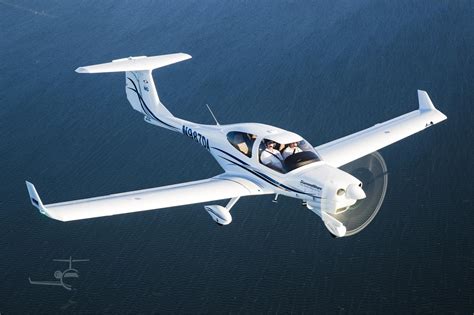
The DA40 NG isn’t just about the engine. The airframe has received significant modifications to improve handling, performance, and aesthetic appeal:
- Winglets: Larger and aerodynamically efficient, they enable a shortened wingspan (38 ft 2 in) without sacrificing lift or stability.
- Landing Gear: A wider stance and larger tires provide better ground handling and safer landings on variable surfaces.
- Cowling: Redesigned for improved airflow and cooling efficiency, it also gives the aircraft a sleeker, more modern appearance.
- Lighting: All-new LED systems enhance visibility and safety, while improving aesthetics.
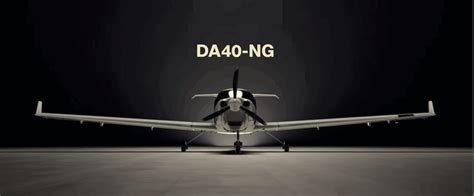
While the DA40 NG shares visual DNA with the DA40 XLT, nearly every aerodynamic surface has been reworked for better utility and higher performance.
Flying the DA40 NG: Comfort, Control, Confidence
From engine start to landing rollout, the DA40 NG offers an experience that’s refined and intuitive. Pilots transitioning from legacy gasoline trainers will immediately notice a difference in cockpit quietness, low vibration, and enhanced control feel.
During climb-out, pilots should anticipate a steeper rudder input requirement due to torque from the diesel’s high-compression output. Climb rates hover around 600 to 750 fpm, and cruise performance is solid—150 KTAS at 9,500 feet with fuel consumption at only 8.2 GPH under max continuous power.
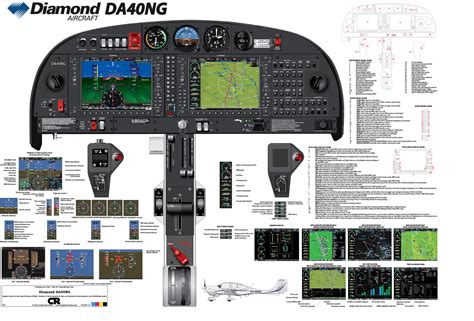
Inside the cockpit, the Garmin G1000 NXi system takes center stage. It features:
- Faster processing speeds
- Enhanced map resolution
- Wireless connectivity options
- Synthetic vision and autopilot integration
Though it lacks the luxury accents of the DA40 XLT’s high-end interior, the NG’s cabin is ergonomically optimized. Seat reclining capability allows pilots to rest comfortably during long legs, and optional electric air conditioning ensures comfort in hot climates—especially important under the expansive canopy.
Diesel vs. Gasoline: What Sets the DA40 NG Apart
The diesel versus gasoline debate has long defined buyer hesitancy in aviation. But with the AE300 engine’s proven reliability and performance, the DA40 NG is not just a diesel aircraft—it’s a better airplane.
Key distinctions include:
- Fuel Availability: The AE300 burns Jet-A, widely available and generally cheaper than 100LL avgas.
- Performance: Slightly better cruise performance and endurance than its gasoline sibling.
- Economics: With diesel prices often lower than avgas and a lower GPH burn rate, operational costs are impressively low.
- Environmental Impact: Diesel engines emit less CO₂ and operate at higher efficiency, aligning with global aviation sustainability goals.
Despite the diesel’s heavier engine block, smart weight distribution and increased max takeoff weight allow the DA40 NG to retain an excellent useful load and balance.
Ownership and the DiamondShare Program
A standout initiative supporting the DA40 NG’s growing popularity is the DiamondShare program, which allows new aircraft owners to offset ownership costs by leasing time to three qualified pilots.
Here’s how it works:
- The owner purchases a DA40 NG and makes it available for use by three pilots, each leasing 100 hours per year.
- These pilots pay a flat monthly rate that includes financing, hangar, and insurance costs.
- In metro areas like New York City, additional surcharges apply, but the average cost remains between $1,200 to $1,500/month—excluding fuel.
For the owner, the program offers nearly cost-neutral ownership, while the pilots gain access to a modern, high-performance aircraft without the capital outlay of ownership.
Conclusion: A New Era for General Aviation
The Diamond DA40 NG is a standout aircraft—fuel-efficient, technologically advanced, and adapted for a global future. Its diesel heart makes it not only a smart alternative to gasoline models but arguably the smarter overall choice. With rising fuel costs, increased environmental awareness, and growing pilot training demand, the DA40 NG is not a compromise. It’s a leader.
As flight schools, private owners, and leasing programs adopt the DA40 NG, it becomes clear that this is no longer a niche diesel experiment—it’s the new benchmark for what a next-generation general aviation aircraft should be.
FAQ
Is the DA40 NG suitable for new pilots or flight schools?
Absolutely. The DA40 NG is particularly well-suited for flight training due to its predictable handling, excellent visibility, and fuel economy. With a low fuel burn rate and Jet-A compatibility, it also offers cost advantages over traditional avgas-powered trainers.
What is the difference between the DA40 NG and the DA40 XLT?
While both share the same airframe roots, the DA40 NG features a diesel engine (Austro AE300) versus the XLT’s gasoline Lycoming IO-360. The NG also has a wider landing gear stance, larger tires, new cowling, and upgraded avionics. These changes make the NG a more efficient and modern aircraft.
How much does a Diamond DA40 NG cost?
The base price is approximately $430,000, while a well-equipped model typically lands just under $500,000. Through the DiamondShare program, pilots can access the aircraft for as little as $1,200 per month plus fuel, making ownership or shared use more attainable.