Diesel Exhaust Fluid (DEF), also known as Aqueous Urea Solution or AdBlue, is a clear, colorless, non-toxic liquid. It is injected into the exhaust stream of diesel engines to help reduce harmful emissions. However, if DEF is accidentally mixed with jet fuel, serious issues can arise. This can lead to clogged fuel filters, fouled injectors, and even engine power loss, which could result in an aircraft emergency.
DEF consists of pure urea mixed with deionized water in a roughly one-third to two-thirds ratio. It is essential for Selective Catalytic Reduction (SCR) systems, which have been mandatory in regions like Europe, the U.S., and Canada since around 2010. When DEF enters the exhaust stream, it triggers chemical reactions that convert nitrogen oxides into harmless water and carbon dioxide, significantly reducing environmental pollution.
Many ground handling services at airports rely on diesel-powered vehicles, such as fuel bowsers and tugs. To support these operations, a supply of DEF must be readily available. Another important fluid found at aerodromes is Fuel System Icing Inhibitor (FSII), commonly known as Prist. Like DEF, FSII is clear and colorless but serves a different purpose. It is mixed with jet fuel to prevent ice crystal formation during flight. Refueling vehicles often have tanks for FSII to ensure it can be added as needed.
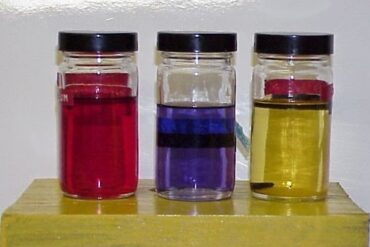
The challenge arises from the similarities between DEF and FSII. Both fluids look alike, and if their containers are not clearly labeled or stored separately, there is a risk of confusion. If DEF is mistakenly added to the icing inhibitor tank, it can react with jet fuel components and form crystalline deposits in the fuel system. These deposits can clog filters and nozzles, potentially leading to engine failure.
Currently, there is no method to test for DEF contamination in jet fuel. Therefore, prevention is key. The U.S. National Transportation Safety Board (NTSB) recommends several safety measures. First, avoid using unlabeled containers for storing chemicals. All containers, including bulk storage tanks, should have large, visible labels. Clearly mark DEF containers as “DIESEL EMISSION FLUID (DEF)” and FSII containers as “JET FUEL SYSTEM ICING INHIBITOR.” Additionally, label all DEF containers with a warning: “NOT FOR AVIATION USE.”
Even with proper labeling, keep DEF and FSII stored apart to reduce confusion. Staff should receive training on the proper storage locations, packaging, and hazards associated with DEF contamination. Fueling personnel should discard any jet fuel or FSII suspected of being contaminated with DEF and should not attempt to reuse contaminated fluids.
In one incident involving a Cessna 550 over Savannah, Georgia, in May 2019, the aircraft experienced an engine power loss due to fuel contamination. Investigators found that this was likely caused by mixing a required fuel additive with DEF, leading to deposits that obstructed fuel flow. Such incidents highlight the importance of maintaining strict separation and labeling of these fluids to ensure safety.