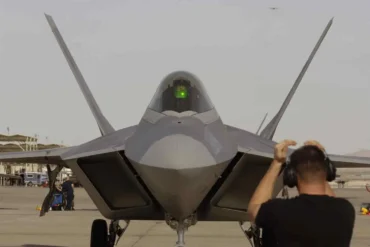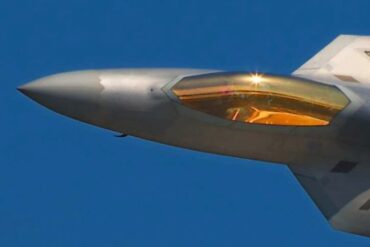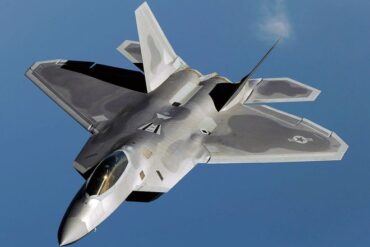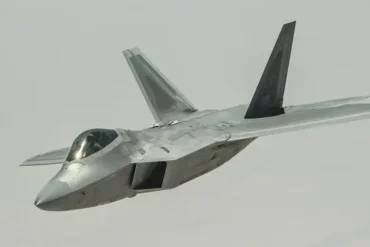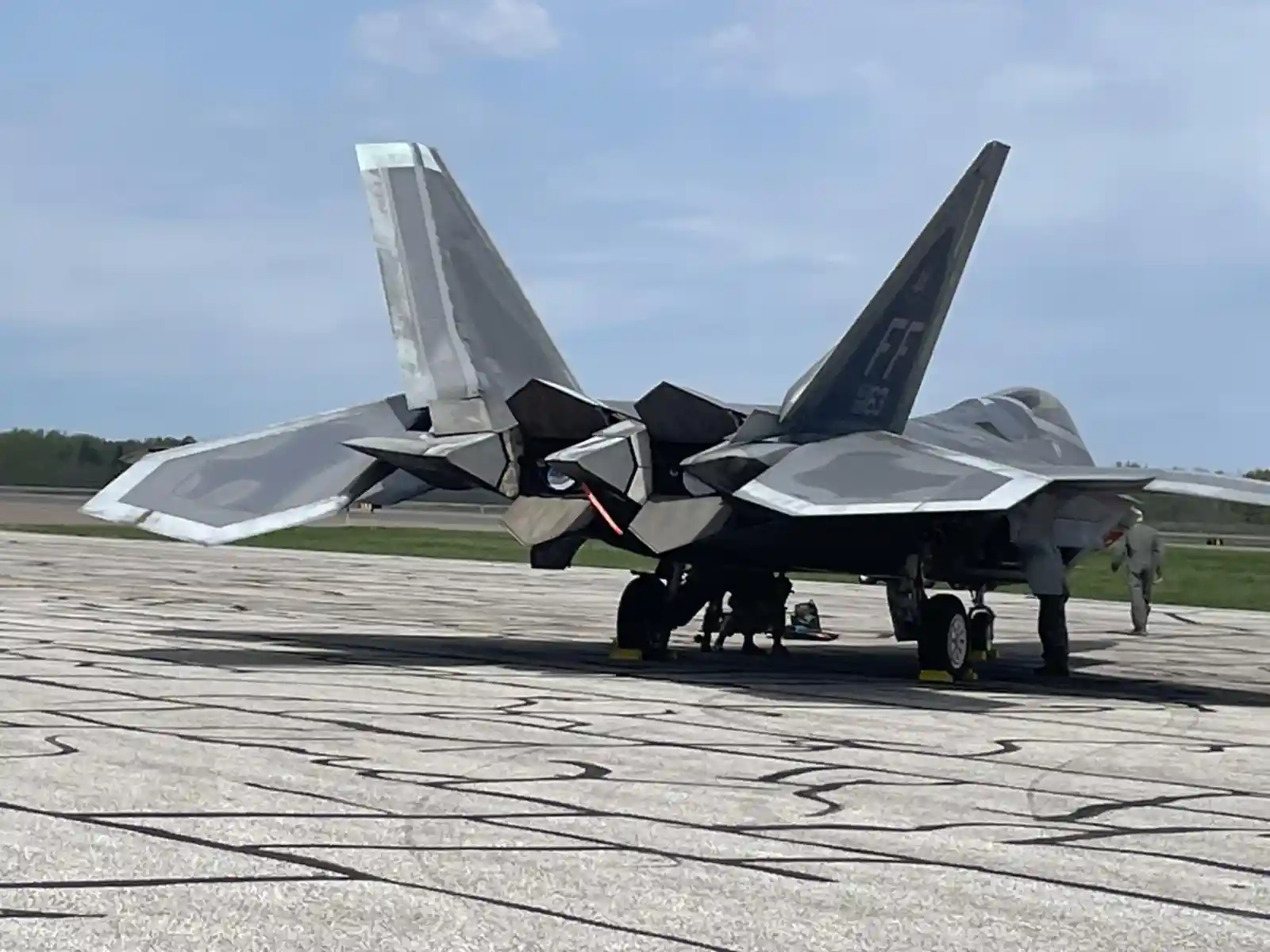
The F-22 Raptor’s exhaust system plays a crucial role in its stealth, maneuverability, and thermal management. Designed with advanced materials and precision engineering, this system integrates low observability (LO) with superior thrust vectoring capabilities. By examining its design, thrust vectoring mechanics, infrared suppression techniques, auxiliary exhaust systems, and future upgrades, we can understand how the F-22 maintains its dominance in modern air combat.
Stealth-Optimized Exhaust Design
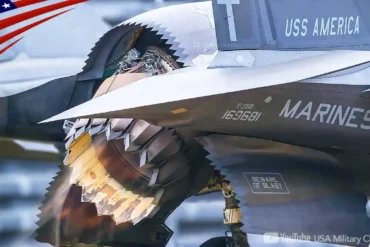
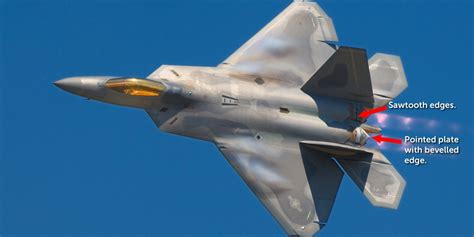
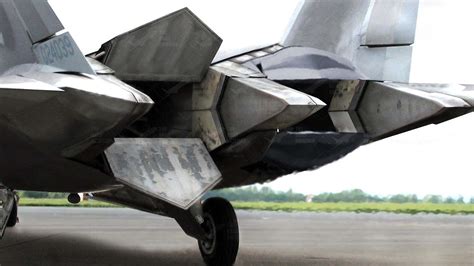
The F-22 Raptor’s exhaust nozzles are two-dimensional (2D) thrust-vectoring systems with serrated edges, reducing its radar cross-section (RCS) and infrared (IR) signatures. Unlike traditional circular nozzles, these 2D nozzles are:
- Integrated into the fuselage, using the aircraft’s rear structure to shield hot exhaust gases from radar detection.
- Coated with radar-absorbent materials (RAM) to reduce detectability.
- Designed to minimize turbulent airflow, which could otherwise increase thermal emissions.
This low-observable (LO) exhaust layout ensures the F-22 remains undetected by enemy radar and heat-seeking missiles. Compared to conventional exhaust systems, this flat nozzle configuration allows for superior aerodynamic performance while maintaining stealth.
Thrust Vectoring and Supermaneuverability
One of the F-22’s defining features is its thrust vectoring capability, achieved through ±20° pitch-deflecting nozzles. Powered by Pratt & Whitney F119-PW-100 engines, these nozzles generate 35,000 lbf of thrust per engine, enabling extreme maneuverability without compromising stealth.
Key advantages of thrust vectoring include:
- Execution of post-stall maneuvers such as Pugachev’s Cobra and J-turns.
- Enhanced dogfighting capabilities, allowing the F-22 to outmaneuver adversaries.
- Improved energy management, maximizing control at both supersonic and subsonic speeds.
The Full Authority Digital Engine Control (FADEC) system continuously optimizes thrust vectoring by adjusting:
- Turbine temperature
- Airflow dynamics
- Thrust output for efficiency
While this system significantly improves performance, it also introduces higher thermal stress on the engine, reducing overall lifespan.
Infrared Suppression and Heat Management
Reducing infrared (IR) detectability is essential for the F-22’s survivability. This is achieved through:
- S-shaped exhaust ducts, preventing direct turbine blade exposure to IR sensors.
- Rapid hot gas dilution, mixing engine exhaust with ambient air to lower heat signatures.
- Ceramic matrix composite (CMC) materials, which withstand temperatures above 2,000°F while limiting thermal emissions.
Despite these countermeasures, the F-22’s exhaust still produces higher IR emissions than newer F-35 designs, which incorporate more advanced serpentine ducts and plasma-based IR suppression concepts.
Auxiliary Exhaust Systems and Startup Mechanisms
During engine startup, the F-22 Raptor activates an auxiliary exhaust port near the rear weapons bay, releasing a distinct puff of smoke. This effect, colloquially called farting in pilot circles, occurs due to:
- Excess gas venting from the Garrett intake system.
- Prevention of pressure buildup, ensuring stable airflow.
Unlike modern Diverterless Supersonic Inlets (DSI), which optimize airflow without auxiliary ports, the F-22’s startup design momentarily compromises stealth but ensures engine reliability.
Challenges and Maintenance Considerations
While the F-22’s exhaust system is a technological marvel, it presents significant maintenance challenges:
High-Temperature Wear and Material Fatigue
- Titanium and composite coatings experience degradation due to prolonged thermal exposure.
- Radar-absorbent coatings (RAM) may peel over time, risking ingestion into engine turbines.
- Vacuum electron beam welding is used to reinforce structure, but extreme temperatures lead to periodic fatigue cracks.
Operational Safety Risks
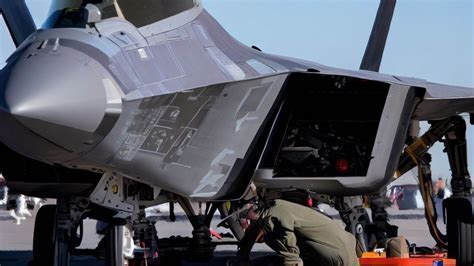
- The engine nozzle’s heat zone extends up to 250 feet, requiring strict personnel safety measures.
- Stored Energy System (SES), located near the main landing gear wing root, generates high-pressure air for auxiliary power units (APUs).
- Air Turbine Starter Exhaust emits extreme heat, demanding specialized fire access screens for safety.
Future Upgrades and Experimental Concepts
As stealth detection technologies advance, the F-22’s exhaust system faces new challenges. Potential upgrades include:
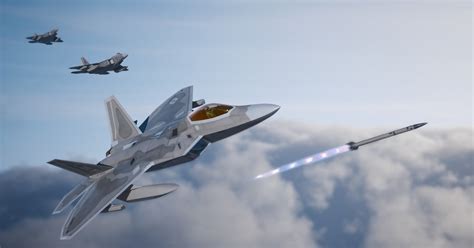
- Infrared Search and Track (IRST) sensors, mounted externally to mitigate stealth compromises.
- Adaptive exhaust geometries, dynamically adjusting nozzle configurations for better IR suppression.
- Plasma-based cooling technology, an experimental concept that may reduce heat signatures while improving thrust efficiency.
Additionally, the F-22’s stealth drop tanks (LDTP) are being redesigned to ensure that fuel tank separation does not compromise exhaust flow.
Frequently Asked Questions (FAQ)
1. How does the F-22’s exhaust system contribute to stealth?
The 2D thrust-vectoring nozzles, serrated edges, and radar-absorbent coatings (RAM) minimize radar cross-section (RCS) and infrared emissions, ensuring low observability against enemy detection systems.
2. What makes the F-22’s thrust vectoring unique?
Unlike traditional jet fighters, the F-22’s ±20° thrust-vectoring nozzles provide supermaneuverability without the need for canards or destabilizing aerodynamic modifications, making it one of the most agile stealth aircraft.
3. What are the main challenges in maintaining the F-22’s exhaust system?
Due to high thermal exposure, the titanium alloy coatings, composite materials, and RAM layers require frequent inspection and maintenance. Additionally, the exhaust nozzles have tight mechanical tolerances, increasing complexity in repair and replacement.
The F-22 Raptor’s exhaust system remains a cornerstone of its stealth, maneuverability, and operational superiority. Through continuous upgrades, it ensures the aircraft’s relevance in future air dominance missions.