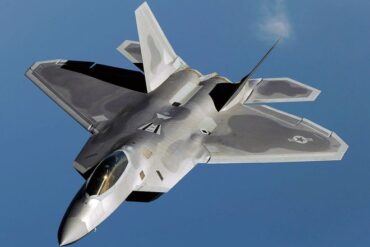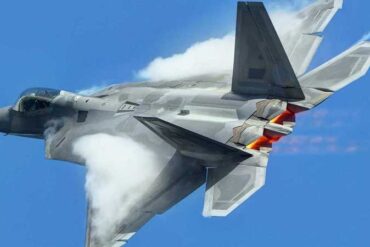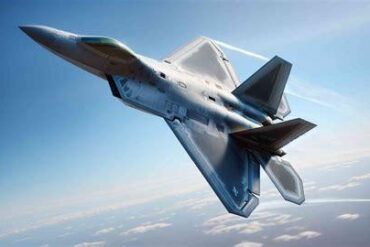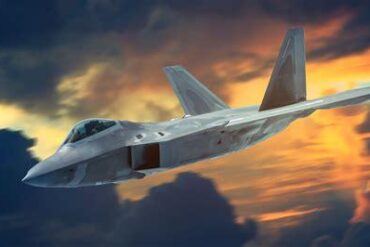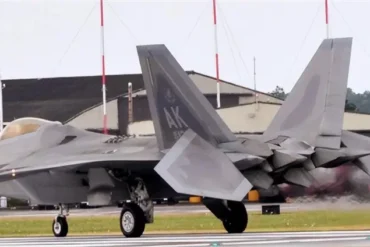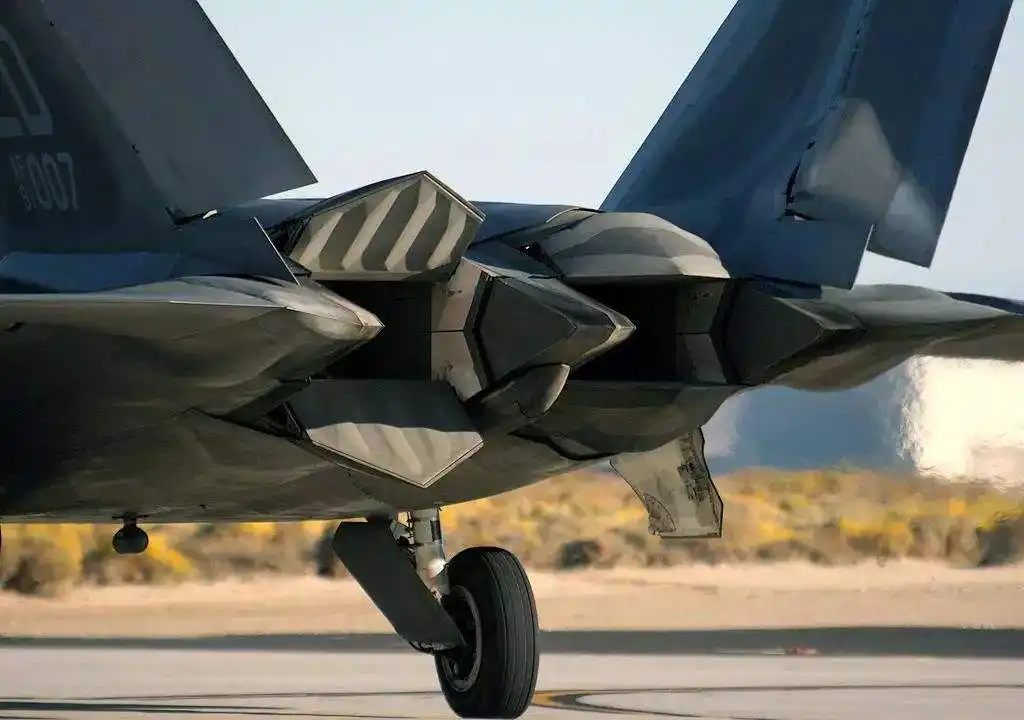
The F-22 Raptor remains an unparalleled example of stealth technology, with its radar cross-section (RCS) setting the standard for fifth-generation fighter aircraft. Its frontal RCS measures approximately 0.0001 square meters, a figure that continues to be the benchmark for stealth fighters worldwide. This extreme low observability allows the F-22 to execute first-look, first-shot, first-kill strategies, ensuring air superiority in modern combat.
Core RCS Performance Metrics
The F-22’s RCS reduction is significantly superior to its counterparts:
- F-22 Raptor: 0.0001 m² (industry benchmark)
- Chengdu J-20: 0.001-0.01 m²
- Sukhoi Su-57: 0.5-1 m²
- F-35 Lightning II: 0.001 m²
The F-22’s ability to evade radar detection gives it an overwhelming tactical edge, allowing it to engage enemy aircraft without being detected until it’s too late.
Stealth Geometry and Design
Diamond-Shaped Fuselage and Edge Alignment
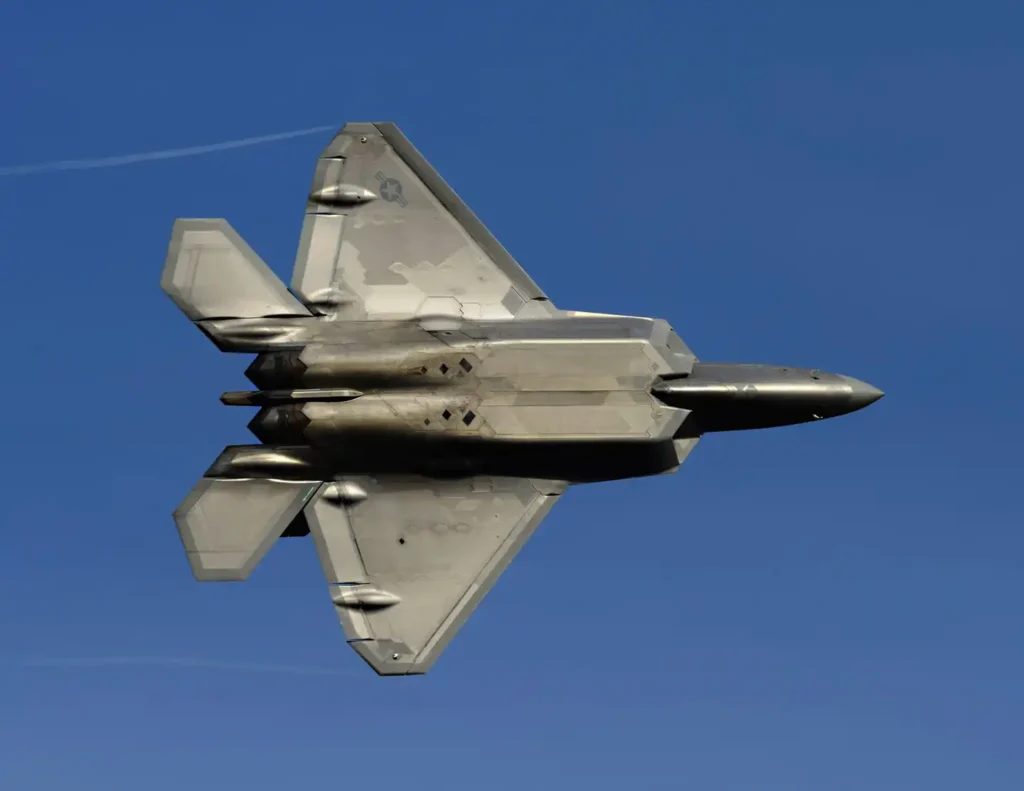
The F-22’s airframe is designed with a diamond-like shape, using 67 parallel edge alignments to redirect incoming radar waves into six narrow scattering angles. This minimizes omnidirectional reflection, significantly lowering RCS.
S-Shaped Air Intakes
The aircraft features S-duct inlets that curve radar waves away from direct exposure to the engine blades. Combined with radar-absorbent material (RAM) coatings, this effectively reduces front-facing RCS, making detection from head-on nearly impossible.
Serrated Panel Edges and Seamless Integration
To minimize radar wave reflection from aircraft gaps, the F-22 incorporates:
- 0.05mm-precision serrated edges on access panels, weapon bay doors, and control surfaces.
- Alignment of control surface edges with major aircraft axes to merge radar returns into fewer detectable points.
Advanced Materials and Coatings
Radar Absorbent Material (RAM) Coatings
The F-22 is coated with a ferrite-based RAM layer that is 0.8-1.2mm thick, capable of attenuating radar signals by -25dB, effectively transforming electromagnetic energy into heat rather than reflecting it back to enemy radar.
Conductive Sealants and Canopy Coatings
- Electrically conductive adhesives eliminate gaps wider than 1cm, suppressing standing wave reflections.
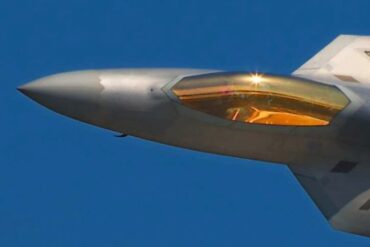
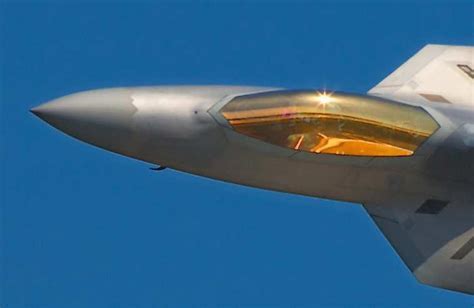
- Gold-coated cockpit canopy reduces pilot helmet radar reflections, further decreasing RCS.
- Titanium mesh grilles inside the engine air intakes prevent radar waves from bouncing back, maintaining low detectability.
Electromagnetic and Infrared Signature Management
Low Probability of Intercept (LPI) Radar Operations
The AN/APG-77 AESA radar enhances stealth by:
- Operating within a 30-degree front-facing cone, avoiding unnecessary electromagnetic exposure.
- Utilizing passive detection through the ALR-94 sensor suite, reducing active radar emissions.
Infrared Suppression Technologies
The F-22’s exhaust system incorporates:
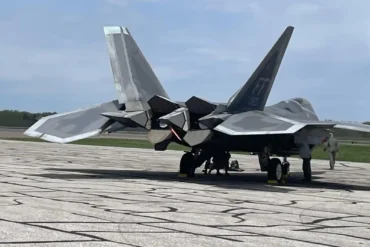
- Two-dimensional thrust-vectoring nozzles that spread exhaust flow to reduce infrared (IR) signature.
- Liquid nitrogen-cooled compartments to minimize heat buildup.
- 85% reduced IR emissions, making infrared-guided missiles less effective.
Limitations and Stealth Vulnerabilities
Despite its superior stealth design, the F-22 is not without challenges:
- High Maintenance Costs: RAM coatings require frequent repair, taking days per maintenance cycle, reducing operational availability.
- Low-Frequency Radar Detection: Russian VHF-band radars can detect side-on RCS peaks up to 42 dBsm, making flanking angles more vulnerable.
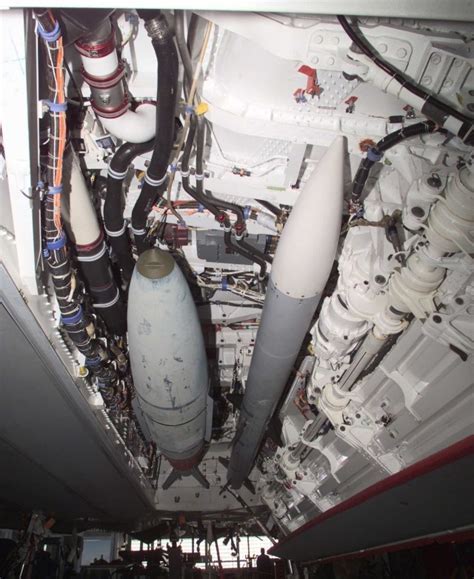
- Weapon Bay Exposure: Deploying missiles momentarily exposes internal compartments, creating a brief radar signature spike.
Comparison With Other Fifth-Generation Fighters
F-22 vs. J-20
- J-20 uses plasma stealth and a modified airframe to reduce detectability, but its RCS remains 10-100 times larger than the F-22’s.
- J-20’s canards significantly increase radar reflections, unlike the F-22’s smooth design.
F-22 vs. F-35
- F-35 Lightning II prioritizes multirole adaptability over extreme stealth.
- Its RCS (0.001 m²) is larger than the F-22’s but still much lower than conventional fighters.
Future Threats and Technological Adaptations
To maintain its stealth superiority, the F-22 is undergoing continuous upgrades, including:
- IRST (Infrared Search and Track) sensors to counter stealth fighters like the Su-57.
- Low-drag external fuel tanks to extend combat range without significantly increasing RCS.
- Next-generation RAM coatings with improved resilience against wear and tear.
Conclusion
The F-22 Raptor remains the stealth standard-bearer, integrating cutting-edge geometric shaping, advanced materials, and electromagnetic management to achieve the lowest radar detectability among fighter jets. However, as anti-stealth technology advances—such as bi-static radars and AI-assisted signal processing—the challenge for maintaining stealth dominance continues. The U.S. Air Force’s F-22 modernization initiatives will be critical in ensuring its effectiveness in future aerial conflicts.
FAQ
How does the F-22 achieve such a low RCS?
The F-22’s stealth is achieved through a combination of aerodynamic shaping, RAM coatings, S-duct air intakes, and advanced electromagnetic control. These design elements work together to minimize radar wave reflections and absorption.
Can low-frequency radars detect the F-22?
Yes, VHF-band and bi-static radars can detect the F-22 at certain angles, particularly from the side. However, the Raptor’s electronic warfare systems and tactics help mitigate this vulnerability.
Why is the F-22 still considered the best stealth fighter?
The F-22 maintains the lowest RCS of any operational fighter, combined with superior maneuverability, speed, and sensor fusion, making it the most dominant air-superiority stealth aircraft in the world today.