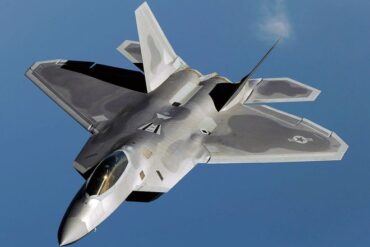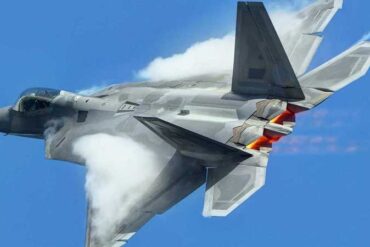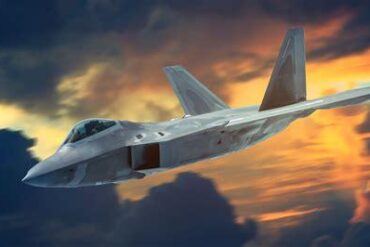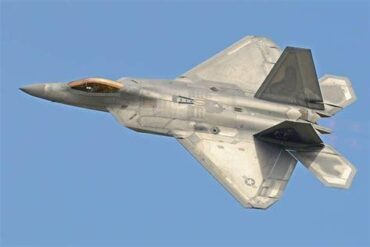
Since the dawn of aerial refueling in 1948, the United States Air Force has relied on in-flight fuel transfer to extend the reach, flexibility, and lethality of its combat aircraft. As jet propulsion matured and fighter designs became hungrier for fuel, air-to-air refueling evolved into an indispensable pillar of American air dominance. In 2025, long-range missions, stealth penetration, and global responsiveness depend heavily on this capability. Among all the aircraft that benefit from it, one fighter extracts more operational value from air-to-air refueling than any other: the Lockheed Martin F-22 Raptor.
The question is not simply which fighter can refuel in the air—many can—but which fighter transforms that capability into unrivaled battlefield superiority. The answer still points squarely to the F-22, whose unmatched stealth, performance, and emerging use of stealth drop tanks give it an extended, lethal envelope no other operational fighter can replicate.
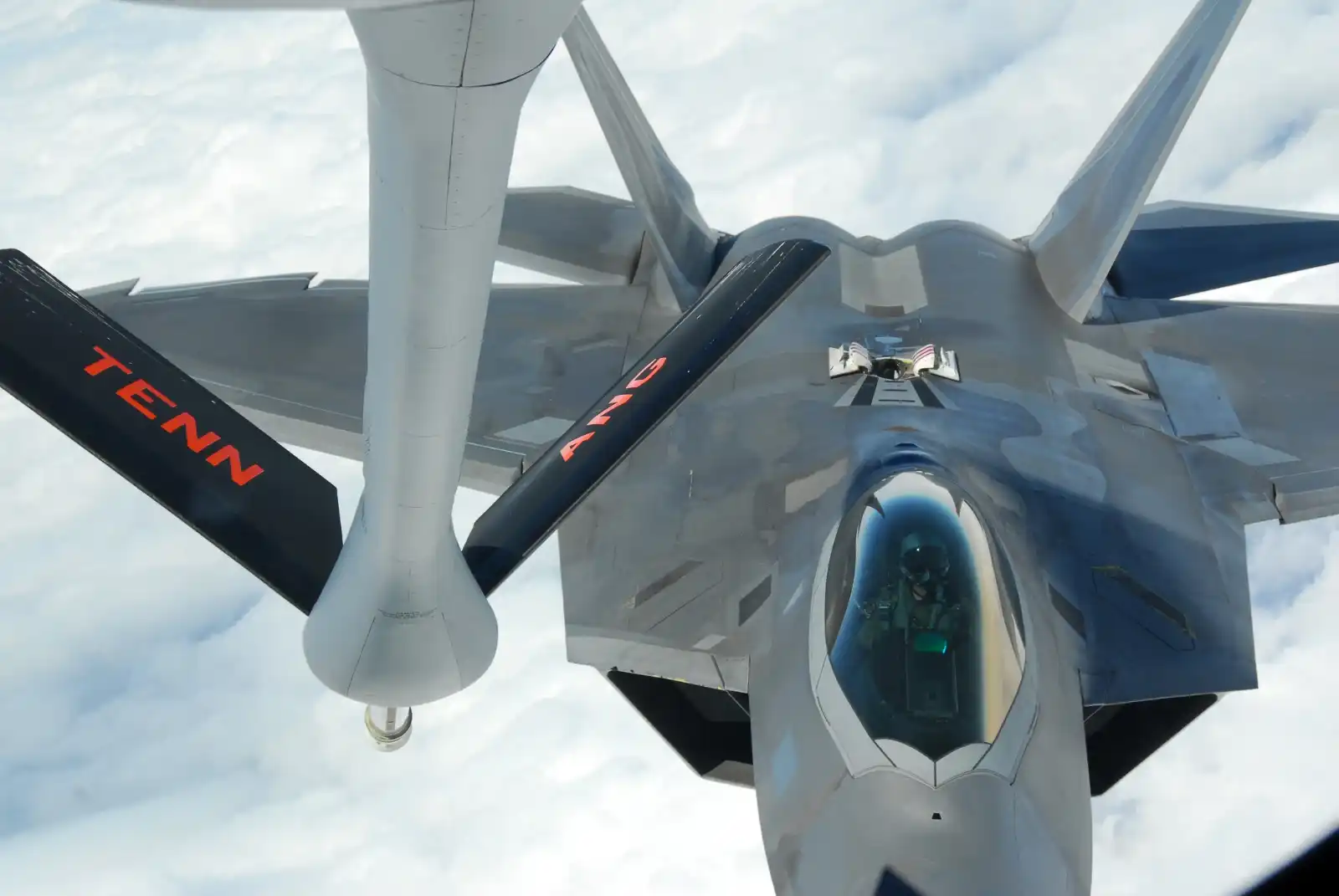
Why the F-22 Raptor Remains the Apex Air Superiority Fighter
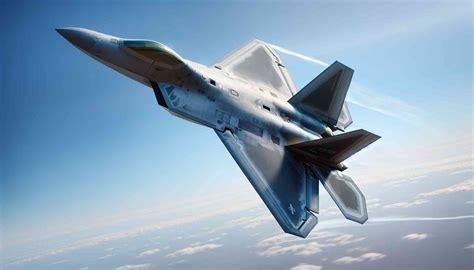
The F-22 Raptor was designed for one purpose: absolute air dominance. Its combination of low observability, supercruise, extreme agility, and advanced sensors makes it the most lethal fighter ever fielded. Air-to-air refueling amplifies these strengths by removing the traditional range constraints that limit stealth aircraft.
Unlike most fighters, the F-22 is one of only a handful of stealth platforms capable of refueling in the air—an essential requirement for global missions. It is also one of only three stealth fighters with stealth-shaped external drop tanks, providing extended range without excessively compromising radar signature.
When the Raptor takes on fuel mid-flight and retains its stealth-designed tanks, it can cross oceans, approach hostile airspace undetected, and remain on station for long periods. This transforms the aircraft into both an air dominance platform and a discreet intelligence, surveillance, and reconnaissance (ISR) node. Few assets combine these roles so effectively.
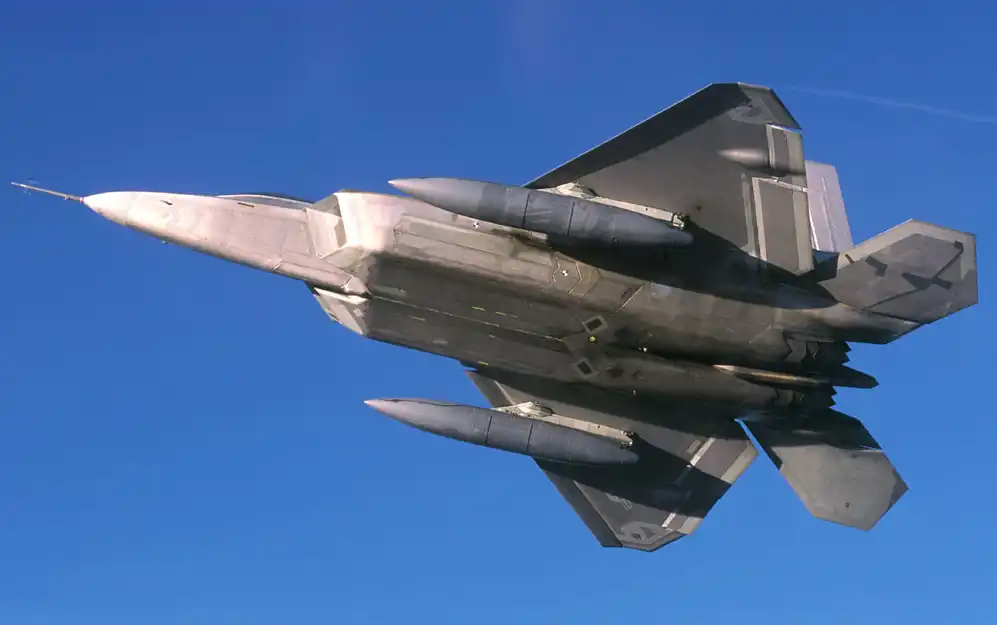
How Stealth Drop Tanks Expand the Raptor’s Reach
The addition of stealthy, low-drag tanks represents one of the most meaningful upgrades in the Raptor’s history. Lockheed Martin has developed these tanks not only for the F-22 but also with an eye toward the future. The company anticipates migrating the technology to the F-35, the Next Generation Air Dominance (NGAD) program, and other advanced platforms.
These stealth tanks provide several key advantages. They enable the Raptor to fly long distances at supercruise speeds, arrive with more fuel reserves, and operate deeper inside contested zones while maintaining a low signature. The F-22 becomes a stealthy long-range hunter with the endurance to direct multiple aircraft, gather ISR data, and execute air-to-air missions without immediate tanker dependence.
Senior Air Force leadership has emphasized that the F-22 will remain at the forefront of combat capability until its retirement. It will act as a technological bridge, transferring many of its advanced developments—including stealth fueling systems—into NGAD. This ensures that its range-extending innovations continue shaping sixth-generation air warfare.
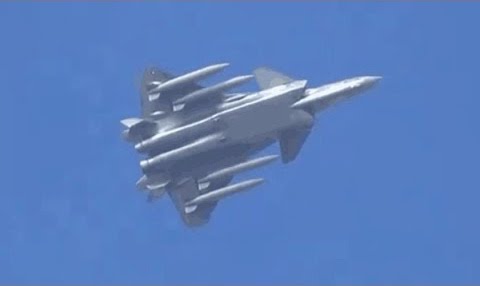
Global Developments in Long-Range Stealth Fighters
While the Raptor remains the benchmark, other air forces are also pursuing extended-range stealth capabilities. The Israeli Air Force has equipped its F-35I Adir variant with underwing fuel tanks and conformal fuel tanks (CFTs), enabling long-range strike missions without tanker support. In China, the J-20 Mighty Dragon has been photographed carrying external fuel tanks with stealth shaping, further expanding its operational radius.
These developments reflect a global urgency: long-range, stealth-capable fighters must sustain endurance to meet modern threat environments. Even so, neither the F-35I nor the J-20 offers the same combination of supercruise, stealth integration, and mature air-to-air capability that makes the F-22 so effective when supported by aerial refueling.
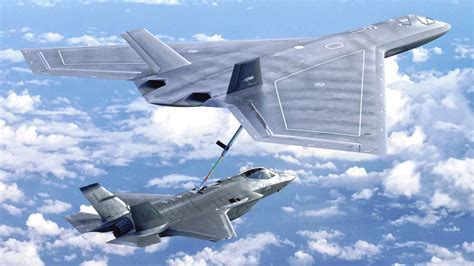
The Air Force’s Next Generation Air-Refueling System (NGAS)
The United States Air Force is modernizing its tanker fleet with systems like the KC-46 Pegasus, but the long-term objective remains the development of the Next Generation Air-Refueling System (NGAS). This initiative aims to create a survivable tanker capable of operating far closer to contested airspace than current platforms.
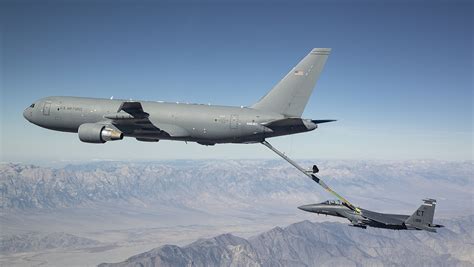
NGAS is designed to counter emerging threats, especially the Chinese J-20, which is built to target high-value assets such as AWACS and tankers. The more tankers can move forward safely, the more fighters like the F-22 can refuel closer to the battlefield—reducing vulnerability windows and extending combat presence.
Budget reallocations, however, have slowed NGAS development. The Air Force is currently steering resources toward critical stealth systems like the B-21 Raider and the advanced F-47 program. This has shifted NGAS toward a more distributed “survivable refueling” concept involving hardened tankers, drones such as the MQ-25 Stingray, and optionally manned aircraft.
Buddy Tanking: A Tactical Tool, Not a Replacement
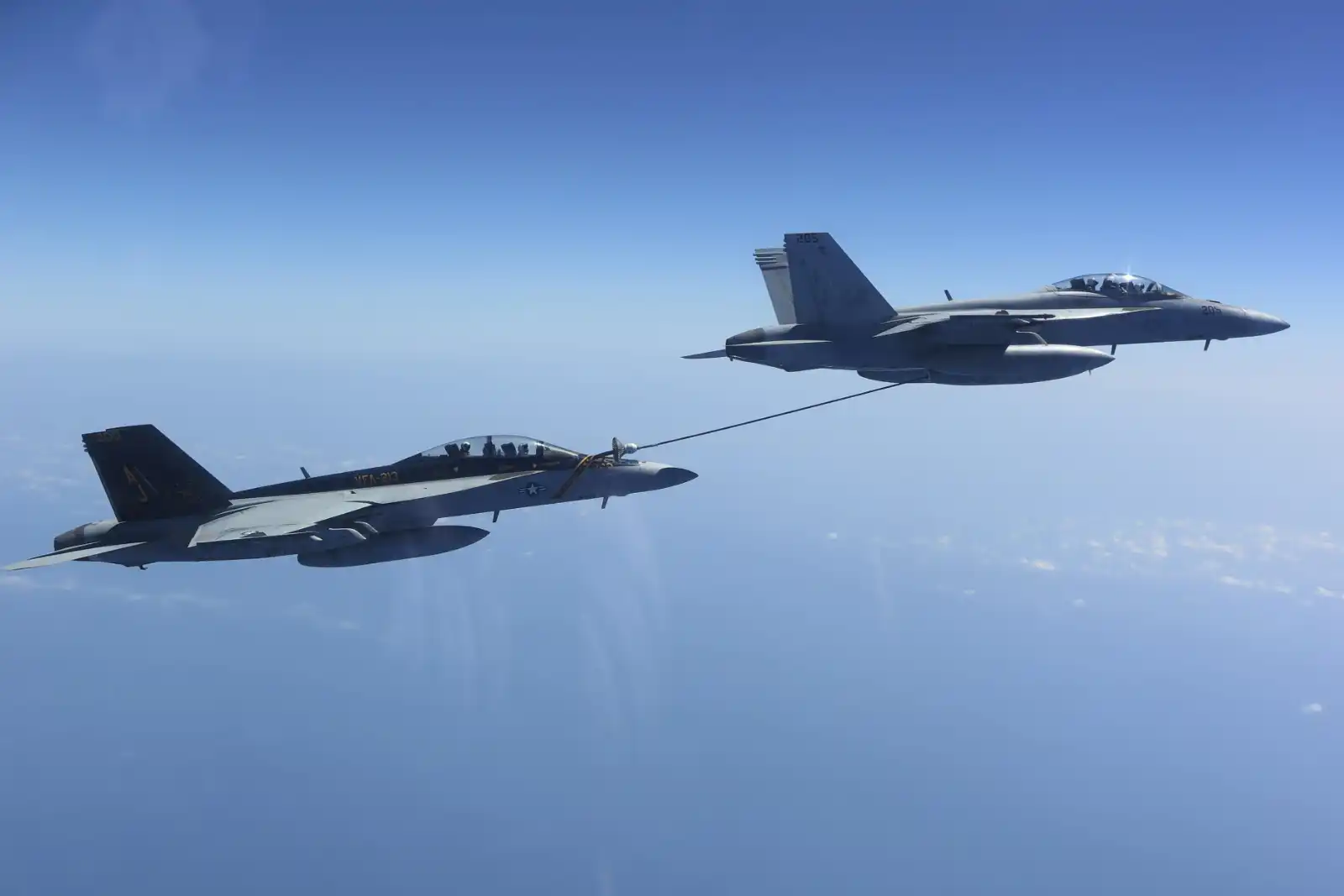
While advanced stealth fighters rely on discreet tanker support, older 4th and 4.5-generation jets have used “buddy tanking” for decades. In this system, one fighter carries an aerial refueling pod and transfers fuel to another fighter mid-mission. Aircraft like the F/A-18 Super Hornet, Rafale, and E-2D Hawkeye have all been supported by such systems.
Buddy tanking works well in environments where stealth is not essential. It allows strike aircraft to take off with heavy weapon loads, refuel once airborne, and continue toward distant targets. For naval aviation, it increases sortie rates and extends reach without depending solely on large tankers.
However, buddy tanking poses challenges in modern high-threat zones. Both the tanker and receiver must fly in close proximity for extended periods, creating a vulnerability window. Even if a stealthy buddy system were developed, it would struggle to match the survivability of a purpose-built NGAS platform.
Why the F-22 Still Reigns as the World’s Best Fighter for Air-to-Air Refueling
When measured by how effectively a fighter multiplies its combat power through aerial refueling, the F-22 emerges as the clear leader. Its combination of stealth, supercruise, sensor fusion, and operational maturity allows it to exploit tanker support in ways other fighters simply cannot.
With stealth drop tanks, the Raptor can:
- cross continents without sacrificing survivability
- loiter in denied airspace as a stealth ISR node
- extend operational radius deep into hostile regions
- maintain air dominance far from friendly bases
The F-22 becomes something far more formidable because of it.
Conclusion: The F-22’s Refueled Future
As global air forces push toward longer-range stealth operations, air-to-air refueling remains a decisive enabler of modern airpower. The F-22 Raptor continues to set the benchmark, extracting unmatched tactical and strategic value from this capability. Its expanding range through stealth fueling systems, its unrivaled air combat performance, and its future role as a bridge to NGAD ensure that it remains the world’s most formidable fighter for aerial refueling operations.
Even with the rise of the F-35, the J-20, and new tanker concepts, the Raptor demonstrates how transformational air-to-air refueling can be when paired with the most advanced air superiority fighter ever built. Its combination of endurance, stealth, and lethality guarantees that, in 2025 and beyond, the F-22 remains the world’s top fighter for air-to-air refueling–enabled air dominance.