The story of the SR-71 Blackbird is not simply about speed—it is about rewriting the boundaries of what humanity believed possible in powered flight. Born in the crucible of Cold War urgency, this aircraft was engineered with a singular obsession: go faster than anything else, fly higher than anything else, and survive where no other aircraft could. The result was a machine so advanced that even decades later, it still holds records that modern aviation has yet to break.
At its core, the SR-71 was a reconnaissance platform, but calling it “just a spy plane” is like calling a lightning bolt “just electricity.” It operated at speeds exceeding Mach 3, cruising comfortably above 80,000 feet, where the sky darkens and the curvature of Earth becomes visible. In that rarefied altitude, the Blackbird didn’t merely evade threats—it rendered them irrelevant.
What makes its speed truly astonishing is not just the raw number—2,193 mph officially, with credible reports exceeding Mach 3.5—but the way that speed became its primary defense system. While modern aircraft rely heavily on stealth coatings and electronic warfare, the Blackbird relied on a far simpler principle: nothing could catch it.
How Fast Could the SR-71 Blackbird Really Fly?
The official top speed of the SR-71 Blackbird stands at Mach 3.32, equivalent to roughly 2,193 miles per hour (3,529 km/h). Yet this figure barely scratches the surface of its true capability. Pilots who flew the aircraft often hinted that the real limits were classified, suggesting speeds closer to Mach 3.5 or higher during certain missions.
To put that into perspective, a typical commercial airliner cruises at around 530 mph. The Blackbird moved at more than four times that speed, compressing vast distances into astonishingly short flight times. A journey across the continental United States—from Los Angeles to Washington, D.C.—could be completed in just over an hour.
At these velocities, time itself seemed to behave differently. Navigation required anticipating future positions rather than reacting to current ones. Even minor course corrections had to be calculated with precision, because at Mach 3+, a small deviation could translate into miles of displacement within seconds.
The aircraft’s engines, the legendary Pratt & Whitney J58, were as much a marvel as the airframe itself. Functioning as hybrid turbojet-ramjets, they became more efficient the faster the aircraft traveled, essentially turning speed into an advantage rather than a limitation.
Faster Than a Bullet: The Physics of Extreme Speed
The phrase “faster than a speeding bullet” is often used metaphorically, but for the SR-71 Blackbird, it was a literal truth. Traveling at over 3,200 feet per second, the aircraft outpaced the muzzle velocity of a .30-06 rifle round, one of the most iconic high-velocity bullets in history.
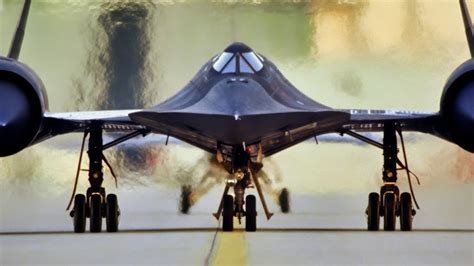
At such extreme speeds, the environment around the aircraft transformed dramatically. Air friction generated temperatures exceeding 500°F (260°C) on the skin of the aircraft. This intense heat caused the titanium fuselage to expand by several inches during flight. On the ground, the Blackbird famously leaked fuel through its seams because they were designed to seal only after thermal expansion at cruising speed.
The concept of speed as defense reached its peak with the SR-71. Surface-to-air missiles (SAMs) were rendered nearly ineffective. By the time a missile climbed to the Blackbird’s cruising altitude—often between 80,000 and 85,000 feet—it had already burned most of its fuel. With little energy left to maneuver, the missile could not match the Blackbird’s velocity or trajectory.
Even in scenarios where missiles were launched head-on, the closing speeds were so extreme that guidance systems struggled to keep up. The aircraft would simply outrun the threat, leaving it trailing in its wake.
Untouchable in Combat: A Perfect Survival Record
Over its 25-year service life, the SR-71 Blackbird achieved something extraordinary: it was never shot down by enemy action. This was not due to a lack of attempts. Historical data indicates that approximately 4,000 missiles were fired at the fleet.
Not one succeeded.
This remarkable record underscores a critical truth: the Blackbird’s speed was not just impressive—it was strategically decisive. Enemy air defense systems, designed to counter slower aircraft, simply could not adapt quickly enough to intercept a target moving at Mach 3+.
Soviet systems like the SA-2 surface-to-air missile were pushed to their limits. Pilots and engineers alike recognized that by the time these missiles reached the Blackbird’s altitude, they had little maneuverability left. Even advanced interceptors such as the MiG-25 Foxbat struggled to engage effectively.
The Blackbird didn’t evade threats in the traditional sense. It rendered them obsolete.
Record-Breaking Performance That Still Stands Today
The SR-71 Blackbird’s legacy is cemented in a series of world records that remain unbroken decades later. These records are not mere technical achievements—they are enduring testaments to the aircraft’s unmatched performance.
In July 1976, the Blackbird set its most famous records near Beale Air Force Base:
- Absolute speed record: 2,193 mph (Mach 3.3)
- Absolute altitude record: 85,068 feet
- Closed-circuit speed record: 2,092 mph over 1,000 km
These numbers have stood the test of time, outlasting generations of newer aircraft designs.
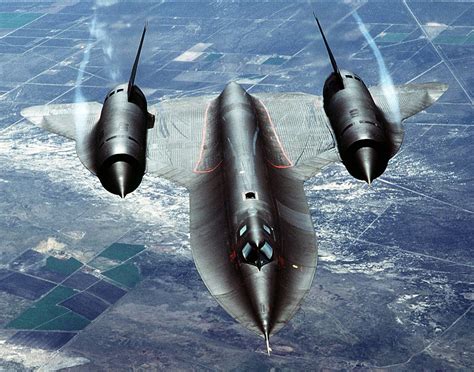
One of the most dramatic demonstrations of its speed came during its final flight in 1990. Flying from California to Washington, D.C., the Blackbird completed the journey in just 64 minutes and 20 seconds, averaging 2,144 mph. During that single flight, it set multiple speed records across different segments of the route.
Even earlier, in 1974, it completed a transatlantic flight in 1 hour and 54 minutes, a record that still stands today.
These achievements are not relics of a bygone era—they are benchmarks that modern aviation still struggles to approach.
Engineering for Mach 3: The Titanium Revolution
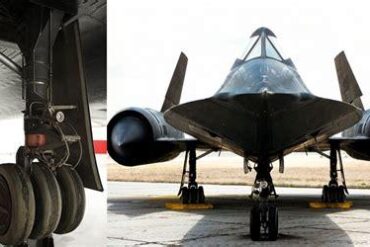
Building an aircraft capable of sustained Mach 3 flight required rethinking everything about aviation engineering. Traditional materials like aluminum would simply melt under the thermal stress. The solution was radical: construct the aircraft primarily from titanium.
More than 80% of the SR-71’s airframe was made from this heat-resistant metal. In a twist that borders on irony, much of the titanium was sourced from the Soviet Union, the very adversary the aircraft was designed to surveil. Through a network of covert procurement channels, the United States quietly acquired the material needed to build its most advanced spy plane.
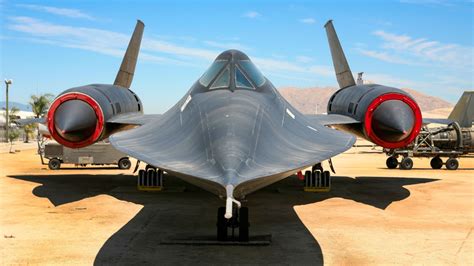
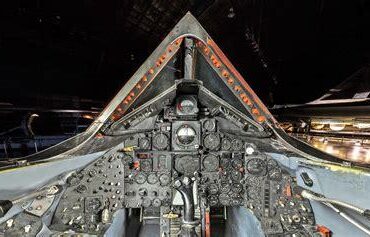
The challenges didn’t stop at materials. Fuel systems, avionics, and even pilot gear had to be redesigned. The cockpit environment resembled that of a spacecraft, with pilots wearing pressure suits similar to those used by astronauts.
Every element of the Blackbird was optimized for one purpose: sustained, controlled flight at speeds where conventional aircraft would fail catastrophically.
Skunk Works and Kelly Johnson: The Minds Behind the Machine
The SR-71 Blackbird was born from the legendary Skunk Works division of Lockheed, led by the visionary engineer Kelly Johnson. Known for his uncompromising standards and disdain for bureaucracy, Johnson fostered an environment where innovation thrived under intense secrecy.
His approach was simple yet powerful: eliminate unnecessary complexity, focus on results, and move fast—both literally and organizationally. Under his leadership, Skunk Works produced a series of groundbreaking aircraft, but the Blackbird stands as the pinnacle of that legacy.
Johnson’s influence extended far beyond design. His management philosophy, often summarized by the principle “Keep It Simple, Stupid (KISS)”, enabled rapid development cycles and unprecedented engineering breakthroughs.
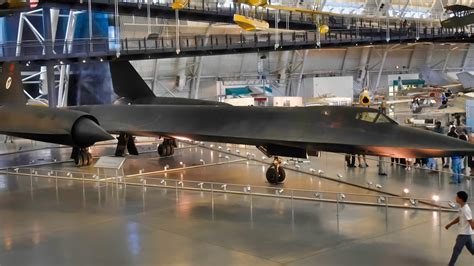
The SR-71 was not an isolated achievement—it was the culmination of decades of innovation, including earlier projects like the U-2 Dragon Lady and the A-12 Oxcart. Each step pushed the boundaries further, ultimately leading to the creation of an aircraft that still feels ahead of its time.
Speed Meets Stealth: A Hybrid Approach to Survival
While speed was the Blackbird’s defining feature, it was far from its only advantage. The aircraft also incorporated early forms of stealth technology, decades before the concept became mainstream.
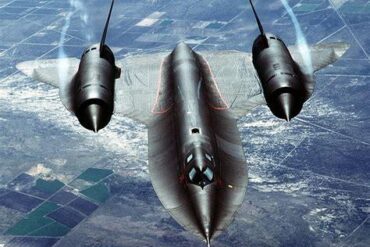
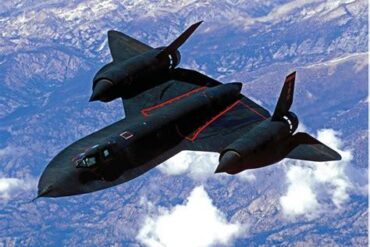
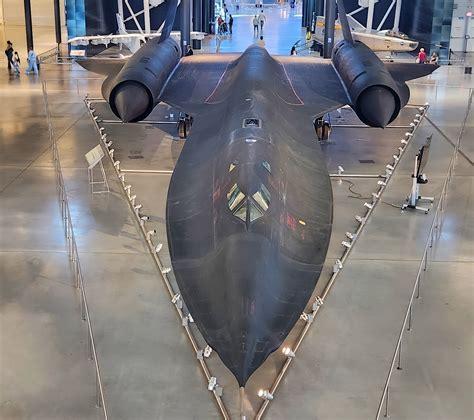
Its design reduced radar cross-section through a combination of geometry and materials. Features like the distinctive chines along the fuselage helped deflect radar waves, while inward-canted vertical stabilizers minimized reflective surfaces.
Additionally, the aircraft was coated in a specialized iron ferrite-based paint that absorbed radar energy and converted it into heat. These measures reduced its radar signature by up to 90% compared to similar aircraft of its era.
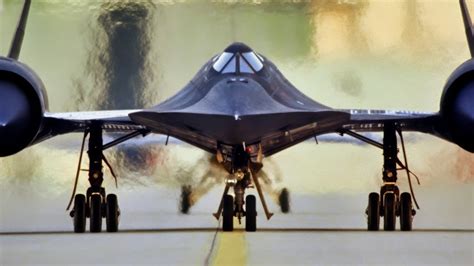
Despite these innovations, the SR-71 was not invisible. Its extreme speed generated a massive heat signature, making it detectable by infrared systems. But this vulnerability was mitigated by the very factor that defined the aircraft: its ability to outrun anything that could track it.
In essence, stealth gave the Blackbird precious seconds of confusion. Speed did the rest.
Why Nothing Has Replaced the SR-71
Given its extraordinary capabilities, a natural question arises: why hasn’t the SR-71 been replaced by something faster?
The answer lies in a combination of cost, technological evolution, and changing mission priorities. Operating the Blackbird was extraordinarily expensive, requiring specialized fuel, maintenance, and support infrastructure. Each flight demanded a level of logistical coordination that few programs could sustain.
At the same time, advancements in satellite reconnaissance and unmanned aerial vehicles (UAVs) began to offer alternative methods of intelligence gathering. These technologies reduced the need for high-risk, high-speed manned missions.
Yet even with these advancements, no aircraft has matched the Blackbird’s unique combination of speed, altitude, and survivability. Modern stealth aircraft prioritize invisibility over velocity, trading raw speed for reduced detectability.
The rumored successor, the SR-72 “Darkstar,” aims to push speeds into the hypersonic range—potentially Mach 6—but as of now, it remains a concept rather than an operational reality.
The Enduring Legacy of the Blackbird
The SR-71 Blackbird is more than a record-holder; it is a symbol of what happens when engineering ambition meets uncompromising vision. It represents a moment in history when the limits of technology were not just tested—they were shattered.
Its records still stand. Its design principles still influence modern aircraft. And its legend continues to captivate aviation enthusiasts, engineers, and historians alike.
What makes the Blackbird truly remarkable is not just how fast it could fly, but how decisively it changed the rules of aerial warfare. It proved that speed, when pushed to its extreme, becomes more than a performance metric—it becomes a strategy, a shield, and a statement of technological dominance.
Even decades after its retirement, the question lingers in the minds of those who study it: not just how fast it was—but how, even today, it remains unmatched.