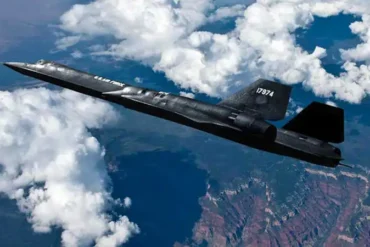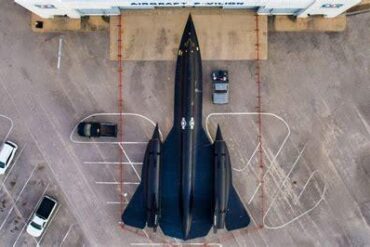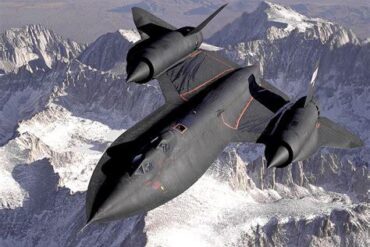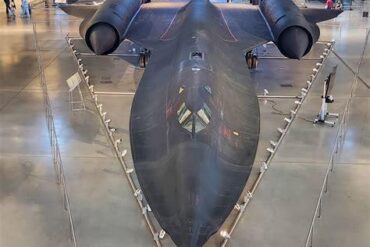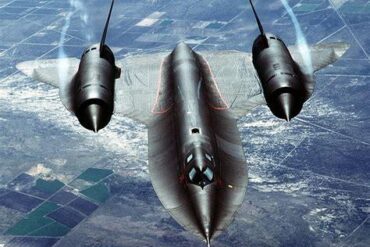
The Lockheed SR-71 Blackbird remains one of the most extraordinary aircraft ever built, not only because it could cruise above Mach 3 and outrun threats, but because it survived an environment that resembled the edge of a furnace. At those speeds, air itself became the enemy. Friction with the atmosphere heated the aircraft’s outer surface to temperatures exceeding 600°F (315°C) in many areas, while zones near the engines climbed close to 1,000°F (540°C). Few machines could endure such punishment. Fewer still could keep two human pilots alive inside.
Most aircraft are designed to move through the air efficiently. The SR-71 had to move through it violently. Every second at top speed generated enormous thermal stress across the fuselage, wings, chines, cockpit glazing, fuel tanks, and engine nacelles. Conventional aluminum aircraft structures would have softened, warped, or failed long before reaching the Blackbird’s operating envelope.
That challenge forced Lockheed’s legendary Skunk Works team to rethink what an airplane could be made from. Their answer was titanium—expensive, difficult, temperamental, and absolutely necessary. The result was an aircraft whose skin was not simply a shell, but the first layer of a carefully engineered survival system.
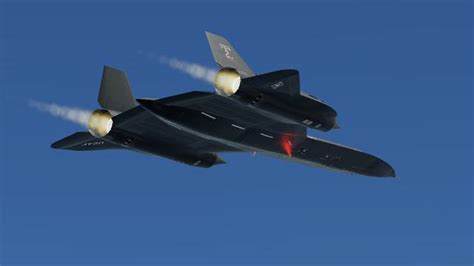
Titanium: The Metal That Made Mach 3 Possible
Roughly 93% of the SR-71’s structure was built from titanium alloys. That statistic alone explains how radical the aircraft was. During the 1960s, titanium was not a routine aerospace material. It was notoriously hard to machine, expensive to refine, and chemically reactive when heated. Yet nothing else offered the combination of strength, lightness, and heat resistance the Blackbird required.
Steel could tolerate high temperatures, but it was far too heavy for an aircraft that needed extreme speed and range. Aluminum was lightweight, but it lost strength rapidly as temperatures rose. Titanium sat in the sweet spot. It delivered strength comparable to steel at about half the weight, while retaining structural integrity in conditions that would cripple conventional airframes.
Lockheed used several titanium alloys, but one of the most important was a beta alloy known as Ti-13V-11Cr-3Al. Its mix of vanadium, chromium, and aluminum helped preserve toughness under repeated thermal cycling. Every high-speed mission heated the aircraft dramatically, then allowed it to cool again after descent. Metals fatigue under that punishment. The Blackbird’s titanium had to endure it repeatedly.
Why Titanium Skin Protected The Pilots
The aircraft’s skin did more than resist melting. It acted as a thermal barrier between the inferno outside and the crew compartment inside. Titanium has lower thermal conductivity than many common structural metals, meaning heat transfers through it more slowly. That characteristic was critical.
Instead of instantly channeling surface heat inward, much of the temperature spike remained concentrated near the outer skin. This delayed and reduced the amount of heat reaching cockpit walls, avionics bays, and internal systems. It did not create a cool cabin by itself, but it bought valuable time and reduced the thermal load the rest of the aircraft had to manage.
At Mach 3+, seconds matter. If heat moved rapidly through the structure, instruments would fail, seals would degrade, wiring would overheat, and cockpit conditions could become intolerable. Titanium helped prevent the aircraft from becoming an oven with wings.
The Black Paint Was About Heat, Not Just Mystery
The SR-71’s matte black finish helped create its legendary image, but the color served a practical purpose. It enhanced heat radiation. Once the aircraft’s skin absorbed tremendous thermal energy, it needed ways to shed that heat efficiently. Dark surfaces radiate heat more effectively than lighter ones, helping the Blackbird cool itself during and after flight.
That paint also contained iron ferrite compounds that contributed to radar signature reduction, but the thermal role was just as important. In short, the Blackbird looked menacing because physics demanded it.
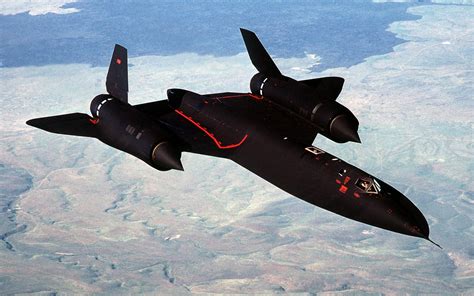
Expansion By Design: Why The SR-71 Leaked Fuel On The Ground
One of the strangest truths about the SR-71 is that it often leaked fuel while parked or taxiing. That sounds like a defect. It was actually intentional.
When cold, the titanium airframe contracted. Engineers left panel gaps and tolerances that appeared loose at ambient temperatures because the aircraft would expand significantly in flight. Estimates vary, but the Blackbird could grow several inches in length once heated at cruise speed.
Its fuel tanks were integrated into the wing structure, so when the aircraft was cold, seams did not fully seal. JP-7 fuel dripped from the aircraft on the ground, often until takeoff. Once the Blackbird accelerated and heated up, the titanium expanded, gaps closed, and the tanks became tight enough for sustained operation.
This was engineering at the edge of possibility: a plane designed to leak when idle so it could function when blazing through the stratosphere.
Corrugated Skin That Helped Stability
Sections of the SR-71’s wing skin were visibly rippled. Those corrugations were aligned parallel to airflow so panels could expand and contract without buckling. A smooth sheet of metal exposed to such temperature swings could warp dramatically.
Instead, the ripples acted like controlled flex zones, allowing thermal movement while preserving aerodynamic shape. Surprisingly, these ridges did not destroy performance. At extreme speed, airflow effectively skimmed over them. Some engineers even noted that the grooves helped channel air rearward, aiding directional stability.
Sometimes the smartest design looks odd because it solves a problem most machines never face.
JP-7 Fuel: Liquid Coolant Before It Was Fuel
Titanium protected the pilots, but it did not work alone. The SR-71’s second line of defense was its unusual fuel, JP-7.
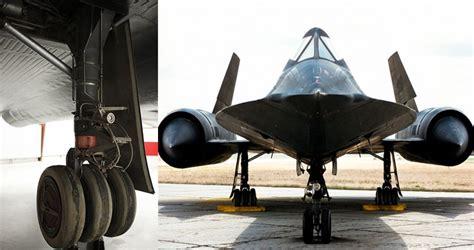
Unlike ordinary jet fuel, JP-7 was engineered with extremely low volatility so it would remain stable despite heat soaking through the aircraft. Before reaching the engines, it circulated through heat exchangers around the cockpit, avionics, landing gear, and other hot zones. In effect, it functioned as a coolant first, fuel second.
The process absorbed thermal energy that otherwise would have raised cockpit temperatures dangerously. Only after soaking up heat was the fuel sent to the engines for combustion.
That created a remarkable efficiency loop. The aircraft used fuel to cool itself, then burned the warmed fuel for thrust. Elegant, brutal, effective.
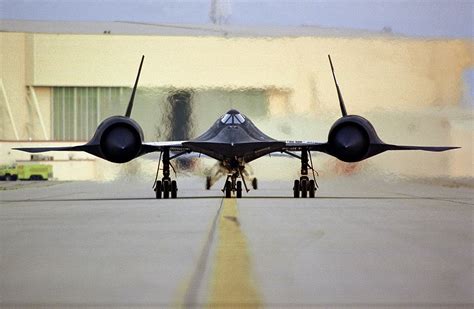
Cockpit Survival At The Edge Of Space
Even with titanium skin and fuel cooling, the cockpit environment remained harsh. The SR-71 routinely operated above 80,000 feet, where atmospheric pressure is too low for normal human survival. Pilots wore full-pressure suits similar to astronaut gear.
These suits protected against decompression, temperature extremes, and emergency scenarios such as canopy failure. Inside the cockpit, environmental control systems regulated air supply and temperature, but the crew still sat inside a machine whose outer shell could exceed the temperature of many kitchen ovens.
That contrast is astonishing: inches away from superheated metal, pilots managed navigation, reconnaissance systems, radio procedures, and engine monitoring with calm precision.
Quartz Windows For A Hotter World
Even the windshield required reinvention. Ordinary aerospace glass would distort, weaken, or fail under Blackbird conditions. Lockheed worked with Corning to develop solid quartz windshields roughly 1.25 inches thick.
Quartz tolerated the heat far better than conventional materials. The windows were bonded to the titanium frame through specialized methods because ordinary adhesives could not survive. Layers of trapped air and laminated inner components improved insulation and durability.
For the pilots, those windows were more than transparency—they were another shield against the thermal violence outside.
Building Titanium Was Nearly As Hard As Flying It
Manufacturing the SR-71 was a saga of industrial invention. Heated titanium eagerly absorbs oxygen, nitrogen, and hydrogen, which can make welds brittle. Skunk Works engineers developed argon-shielded welding systems and sealed chambers where technicians worked through gloves to keep oxygen away from hot metal.
Standard tools also caused trouble. Titanium work-hardened during machining and destroyed cutting bits. Chlorine contamination from city water reportedly caused mysterious failures until engineers traced the source and switched to distilled water cleaning.
Every part of the aircraft demanded patience, precision, and custom processes. Building the Blackbird was not mass production—it was controlled combat with metallurgy.
Cold War Irony: Soviet Ore, American Spy Plane
One of the greatest twists of the Cold War is that much of the titanium used for American high-speed reconnaissance aircraft was sourced indirectly from the Soviet Union, then the world’s leading supplier of titanium ore.
Through shell companies and covert procurement networks, the United States obtained raw material that would eventually become the structure of aircraft designed to watch Soviet territory. History occasionally writes jokes sharper than fiction.
Why The Titanium Skin Still Matters Today
Modern stealth aircraft, hypersonic research vehicles, and space systems all owe something to the lessons of the SR-71. The Blackbird proved that structure, thermal management, propulsion, and human survival systems must be designed together when speed enters extreme territory.
Its titanium skin was not a cosmetic feature or material luxury. It was the foundation that made everything else possible. Without it, there would be no Mach 3 cruise, no survivable cockpit, no global reconnaissance legend.
The SR-71 did not merely fly fast. It carried human beings through temperatures above 300°C using engineering so advanced that decades later it still feels futuristic. That is why the Blackbird remains iconic: it turned impossible heat into manageable reality, one titanium panel at a time.