The Lockheed SR-71 Blackbird was never designed to travel into space. Yet for the men who flew it, the aircraft often felt as though it existed in a realm somewhere between Earth and the cosmos. Cruising at altitudes above 80,000 feet and accelerating beyond Mach 3, the legendary reconnaissance aircraft carried its crews into an environment so alien that many described it as profoundly disorienting. For some pilots, the view alone was enough to challenge their perception of reality.
During the height of the Cold War, the SR-71 became one of the most extraordinary technological achievements ever produced. Built to outrun missiles, evade interceptors, and gather intelligence from hostile territory, the aircraft earned a reputation for speed and survivability that remains unmatched among operational manned reconnaissance aircraft. Yet beyond its military accomplishments, the Blackbird offered something far more unexpected: a glimpse of Earth and space that few human beings had ever witnessed.
The experience was so overwhelming that one veteran pilot later admitted it could “mess up your head really quick.” His words captured a sensation shared by many who ventured to the edge of the atmosphere aboard America’s fastest spy plane.
The SR-71 emerged during a period when science fiction dominated popular culture. The Cold War fueled public fascination with futuristic technology, space exploration, and advanced military machines. Against this backdrop, the Blackbird appeared almost impossibly futuristic.
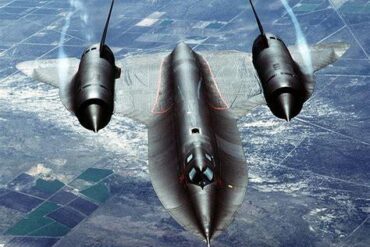
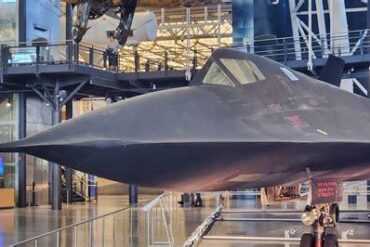
When the aircraft was publicly revealed in 1964, it looked unlike anything else flying. Its dark, radar-evading exterior, razor-sharp contours, and elongated fuselage created the impression of a spacecraft rather than a conventional airplane. Even among the rapidly advancing jet aircraft of the era, the Blackbird stood apart.
Its appearance was not merely aesthetic. Every line and contour served a purpose. Engineers at Lockheed’s Skunk Works designed the aircraft to survive sustained flight at speeds exceeding Mach 3.2 while operating in one of the harshest environments any aircraft had ever encountered.
At those extreme velocities, the aircraft’s skin heated dramatically due to atmospheric friction. Temperatures across portions of the airframe exceeded 500 degrees Fahrenheit. Conventional aluminum construction would have failed under such conditions, forcing engineers to pioneer the extensive use of titanium throughout the aircraft.
The result was a machine that seemed decades ahead of its time.
Flying Above 95 Percent of Earth’s Atmosphere
The true uniqueness of the Blackbird became apparent once it reached operational altitude.
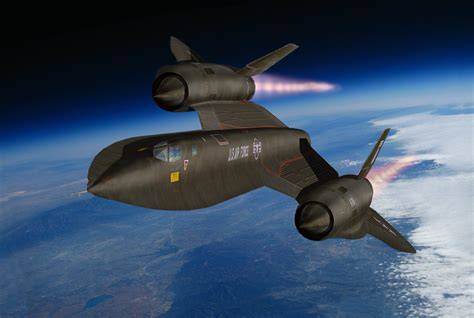
Most commercial airliners cruise between 30,000 and 40,000 feet. Modern fighter aircraft may occasionally climb higher, but few remain there for long periods. The SR-71 routinely operated between 80,000 and 85,000 feet, placing nearly 95 percent of Earth’s atmosphere beneath the aircraft.
At these altitudes, the sky no longer appeared blue.
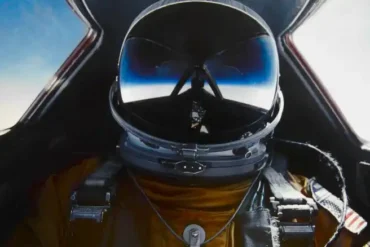
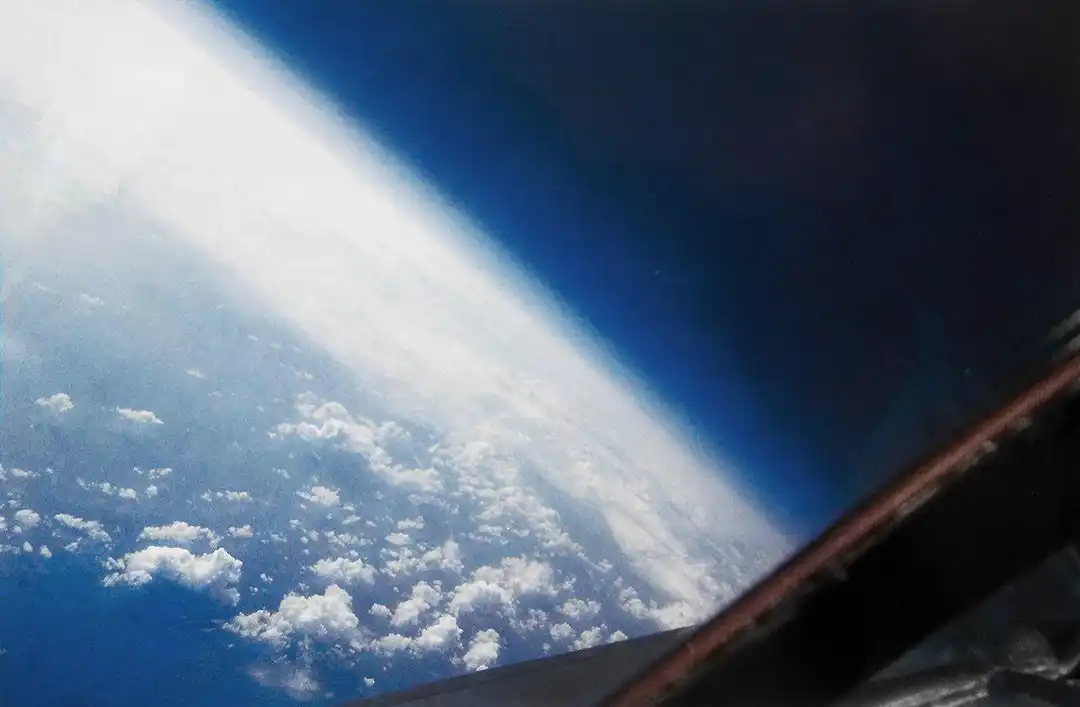
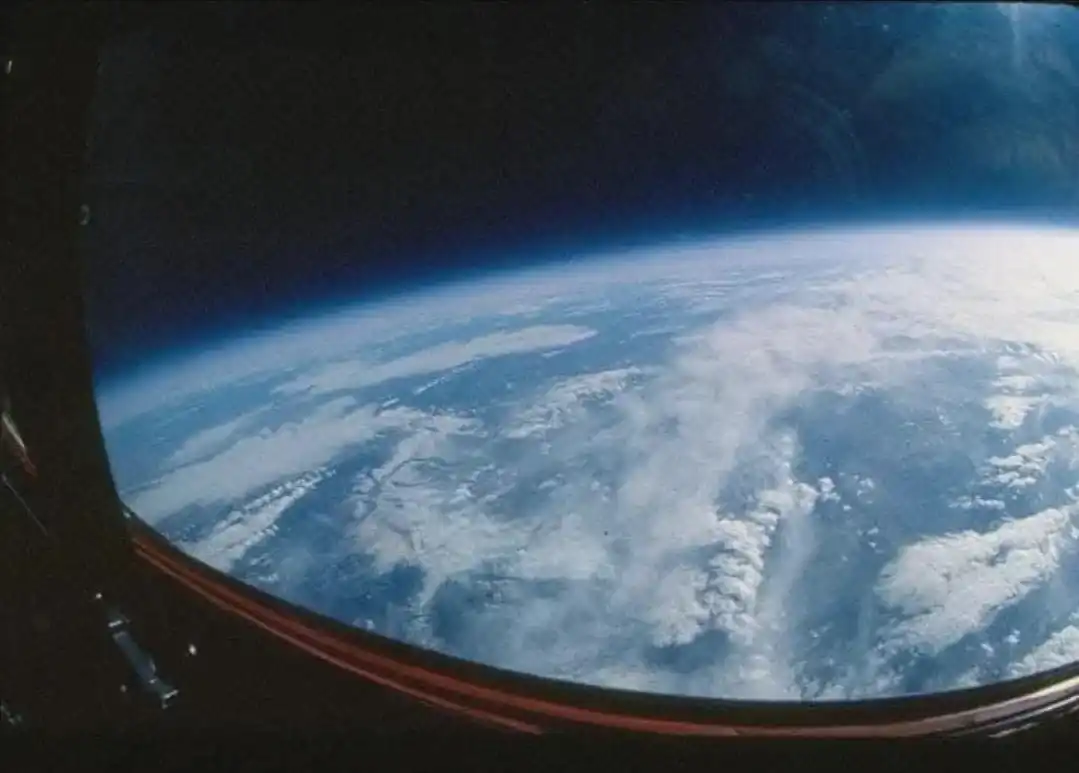
Instead, pilots described a sky that gradually darkened into a deep indigo before becoming almost completely black. The transition created a surreal visual effect. Above the aircraft was the darkness of space. Below stretched the curved surface of Earth, illuminated by sunlight and wrapped in a thin atmospheric layer.
The horizon itself looked different. Rather than extending in a flat line, it visibly curved. Pilots could observe immense sections of the planet at once, gaining a perspective usually reserved for astronauts.
This view transformed routine reconnaissance flights into unforgettable experiences.
For intelligence planners, those altitudes offered enormous operational advantages. The Blackbird could photograph strategic targets across thousands of miles while remaining outside the effective reach of most air defense systems. Soviet missile crews, Chinese radar operators, and North Vietnamese air defense networks could detect the aircraft, but engaging it successfully was another matter entirely.
The aircraft’s speed and altitude made interception nearly impossible.
According to historical records, enemy forces launched thousands of missiles against Blackbirds throughout their operational career. None succeeded in destroying a single SR-71.
The Night Sky That Changed Everything
The most remarkable views often appeared during nighttime missions.
Former United States Air Force Lieutenant Colonel David Peters experienced one such flight while operating from Kadena Air Base in Japan. Flying reconnaissance missions near the Korean Demilitarized Zone and along the Chinese coastline, Peters routinely entered an environment few humans would ever see.
On a moonless night at approximately 80,000 feet, the sky transformed into something beyond ordinary comprehension.
Without the atmospheric distortion present at lower elevations, stars appeared with extraordinary clarity and intensity. The heavens seemed impossibly crowded with light. Instead of seeing isolated constellations, pilots encountered an ocean of stars stretching endlessly in every direction.
Peters later recalled that astronomical experts estimated observers at that altitude could see trillions more stars than were visible from the ground.
The effect was immediate and deeply unsettling.
Unlike stargazing from Earth, there was little visual separation between the aircraft and the universe beyond. The distinction between atmosphere and space seemed to blur. The sensation created an overwhelming awareness of scale and distance that many pilots struggled to process.
Rather than admiring the view for extended periods, Peters explained that pilots often returned their attention to cockpit instruments. The experience could become disorienting enough to affect spatial awareness.
In aviation, maintaining orientation is critical. Pilots rely on visual references and instrument readings to determine attitude, direction, and altitude. When confronted with a sky overflowing with stars and a horizon unlike anything experienced at lower altitudes, those references could become psychologically confusing.
For some crews, the spectacle was simply too immense to absorb comfortably.
The Psychological Impact of Seeing Earth from the Stratosphere
What SR-71 pilots experienced was not merely visual amazement. Psychologists recognize a phenomenon known as awe, an emotional response triggered when individuals encounter something so vast that it challenges their normal understanding of reality.
Awe occurs when the human mind confronts scales, concepts, or experiences beyond its everyday framework.
Standing beside a giant mountain can inspire awe. Witnessing a solar eclipse can produce the same effect. Viewing Earth from the edge of space elevates that sensation to an entirely different level.
Researchers studying astronauts have identified a related phenomenon known as the Overview Effect. Although typically associated with orbital spaceflight, many aspects of the experience mirror what Blackbird crews reported.
The Overview Effect often produces a dramatic shift in perspective. Individuals become intensely aware of Earth’s fragility, interconnectedness, and isolation within the vastness of space. Many astronauts describe feelings of unity, humility, and emotional overwhelm.
SR-71 pilots occupied a unique middle ground.
They were not technically astronauts, yet they traveled high enough to glimpse some of the same realities that transformed those who ventured into orbit. At 80,000 feet, Earth’s atmospheric blanket appeared remarkably thin. National borders vanished. Human conflicts seemed insignificant compared to the scale of the planet itself.
For military aviators tasked with collecting intelligence during one of history’s most dangerous geopolitical rivalries, such reflections could be unexpectedly profound.
Why the SR-71 Existed in the First Place
The aircraft’s extraordinary capabilities emerged from a strategic necessity.
During the 1950s, the United States depended heavily on high-altitude reconnaissance to monitor Soviet military activities. The Lockheed U-2 initially fulfilled that role by flying above most air defense systems.
That assumption collapsed in 1960.
Pilot Francis Gary Powers was shot down while flying a U-2 mission over the Soviet Union. His capture exposed the vulnerability of existing reconnaissance methods and created an international political crisis.
American planners realized that altitude alone was no longer sufficient.
A new aircraft would need both extreme altitude and unprecedented speed.
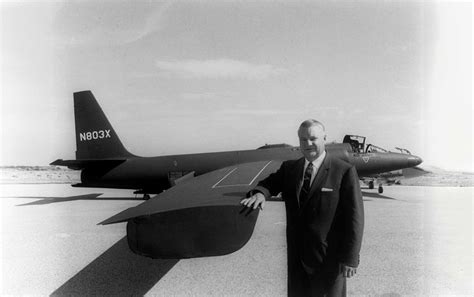
Lockheed’s legendary engineer Clarence “Kelly” Johnson and his Skunk Works team responded by creating the A-12 OXCART. This revolutionary aircraft introduced many technologies that would later define the SR-71.
The A-12 demonstrated that sustained flight above Mach 3 was achievable. It incorporated extensive titanium construction, reduced radar visibility features, and propulsion systems capable of operating in conditions previously considered impractical.
However, the aircraft was demanding and expensive to operate.
The lessons learned from the A-12 ultimately paved the way for the more capable SR-71 Blackbird.
Advanced Technology That Made the Impossible Routine
The SR-71 represented a significant advancement over its predecessor.
One of its most important improvements was the addition of a two-person crew. Alongside the pilot sat a Reconnaissance Systems Officer, commonly known as an RSO. This arrangement dramatically reduced workload during complex missions that often covered enormous distances.
The aircraft also incorporated an advanced Astro-Inertial Navigation System.
This remarkable technology used stars as navigational references. By tracking celestial objects during flight, the system corrected accumulated navigation errors and maintained exceptional positional accuracy across vast distances.
The Blackbird’s optical reconnaissance systems were equally impressive.
Its cameras could capture highly detailed imagery across enormous swaths of territory. Intelligence analysts could examine military facilities, transportation networks, industrial complexes, and strategic infrastructure with unprecedented clarity.
Electronic warfare capabilities further enhanced survivability.
Radar warning systems alerted crews to potential threats, while sophisticated defensive equipment complicated enemy targeting efforts. Combined with altitude and speed, these systems contributed to the aircraft’s remarkable operational record.
Powering the entire platform were the legendary Pratt & Whitney J58 engines.
These engines blurred the line between traditional turbojets and ramjets. At cruising speed, much of their thrust originated from airflow management rather than conventional turbine operation. The design enabled sustained Mach 3 flight for hours at a time, something no other operational military aircraft achieved on a similar scale.
The Dangerous Reconnaissance Missions Over Vietnam
The Vietnam War became one of the Blackbird’s most important operational theaters.
Based at Kadena Air Base in Okinawa, SR-71 crews conducted reconnaissance missions over North Vietnam beginning in 1968. Their task was straightforward but vital: collect intelligence that could not be obtained through other means.
The aircraft photographed transportation networks, industrial centers, supply depots, military installations, and prisoner-of-war facilities.
As the conflict intensified, the need for accurate intelligence grew dramatically. Military planners required constant updates regarding the movement of equipment and personnel from China into North Vietnam.
The SR-71 provided those answers.
Flying at extraordinary altitude and speed, the aircraft could cross vast areas quickly while gathering massive amounts of photographic data. By the early 1970s, missions became increasingly frequent as intelligence demands expanded.
Information gathered during these flights influenced strategic planning, targeting decisions, and assessments of enemy capabilities.
The Blackbird’s ability to deliver timely intelligence often made it one of the most valuable assets available to military and intelligence agencies operating in Southeast Asia.
The Lasting Legacy of the Aircraft That Touched the Edge of Space
After more than three decades of service, the SR-71 was retired in 1998.
Its departure reflected changing priorities rather than diminished performance. Advances in satellite reconnaissance, shifting defense budgets, and evolving military requirements reduced the need for manned strategic reconnaissance aircraft.
Yet retirement did little to diminish the Blackbird’s reputation.
Even today, it remains one of the most celebrated aircraft ever built. Its speed records endure. Its engineering achievements continue to inspire aerospace designers. Its distinctive silhouette remains instantly recognizable around the world.
Most importantly, the aircraft left an unforgettable impression on those who flew it.
For SR-71 crews, the mission was never simply about gathering intelligence. It was about operating in a domain where aviation began to merge with spaceflight. Few people in history have witnessed Earth from such a vantage point while traveling faster than a rifle bullet.
From 80,000 feet above the planet, the atmosphere appeared fragile, the horizon curved gently into darkness, and countless stars filled the sky with overwhelming brilliance.
That view was more than a spectacle.
It was a reminder of humanity’s small place within an unimaginably vast universe—a realization powerful enough to leave even the most experienced pilots momentarily speechless.