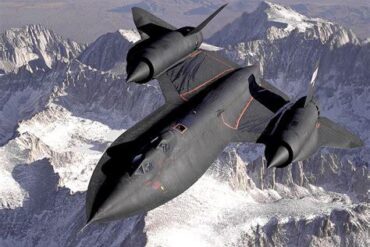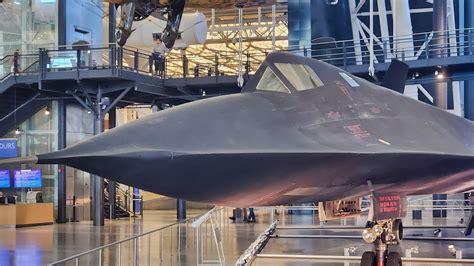
The SR-71 Blackbird represented one of the most extraordinary achievements of Cold War aviation. Built to gather intelligence deep near hostile airspace, the aircraft relied on an unmatched combination of speed, altitude, and advanced engineering rather than weapons for protection. When American pilots flew missions near the Soviet Union, their greatest defense was simple: climb higher and move faster than anything trying to intercept them.
The Blackbird could reach speeds of more than 2,000 miles per hour and operate at altitudes approaching 85,000 feet, far above ordinary commercial aircraft. In 1976, it officially set a record speed of 2,193 miles per hour, a mark that remains one of aviation’s most remarkable achievements. However, flying at such extreme conditions created enormous risks, especially when mechanical problems appeared thousands of feet above enemy territory.
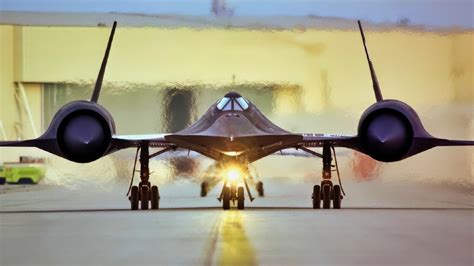
The Challenge of Flying the SR-71 Blackbird Near Soviet Airspace
The basic survival strategy of the U.S. Air Force SR-71 program was built around avoiding confrontation. The aircraft was not designed to fight enemy aircraft directly. Instead, its pilots depended on the Blackbird’s extraordinary performance to escape danger before hostile interceptors could react.
At more than 80,000 feet, a problem that might be manageable in a normal aircraft could become a life-threatening emergency. A failing engine, navigation issue, or fuel problem could leave pilots with limited options. The Cold War created additional pressure because any emergency landing near Soviet-controlled regions could have caused a major diplomatic crisis.
Yet the Blackbird crews trained extensively for these situations. Every mission involved careful planning, alternative routes, and coordination with friendly nations that could provide assistance if the aircraft could no longer complete its mission.
The Baltic Express and Sweden’s Unexpected Role
One of the most famous operational areas for the SR-71 was the Baltic Sea region, where missions known as the “Baltic Express” monitored Soviet military activity. The location was strategically important because the Baltic Sea bordered several European nations while remaining close to Soviet territory.
In 1987, an SR-71 flying this route suffered an engine-related problem and could not safely continue its mission. The aircraft received assistance from four Swedish pilots flying Saab Viggen fighter jets. The Swedish pilots escorted the damaged Blackbird, helping guide it away from dangerous airspace and toward a safe landing location.
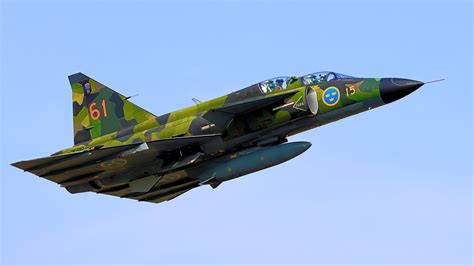
The assistance demonstrated the importance of international cooperation during the Cold War. Those Swedish pilots were later recognized with U.S. Air Force medals in 2018 for their actions decades earlier.
Emergency Landings Proved the SR-71’s Engineering Strength
Another incident occurred in 1987 when an SR-71 experienced problems with one of its powerful Pratt & Whitney J58 engines near Norway. The aircraft was forced to land at Stavanger, but the mission ended safely without escalation.
These incidents highlighted more than pilot skill. They showed the remarkable reliability and design philosophy behind the Blackbird. Engineers created an aircraft capable of operating at extreme temperatures, extreme speeds, and extreme altitudes while giving crews a chance to survive unexpected failures.
Many details about SR-71 operations remain classified, but the known events reveal the extraordinary challenges faced by its pilots. Flying above the Soviet Union’s doorstep at 83,000 feet was never routine. It was a dangerous mission where technology, preparation, and international cooperation combined to keep the world’s fastest jet and its crews alive.