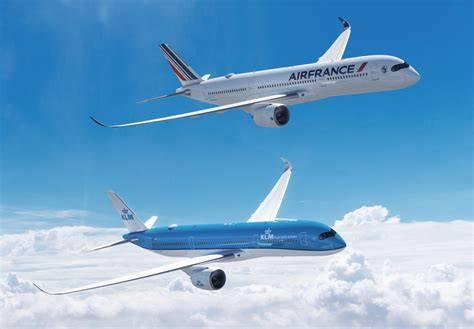
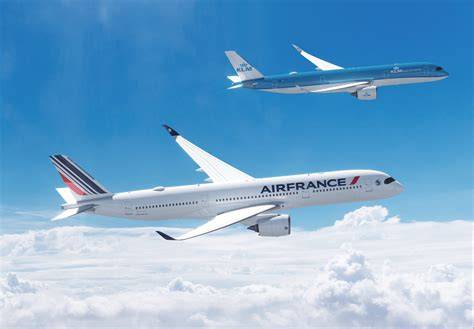
The United States Department of Transportation has fined Air France and KLM for operating Delta Air Lines codeshare flights below 32,000 feet within the Baghdad Flight Information Region, the restricted Iraqi airspace where the Federal Aviation Administration bars US-linked operations because of heightened conflict risk. Air France received a $105,000 penalty, while KLM was assessed $320,000, bringing the combined total to $425,000. Neither carrier is American, yet both sold seats under a Delta designator code, and that marketing arrangement pulled their flights inside the reach of US safety regulations. The case thus turns on a narrow but powerful legal principle: when a foreign airline puts a US airline code on a ticket, it accepts the same altitude restrictions that bind American operators.
Office of Aviation Consumer Protection Investigation Finds More Than 130 Flights in Prohibited Airspace
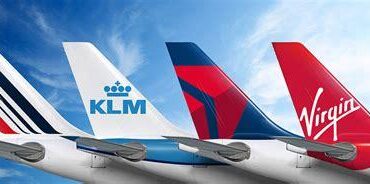
The Office of Aviation Consumer Protection conducted a detailed review of both carriers’ operations and concluded that Air France operated more than 30 flights carrying the Delta code, while KLM operated more than 100 flights under the same code in FAA-prohibited airspace between January 2022 and May 2025. Delta did not fly these aircraft itself. Instead, it placed its designator code on services flown by its SkyTeam partners and sold tickets for those flights, a routine codeshare practice that lets airlines share networks, coordinate baggage, and pool frequent flyer benefits. The operating carrier flies the aircraft; the marketing carrier sells the ticket under its own flight number. That distinction sits at the heart of the enforcement action, because the DOT treated the Delta code on the ticket as the hook that made US rules apply.
DOT Enforcement Relies on 14 CFR 91.1605 and the Baghdad Flight Information Region Restriction
The restriction stems from 14 CFR 91.1605, which covers Iraqi-managed airspace and prohibits US carriers, along with select other US operators, from flying below 32,000 feet within the designated Baghdad region. Extended in 2022, the rule remains in effect and is designed to reduce exposure to militant activity and other security threats during transit above Baghdad. Crucially, the regulation also reaches foreign airlines that operate flights marketed under a US airline designator, so the codeshare arrangement placed Air France and KLM squarely inside its scope. The DOT’s position is that a US flight code is not a marketing label alone but a commitment to American safety standards, wherever the aircraft is registered.
Air France and KLM Dispute Altitude Deviations, Citing Air Traffic Control Instructions
Both airlines disputed responsibility for the altitude deviations, arguing that air traffic controllers directed the aircraft’s altitude rather than their own flight crews choosing to descend. That argument raises a genuine question: should a carrier be penalized for following instructions from air traffic control in a conflict-affected region? The DOT nonetheless proceeded, and the resolution carries a combined $425,000 obligation, with $265,000 due within 60 days and the remaining $160,000 payable only if either airline commits a similar violation within the next year. Both carriers told the department they take regulatory compliance seriously and neither deliberately ignored the restrictions. The penalty structure reflects that posture, pairing an immediate payment with a suspended amount that functions as a deterrent.
Transportation Secretary Sean P. Duffy Says Passenger Safety Comes First
US Transportation Secretary Sean P. Duffy framed the enforcement in unambiguous terms. “Under the Trump Administration, if you fly carrying a US code, following our safety rules is not optional,” he said. “We will not hesitate to hold accountable any airline for failing to comply with agency regulations. Passenger safety comes first—no exceptions.” The statement signals that the department intends to treat codeshare compliance as a safety matter rather than a technical ticketing question, and it extends the reach of FAA prohibitions to partners flying on behalf of American brands.
What the Air France and KLM Fines Mean for Delta Codeshare Partners and Global Airline Alliances
The action sets a clear precedent for SkyTeam partners and any foreign airline that markets flights under a US carrier’s code. Delta escaped direct liability because it did not operate the aircraft, but its brand accompanied every one of those flights, and the DOT has now demonstrated that it will trace the code to the ticket. For travelers, the practical lesson is that a familiar US flight number can carry obligations invisible in the itinerary: the safety rules attached to that code apply regardless of which airline’s aircraft actually flies. For airlines, the message is that US airspace restrictions follow the marketing carrier as surely as they follow the operator, and that conflict-zone altitude limits are enforced with real money when a US code is attached.