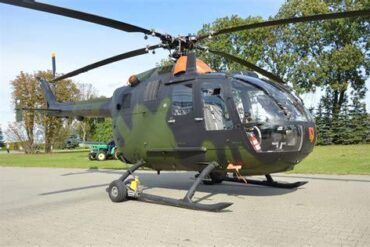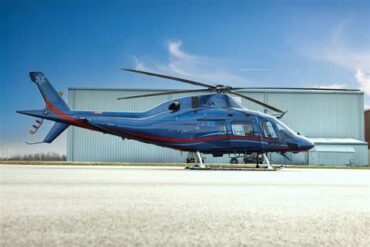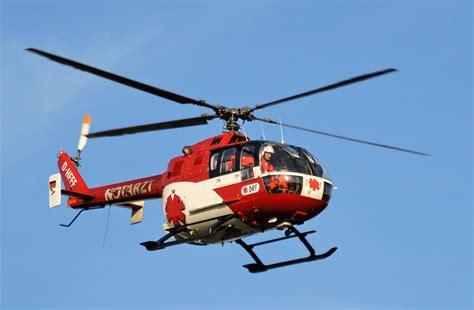
The MBB Bo 105 stands as one of the most influential helicopters in modern aviation history. Developed in West Germany by Bölkow and first flown on 16 February 1967, this light, twin-engine multipurpose helicopter set unprecedented benchmarks in agility, versatility, and aeronautical engineering. Not merely another entry into the rotary-wing category, the Bo 105 introduced innovations that would ripple through decades of helicopter design, military tactics, and emergency response frameworks.
Origins and Development of the Bo 105
In the heart of the Cold War era, the need for highly agile and dependable rotary aircraft spurred intense innovation. It was in this environment that Bölkow began work on a helicopter that would ultimately disrupt the landscape. The Bo 105 emerged not only as the first light twin-engine helicopter but also as the first rotorcraft capable of performing full aerobatic maneuvers, including the revered inverted loop. This capability was no stunt; it was a testament to the design’s structural integrity and mechanical superiority.
The helicopter’s agility was largely due to its pioneering hingeless rotor system. Traditional rotor hubs featured complex hinges to manage blade motion, but the Bo 105’s rigid rotor eliminated these, using composite materials that allowed blade flexibility without mechanical articulation. The result was a simpler, lighter, and more responsive rotor head that reduced maintenance and increased maneuverability.
Transition to Mass Production and Operational Deployment
Following its prototype stage, the Bo 105 went into production in 1970 under Messerschmitt-Bölkow-Blohm (MBB), which would later become part of Eurocopter and ultimately Airbus Helicopters. From its initial production phase through to 2001, a remarkable 1,640 units were manufactured. These helicopters saw widespread adoption across both civilian and military sectors.
By the late 1970s and into the 1980s, the Bo 105 had already solidified its place in multiple national fleets. Its multi-role flexibility made it indispensable to emergency medical services (EMS), law enforcement agencies, search and rescue teams, and military forces. Nations across Europe, Asia, North America, and Africa utilized the Bo 105’s robust design to fulfill mission-critical roles, particularly in harsh or high-risk environments.
Hingeless Rotor System: Engineering Ahead of Its Time
At the heart of the Bo 105’s legendary flight characteristics is its rigid hingeless rotor head, which was a major departure from conventional designs. The rotor blades were attached directly to a titanium rotor hub, made possible through the use of fiber-reinforced composites. These materials allowed for necessary flexion while maintaining the strength required to perform under stress.
This innovative configuration provided several key advantages:
- Superior maneuverability, allowing tight turns and precise handling.
- Low vibration levels, enhancing both passenger comfort and structural longevity.
- Reduced maintenance, thanks to fewer mechanical parts subject to wear and tear.
These factors made the Bo 105 not only a pilot’s helicopter but a favorite among mechanics and procurement officers worldwide.

Military Adaptations: The PAH-1 Anti-Tank Variant
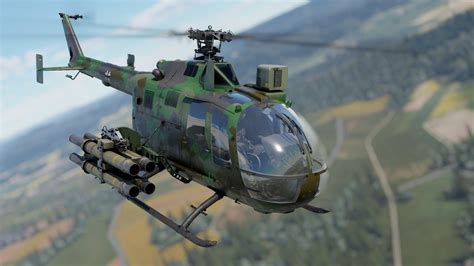
One of the most prominent military adaptations of the Bo 105 was the PAH-1, a Panzerabwehrhubschrauber (anti-tank helicopter) developed for the German Army. Outfitted with HOT (High Subsonic Optical Remote-Guided, Tube-Launched) missiles, the PAH-1 delivered precise, mobile firepower capable of engaging and neutralizing enemy armor units from concealed or elevated positions.
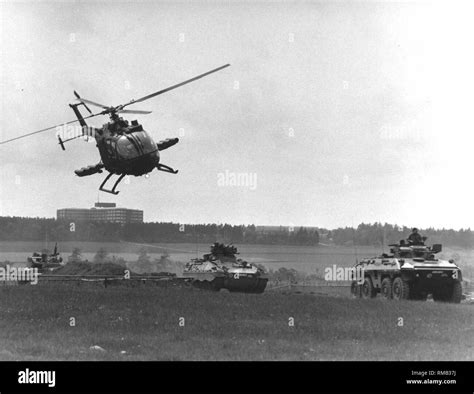
The PAH-1 variant retained the core agility of the original Bo 105 while being modified with:
- Advanced targeting systems, including optical sights and infrared sensors.
- Weapon pylons, configured for anti-tank missiles and rockets.
- Ballistic protection, including armored seats and redundant flight systems.
These improvements transformed the Bo 105 from a general-purpose platform into a lethal combat unit, one that could navigate complex terrains and retreat swiftly from engagement zones. It was particularly effective in central Europe’s wooded and urban battlefields, where mobility was paramount.
EMS and Civilian Roles: A Lifesaving Workhorse
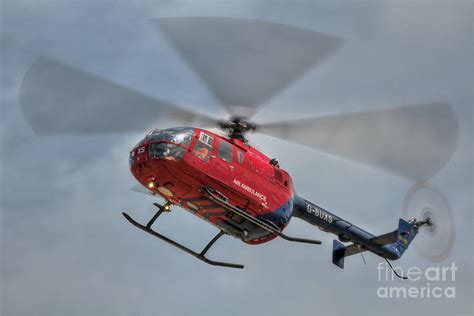
In the civilian domain, the Bo 105 earned its reputation as a life-saving EMS platform. The helicopter’s compact footprint, combined with its ability to land in confined spaces, made it ideal for emergency response in both urban and remote environments. Its flat floor cabin, rear clamshell doors, and excellent visibility further facilitated rapid patient loading and medical treatment while in flight.
Hospitals, air ambulance services, and governmental health organizations embraced the Bo 105 for missions where every second counted. In this role, it not only provided speed but also reliability, even in adverse weather conditions. Throughout the 1980s and 1990s, Bo 105s became a mainstay of air rescue operations in countries like Germany, Austria, Sweden, and Canada.
Global Reach and Long-Term Service Record
Over its more than three decades of active production and deployment, the Bo 105 flew across continents and climates. Whether operating in the Alaskan wilderness, the Alpine mountains, the deserts of the Middle East, or the tropical jungles of Southeast Asia, it proved its mettle time and again. This global service translated into millions of flight hours, accumulating a safety record and performance history that very few helicopters can match.
The Bo 105’s legacy is felt in:
- Indonesia, where it served for decades in a range of paramilitary and civilian roles.
- Chile, using Bo 105s in mountainous SAR and border patrol missions.
- Spain and France, integrating the platform into customs and environmental monitoring.
By the time production ceased in 2001, many operators had begun transitioning to the more modern Eurocopter EC135, which built upon the Bo 105’s core concepts but with enhanced avionics, noise reduction technologies, and modular design.
Technical Specifications: A Snapshot of Excellence
To appreciate the Bo 105’s engineering prowess, one must consider its technical specifications:
- Length (rotors turning): 11.86 m (38 ft 11 in)
- Main rotor diameter: 9.84 m (32 ft 3 in)
- Empty weight: 1,300 kg (2,866 lb)
- Max takeoff weight: 2,500 kg (5,512 lb)
- Engines: 2 × Allison 250-C20B turboshafts, each producing 420 shp
- Cruise speed: 242 km/h (150 mph)
- Range: 575 km (357 mi)
- Service ceiling: 5,180 m (17,000 ft)
- Rate of climb: 8.9 m/s (1,750 ft/min)
These figures not only reflect the helicopter’s power and agility but also its ability to perform reliably across a variety of mission types.
Legacy and Continuing Influence in Helicopter Design
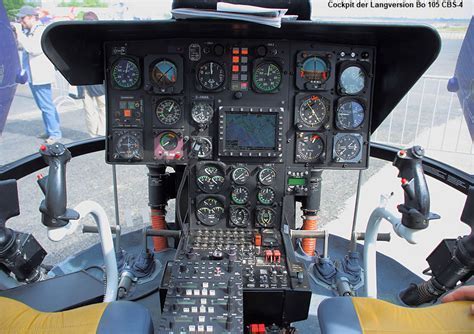
Though no longer in production, the MBB Bo 105’s legacy is far from dormant. Many of its design elements—most notably the rigid rotor system—have informed the development of modern rotorcraft. The Airbus H135, successor to the Bo 105, carries forward its DNA while integrating 21st-century avionics, aerodynamics, and safety standards.
Several Bo 105s remain operational today, particularly in private collections, aerobatic demonstration teams, and historical aviation museums. These helicopters continue to draw admiration not only for their engineering but also for the pivotal role they played in redefining what helicopters could do.
As the aviation community looks toward electrification, autonomous systems, and urban air mobility, the MBB Bo 105 reminds us of a time when raw ingenuity and precision engineering delivered breakthroughs that shaped generations. It is more than a helicopter; it is a cornerstone of rotary-wing excellence.