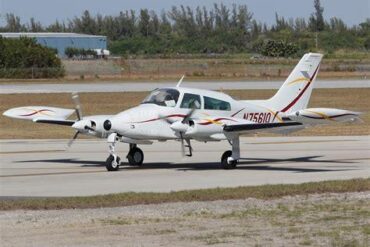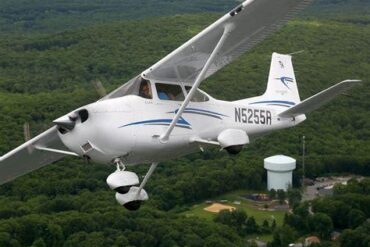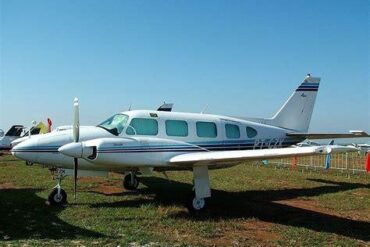
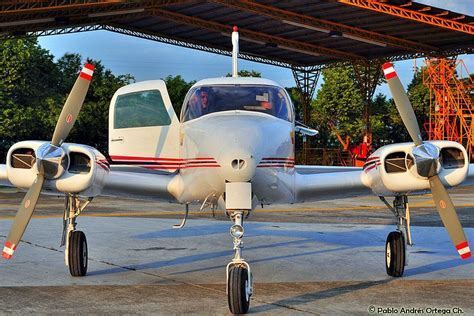
The Cessna 310, first introduced in 1954, stands as one of the most innovative and enduring aircraft in general aviation history. Designed as a twin-engine, low-wing monoplane, it filled a much-needed niche in the rapidly growing postwar market for light, multi-engine planes. With more than 6,000 units produced, including the turbocharged Cessna 320 Skyknight, the 310 series carved a legacy across commercial, military, and private sectors, showcasing remarkable versatility, speed, and reliability.
Built to accommodate between four and six passengers, the Cessna 310 was not just a people mover—it was a statement in aviation engineering that brought advanced features and dependable performance to a broad array of users from air taxis to military couriers.
Genesis of a Postwar Legend: Design and Development
The Cessna 310 made its first flight on January 3, 1953, and entered full production the following year. It marked Cessna’s first foray into the twin-engine market since the 1930s, aiming to provide a high-speed, high-payload aircraft for charter operators and private owners seeking more than single-engine performance.
Initial designs featured exhaust augmenter tubes running along the fuselage bottom, doubling as thrust-enhancers and heating sources. Uniquely, fuel was stored in sleek tip tanks, optimizing wing structure and extending range. These design elements offered early models a distinct silhouette and aerodynamic edge.
In 1964, a pivotal design revision routed exhaust beneath the wings, significantly reducing cabin noise and enhancing safety. Over time, Cessna applied lettered suffixes to denote generational improvements:
- The 310C (1959) introduced 260 hp engines, enhancing cruise speed and payload.
- The 310D (1960) featured a swept vertical stabilizer, improving stability.
- The 310F added an extra cabin window for better visibility and aesthetics.
- The 310G introduced canted “stabila-tip” tanks, improving roll stability.
- The 310K brought in three-bladed propellers and a redesigned side window.
Notably, the Cessna 320 Skyknight—produced from 1961 to 1969—offered a turbocharged TSIO-470 engine, elevating high-altitude cruise performance and range.
High-Performance Modifications: The Riley and Turbostream Conversions
In the aftermarket, engineers like Jack Riley pushed the 310’s potential further. Riley’s Rocket and Turbostream conversions replaced the standard Continental powerplants with 350 hp Lycoming engines, raising cruise speeds to 260 knots and boosting climb rates to 3,000 feet per minute.
These radical upgrades made the Cessna 310 a powerhouse in its class, rivaling turboprops in short-field utility while maintaining the accessibility of piston operation.
Operational Roles in Civil and Military Aviation
The Cessna 310 found instant popularity among commercial operators, particularly in the U.S. and remote regions worldwide. Its short takeoff and landing (STOL) performance, coupled with over 2,000 lb of payload capacity, made it a go-to solution for:
- Air taxi services in rugged terrain
- Medical evacuations
- Cargo runs
- Executive charters
Charter companies appreciated its low operating cost, with certain variants running under $100/hour even by late 20th-century standards. Its twin-engine redundancy also inspired confidence over mountainous or water-covered routes.
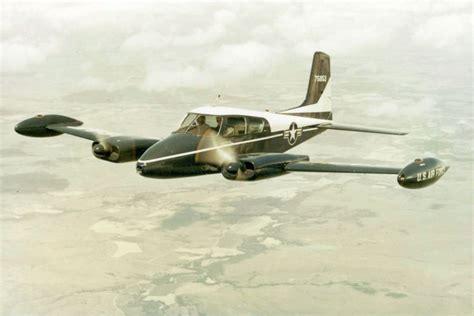
Military Adaptation: The U-3 ‘Blue Canoe’
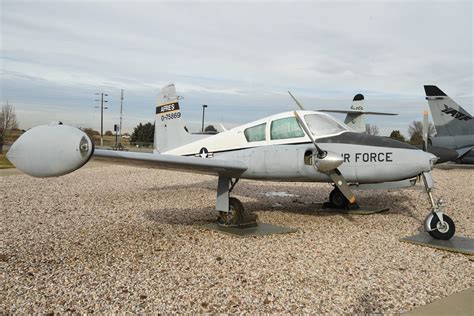
The United States Air Force adopted the aircraft under the L-27A/U-3A and L-27B/U-3B designations, acquiring more than 190 units for use in courier, liaison, and utility roles. These aircraft served prominently during the Vietnam War, often ferrying personnel and equipment between forward bases.
Their affordability—costing under $12 per flight hour—and rugged field performance made them a staple among U.S. and allied forces. Other military operators included Argentina, Indonesia, France, and Saudi Arabia.
Heroic and Historical Moments
One of the most dramatic stories involving a Cessna 310 occurred in 1992, when Major Orestes Pérez, a defector from Cuba, landed his 1961 model on the Varadero highway in a daring mission to evacuate his family. The maneuver evaded Cuban radar and gained international attention.
Earlier, in 1959, Cuban revolutionary Camilo Cienfuegos disappeared in a Cessna 310 during a return flight to Havana. Despite extensive searches, the wreckage was never found, fueling political speculation and myths.
Tragic Incidents and Safety Legacy
As with many general aviation aircraft of its era, the Cessna 310 was involved in several high-profile and fatal accidents. Among the most notorious:
- A 1962 mid-air collision over Brazil
- A 1967 collision involving a Navy aircraft over North Carolina
- The 1972 disappearance of U.S. Congressmen Nick Begich and Hale Boggs in Alaska
By July 2017, the NTSB recorded 1,787 incidents involving the Cessna 310, with 436 resulting in fatalities. Most accidents were attributed to pilot error or weather-related factors, not structural or mechanical deficiencies.
In the Public Eye: Display and Popular Culture
Several Cessna 310 aircraft are preserved or honored in public spaces. Notably, a U-3A ‘Blue Canoe’ is exhibited at the National Museum of the United States Air Force in Dayton, Ohio. The 1955 310 owned by actor Jimmy Stewart, serial N6775X, serves as a gate guardian at Indiana County–Jimmy Stewart Airport, celebrating his dual careers in aviation and film.
The aircraft has also made appearances in fiction and television, symbolizing dependable utility and executive flair. Though not as mainstream as other aircraft in cinema, its inclusion in aviation-themed literature and documentaries remains consistent.
Technical Specifications: 1956 Cessna 310
- Crew: 1
- Passenger Capacity: 4
- Length: 27 ft
- Wingspan: 35 ft
- Empty Weight: 2,850 lb
- Maximum Takeoff Weight (MTOW): 4,600 lb
- Fuel Capacity: 100 US gallons
- Powerplant: 2 × Continental O-470, 240 hp each
- Maximum Speed: 220 mph
- Cruise Speed: 205 mph
- Range: 1,000 miles
- Service Ceiling: 20,000 ft
- Rate of Climb: 1,700 ft/min
These figures evolved slightly across later variants, especially with turbocharging and aftermarket enhancements. Still, the airframe’s consistency and upgrade path contributed to its long production run from 1954 to 1980.
Legacy of the Cessna 310
The Cessna 310’s longevity and adaptability place it among the most successful general aviation twins ever built. It pioneered design elements that became standard in future multi-engine aircraft—tip tanks, turbocharging, and cabin pressurization were all explored or implemented in this model’s lineage.
More importantly, the 310 proved that twin-engine utility did not have to sacrifice elegance, affordability, or ease of operation. Even decades after production ceased, many examples remain flying today—testaments to their durability and the loyalty they inspire among pilots and operators.
In a world increasingly filled with glass cockpits and carbon-fiber airframes, the Cessna 310 remains a compelling symbol of postwar aviation ingenuity, a machine that delivered speed, safety, and sophistication in equal measure.