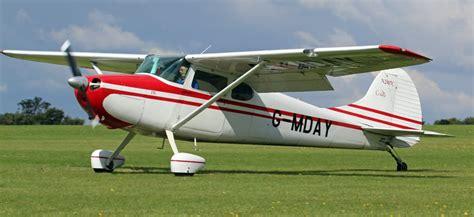
The Cessna 170 stands proudly in the history of aviation as a hallmark of design, reliability, and versatility. Produced between 1948 and 1956 by the Cessna Aircraft Company, this light personal aircraft not only paved the way for future general aviation milestones but also introduced innovations that remain influential today. With over 5,174 units built, the Cessna 170 captured the imagination of pilots worldwide, offering a balanced mix of performance, durability, and classic style.
The Cessna 170’s development came at a pivotal time in aviation history. Following World War II, there was a surge of interest in civilian flying, and Cessna responded by evolving their successful 140 series into something larger, more capable, and even more appealing to the emerging market. The result was a four-seat, single-engine aircraft that retained the trusted Continental engine technology, augmented for greater power and range.

Development and Evolution of the Cessna 170
The original Cessna 170 introduced in late 1948 featured a metal fuselage and tail, matched with fabric-covered wings supported by a “V” strut. The wings held three fuel tanks totaling 36 gallons, a configuration that significantly enhanced range compared to its smaller predecessor, the Cessna 140. Powering the aircraft was a robust 145 hp (108 kW) Continental C145-2 engine, offering dependable thrust and straightforward maintenance.
Recognizing the importance of continuous innovation, Cessna rapidly moved to introduce the Cessna 170A in 1949. In this version, Cessna transitioned to an all-metal construction, providing superior durability and reducing maintenance concerns associated with fabric wings. The 170A also featured a newly engineered wing design — a zero-dihedral wing with refined flaps capable of a maximum 50 degrees deflection, paired with a single strut for improved aerodynamics and a cleaner aesthetic.
The design lineage did not stop there. In 1952, Cessna introduced the pinnacle of the 170 series: the Cessna 170B. This model brought significant aerodynamic enhancements, including a dihedral wing beyond the flap section, much like its military cousin, the O-1 Bird Dog. Modified Fowler flaps, which deployed backward and downward up to 40 degrees, delivered unparalleled control at low speeds — a hallmark of the B model’s superior short-field performance.
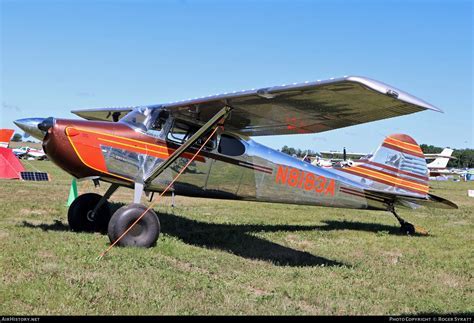
Further refinements included a redesigned tailplane, a more robust tailwheel bracket, and a modernization of the rear windows from an elliptical to a squarer shape in 1955. Despite the success of these advancements, the progression of aviation and customer preferences ultimately led Cessna to develop the Cessna 172 — a tricycle-gear evolution of the 170B, effectively ending the 170’s production by 1956.
Military Adaptations: From 170 to O-1 Bird Dog
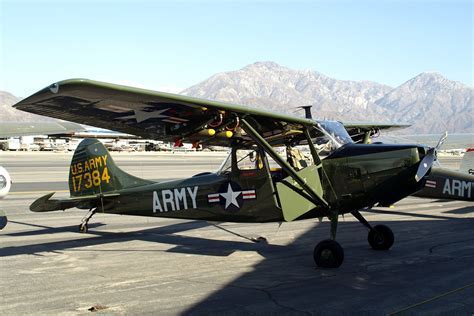
The versatility of the Cessna 170 platform extended into military service through the Model 305, better known as the L-19/O-1 Bird Dog. Extensively re-engineered for forward air control and reconnaissance missions, the Bird Dog utilized tandem seating and even more aggressive flap systems to meet the rigorous demands of battlefield observation. Its lineage from the Cessna 170 gave it a rugged DNA perfectly suited for rough-field operations and slow-speed stability.
Notably, the Bird Dog’s contribution to military aviation, particularly during the Korean and Vietnam wars, established Cessna’s reputation for building rugged, effective liaison and observation aircraft that could thrive in the harshest conditions.
Experimental Innovations: The Boundary Layer Control Projects
In the early 1950s, Cessna demonstrated their commitment to cutting-edge research by modifying 170 airframes into Models 309 and 319. These experimental aircraft explored boundary layer control technology — the manipulation of airflow over the wing surfaces to drastically improve lift and stall characteristics.
The Model 309 incorporated a system based on German WWII research, utilizing a jet pump to suck in and re-energize stagnant airflow. Later, the Model 319 improved upon this with hydraulic axial fans, achieving record lift coefficients. These experiments, while not commercialized on the Cessna 170 line, contributed invaluable knowledge to aviation, influencing future designs like the Lockheed F-104 Starfighter.
Flying Characteristics and Performance
Flying a Cessna 170, especially the 170B, offers a distinctive experience often praised by pilots. Its conventional landing gear configuration — tailwheel instead of tricycle — demands precision during landings and ground handling, rewarding skillful airmanship.
The aircraft’s performance specifications underline its balanced capabilities:
- Maximum Speed: 140 mph (230 km/h)
- Cruise Speed: 120 mph (190 km/h)
- Stall Speed: 52 mph (84 km/h)
- Service Ceiling: 15,500 feet (4,700 m)
- Rate of Climb: 690 ft/min (3.5 m/s)
- Endurance: Over 4.5 hours
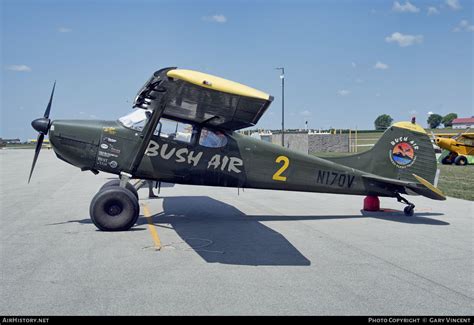
Its relatively low stall speed combined with excellent low-speed handling made it ideal for short-field operations, backcountry flying, and training roles. Many vintage aviation enthusiasts and bush pilots still prize the Cessna 170 today for exactly these characteristics.
Legacy and Cultural Impact
The Cessna 170’s influence extends far beyond its production numbers. It provided the direct foundation for the Cessna 172, which remains the most-produced aircraft in aviation history. Its simple yet effective engineering principles — light weight, robust construction, predictable flying qualities — became benchmarks for future generations of light aircraft.
Moreover, the Cessna 170 has embedded itself into the culture of general aviation. Numerous pilots owe their initial tailwheel endorsements to the 170, and countless aviation stories start with adventures in these classic machines. Organizations dedicated to vintage aircraft preservation often showcase the 170 as a centerpiece, recognizing its pivotal role in post-war aviation development.
Notably, variants of the Cessna 170 were utilized by militaries across Central America and Southeast Asia, serving in liaison, transport, and training capacities well into the late 20th century. Civilian operators, flight schools, and private owners worldwide continue to cherish the 170 for its rugged elegance and reliable service.
Conclusion: Why the Cessna 170 Still Matters
Even decades after the last unit rolled off the production line, the Cessna 170 remains a revered name among aviators. Its balance of design elegance, operational robustness, and historical significance secures its place in the pantheon of aviation legends.
For pilots seeking a true connection to the roots of general aviation — a machine that demands skill, rewards proficiency, and offers a flying experience untouched by modern automation — the Cessna 170 offers an irreplaceable opportunity. Whether admired on the ramp, explored in the backcountry, or remembered in the annals of aviation history, the Cessna 170 continues to soar with undiminished grace.