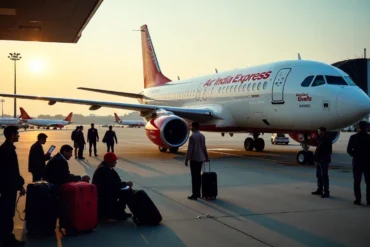
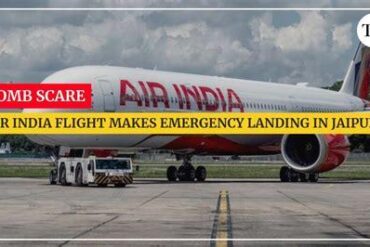
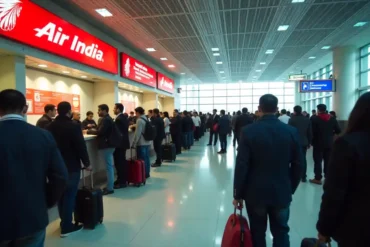
An Air India Express flight from Guwahati to Kolkata became a prolonged ordeal for more than 170 stranded passengers over the weekend, as repeated technical malfunctions led to an 18-hour delay, severely testing passenger patience and raising serious concerns about airline operations and passenger support standards.
Initially scheduled for 9:20 PM on Saturday, the flight from Lokpriya Gopinath Bordoloi International Airport failed to take off after the aircraft developed a technical issue just prior to departure. Passengers, who had already boarded, were left waiting on the tarmac deep into the night.
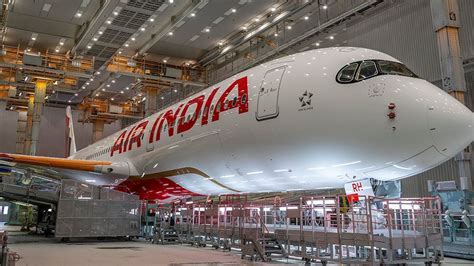
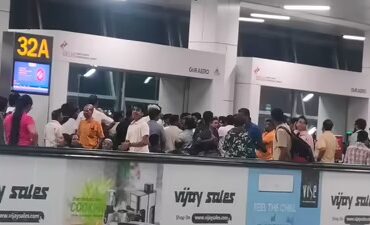
The first wave of frustration began when travelers were kept onboard for several hours without clear communication. According to passenger accounts, it wasn’t until 1:30 AM that they were finally allowed to disembark. However, relief was short-lived as the hospitality measures that followed proved inadequate. Many described the airport lounge as overcrowded and under-resourced, and the hotel accommodations that were eventually arranged were criticized for lacking even the most basic amenities. Reports emerged of no breakfast being provided, despite travelers having waited for hours through the night.
Second Technical Failure Cripples Hope of Quick Recovery
The following morning brought with it a glimmer of optimism. The same aircraft was reportedly cleared and prepped for another attempt at takeoff. However, within hours, the technical fault resurfaced, forcing the aircraft to be grounded again. This second mechanical failure within 12 hours was a severe blow to both passenger morale and public confidence in the airline’s operational integrity.
Passengers were again returned to the terminal, this time more vocal in their dissatisfaction. Some opted to make alternate arrangements with other carriers, especially after being told that a replacement aircraft would be sourced, but with no clear timeline in sight. Several passengers took to social media, posting real-time updates and photos that highlighted the chaos and lack of effective communication.
Final Departure After Eighteen Hours: Fatigue, Complaints, and Compensation
After more than 18 hours of delay, a substitute aircraft was finally arranged. The delayed flight departed at 3:34 PM on Sunday, closing a chapter of inconvenience and unrest. Air India Express confirmed that the original aircraft had unresolved technical malfunctions and was withdrawn from service to ensure passenger safety. The replacement aircraft was deployed only after final safety checks were completed.
To mitigate the impact of the disruption, Air India Express offered the following recovery measures:
- Full hotel accommodations during the overnight delay
- Flexible rescheduling without additional costs
- Full refunds for those who chose not to travel
Despite these offerings, the damage to the airline’s image was evident. Passengers, particularly those with connecting travel plans or medical emergencies, expressed dismay over the handling of the crisis, pointing to a lack of real-time updates, poor service standards, and inadequate provisions during the prolonged wait.
Systemic Issues in Airline Crisis Response Revealed
The incident has triggered renewed debate about the state of aircraft maintenance protocols and the quality of customer support provided during unforeseen delays. Aviation industry observers note that technical issues are not uncommon, but what sets apart a reliable carrier is how swiftly and competently such disruptions are managed.
In this case, the repeated failure of the same aircraft, coupled with poor communication and logistical support, has put Air India Express under intense scrutiny. Travel experts argue that the delay was not merely a result of bad luck but a reflection of under-investment in preventative maintenance and crisis training.
Air Travel Recovery Collides with Service Expectations
The delay comes at a time when domestic air travel is rebounding strongly, especially on regional routes like Guwahati–Kolkata. However, as passenger numbers rise, so do expectations. Today’s travelers demand not only punctuality but also transparency, comfort, and proactive communication when things go wrong.
For the affected passengers, the experience was a harsh reminder of the gaps that still exist in India’s aviation sector, particularly among budget carriers. While Air India Express is known for affordable fares and regional connectivity, this incident casts a shadow over its operational resilience.
Several passengers shared emotional accounts of how the extended delay disrupted important events, from missed weddings to hospital visits. The absence of real-time status alerts, confusing ground instructions, and lack of senior airline representatives at the airport only amplified their distress.
Lessons for the Industry: Maintenance, Transparency, and Passenger Care
This high-profile delay is not an isolated incident, but a symptom of wider systemic weaknesses in fleet management and contingency planning. Aviation regulators may now be forced to re-examine protocols for aircraft troubleshooting and ground response in such scenarios.
In particular, the following takeaways have emerged:
- Preventative maintenance must be prioritized to avoid repeat mechanical failures
- Airlines need to invest in training for both ground staff and cabin crew to handle disruptions empathetically
- Digital tools for real-time communication (SMS alerts, app updates) must be actively used
- Emergency accommodation and food service arrangements should meet minimum hospitality standards
In the aftermath, Air India Express has not confirmed whether the original aircraft will return to service soon. Meanwhile, industry analysts warn that multiple delays caused by the same technical fault may indicate deeper problems, possibly relating to fleet age, component wear, or inspection rigor.
Public Trust Wanes as Complaints Go Viral
In an era dominated by instant digital communication, delays of this scale inevitably go viral. Passengers turned to Twitter, Instagram, and Facebook, flooding platforms with images of cramped lounges, unsanitary conditions, and confused ground staff. Many tagged the Ministry of Civil Aviation, demanding oversight and accountability.
The reputational impact for Air India Express could be substantial, especially as travelers weigh their options in an increasingly competitive market. Trust, once broken, is hard to regain—and it will require more than apology statements to repair.
Looking Ahead: Will Airlines Evolve Before Passengers Revolt?
This incident should serve as a wake-up call for the broader Indian aviation sector. As infrastructure scales up, customer service must scale with it. Eighteen-hour delays due to technical issues cannot become normalized. Passengers are no longer passive recipients of inconvenience—they are vocal, connected, and ready to shift loyalties.
Air India Express, now a subsidiary of the Tata Group following the larger Air India privatization, must uphold a higher operational benchmark if it is to win and retain public confidence. The days when delays could be quietly brushed aside are over. Now, each incident is a test of brand credibility.
Until carriers invest in smarter maintenance, more humane disruption management, and transparent crisis communication, such disruptions will continue to erode the trust that travelers place in the wings that carry them.
The flight may have taken off eventually, but the consequences of its delay will resonate far longer than the journey itself.