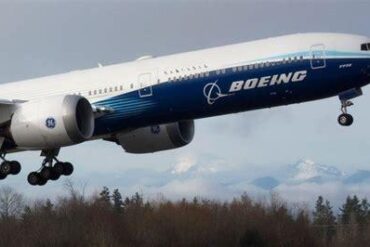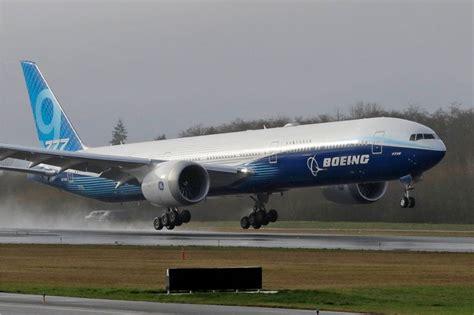
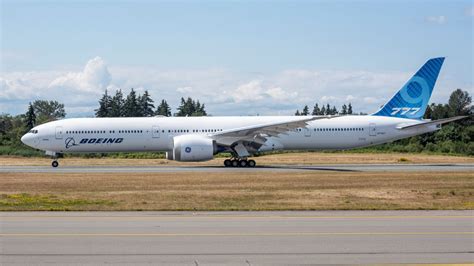
The Boeing 777X stands as a monumental achievement in the evolution of commercial aviation. As the most advanced and largest twin-engine passenger aircraft in the world, it fuses aerodynamic innovations, cutting-edge engine technology, and unmatched cabin refinement into a single formidable airframe. Developed to challenge Airbus’s dominance with the A350 series, the 777X promises not just to compete but to revolutionize global long-haul travel.
Unveiled as the next generation of Boeing’s iconic 777 family, the 777X is more than a simple redesign. With variants like the 777-9 for passengers and the 777-8F for cargo, the aircraft introduces new frontiers in fuel efficiency, capacity, and operational performance. Airlines including Emirates, Lufthansa, and Singapore Airlines have lined up to incorporate this flagship into their premium routes.
Boeing 777X: A Giant Among Giants
At 251 feet 9 inches (76.73 meters), the Boeing 777-9 officially becomes the longest commercial aircraft ever constructed, even outstretching the Boeing 747-8. With a maximum takeoff weight of 351 tons and a seating capacity of 400 to 426 passengers, it serves as the ultimate aircraft for long-haul, high-density routes.
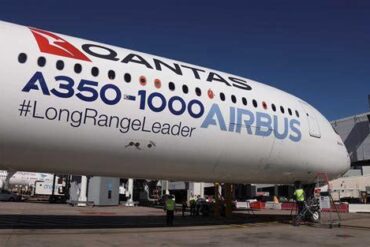
Unlike the Airbus A350, which was developed on a clean-sheet platform using carbon composites, the 777X builds upon the proven 777 legacy. Its stretched fuselage and upgraded wings allow for increased payload and cabin area, giving airlines flexibility in cabin layout—from ultra-dense economy to ultra-luxurious first-class suites.
Engineering Excellence: A Wing Design Like No Other
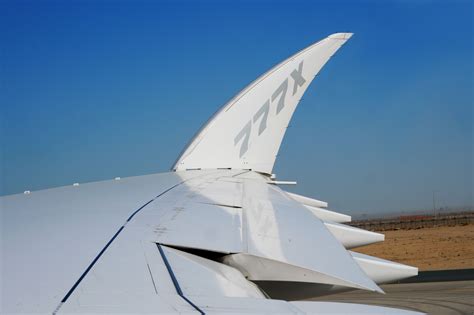
One of the defining innovations of the 777X is its carbon-fiber composite wing with folding wingtips. With an unfurled wingspan of 235 feet 5 inches (71.76 meters), the 777X outpaces all comparable jets. However, to remain compatible with existing airport gates (ICAO Code E), the tips fold upward while on the ground, a first for commercial aviation.
The wing design draws directly from the Boeing 787 Dreamliner’s aerodynamic efficiencies. Coupled with laminar flow surfaces and advanced control surfaces, the 777X can achieve a 10% fuel savings over competing aircraft, a crucial factor in reducing operational costs.
GE9X: The Most Powerful Commercial Jet Engine Ever Built
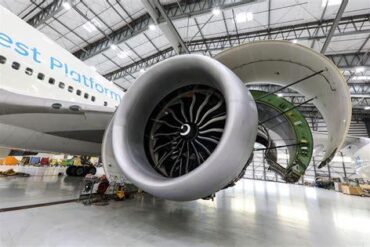
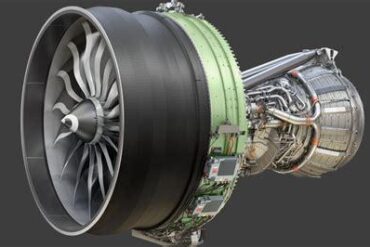
The GE9X engine, designed exclusively for the 777X by General Electric, is the largest and most efficient turbofan in history. With a fan diameter of 134 inches and a rated thrust of 110,000 pounds, it sets a new benchmark in propulsion.
During testing, the GE9X achieved a record-breaking 134,300 pounds of thrust, yet it was conservatively rated for improved longevity and reliability. It also features a 10:1 bypass ratio, 60:1 pressure ratio, and ceramic matrix composites (CMCs) that allow it to operate at higher temperatures while burning less fuel.
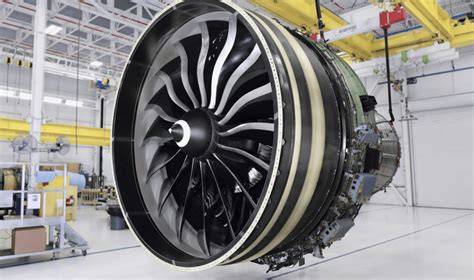
These advancements result in significantly lower emissions, extended maintenance intervals, and reduced noise, further aligning the 777X with future sustainability goals.
Cabin Architecture: Where Luxury Meets Efficiency
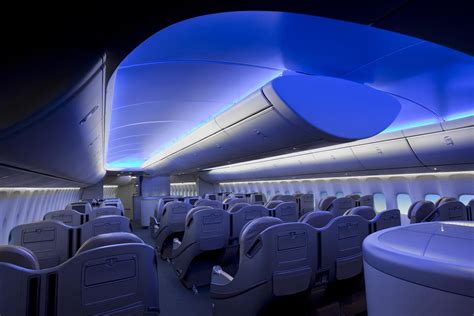
The 777X cabin has been meticulously re-engineered to enhance comfort while maximizing capacity. Key cabin features include:
- Wider aisles and thinner sidewalls for increased roominess
- Larger windows, integrated into the fuselage itself and placed higher for better visibility
- Next-generation LED lighting, including customizable mood lighting and even starry night ceilings
- Pressurization and humidity systems mimicking those of the 787 Dreamliner for less fatigue on long-haul journeys
- Four-bag overhead bins, significantly expanding carry-on space
These features are not superficial; they’re engineered to optimize well-being on ultra-long-haul routes, making the 777X one of the most passenger-friendly aircraft in operation.
Advanced Cockpit and Pilot Integration
The cockpit of the 777X mirrors that of the Boeing 787, allowing for cross-qualification and shared training programs. Five large touchscreen displays replace older cursor control systems, while optional dual Heads-Up Displays (HUDs) provide real-time flight data.
Pilots benefit from the Crew Information Gateway, a digital interface that syncs with Electronic Flight Bags (EFBs), displaying data on-screen without the need for additional hardware. This seamless integration enhances situational awareness and reduces cognitive workload.
Global Airline Adoption and Flagship Role
With over 500 orders on record, the 777X is a preferred choice for leading carriers across continents:
- Emirates (EK): Will debut next-gen first-class Game Changer suites
- Cathay Pacific (CX): Plans to roll out Halo Suites by 2027
- Singapore Airlines (SQ): Set to introduce upgraded premium cabins
- Lufthansa (LH) and Etihad (EY): Committed despite initial delays
These airlines are adopting the 777X not just for its size or range but for its ability to reimagine the premium flying experience. Many already operate the Airbus A350, but have earmarked the 777X for flagship routes demanding ultimate luxury and capacity.
Performance Metrics: Stacked Against the Competition
| Aircraft | MTOW (Tons) | Range (NM) | Passenger Capacity |
|---|---|---|---|
| Boeing 777-8 | 365 | 8,730 | 350–375 |
| Boeing 777-9 | 351 | 7,285 | 400–426 |
| Boeing 777-300ER | 351 | 6,028 | 354–396 |
| Airbus A350-1000 | 322 | 8,700 | 350–410 |
| Boeing 787-9 | 254.7 | 7,565 | 290–310 |
Although the A350-1000 offers slightly more range, the 777X surpasses it in payload, cabin width, and maximum capacity. The 777X’s larger floor space allows airlines to configure premium cabins without sacrificing seat count—a key differentiator for high-demand routes.
Delay and Certification Challenges
Originally set to debut in 2020, the 777X program faced multiple delays due to engine certification issues, supply chain bottlenecks, and regulatory scrutiny following the 737 MAX incidents. Boeing has now scheduled first deliveries for 2026, with several prototypes actively undergoing flight testing.
While delays have strained relationships with early customers like Emirates, confidence in the aircraft remains high, with few cancellations relative to initial commitments.
The Future of Flagship Travel
Despite being built on a legacy platform, the 777X’s innovations position it as the future flagship for many global carriers. With industry-leading cabin flexibility, operational economy, and environmental performance, it will anchor premium fleets for decades to come.
Airlines looking to differentiate on comfort, capacity, and cost-efficiency will find no better option than the 777X. As the aviation world emerges from post-pandemic turbulence, the aircraft is well-timed to meet new expectations in long-range connectivity.
The Boeing 777X is not just the largest twin-engine passenger jet ever built—it is the most complete. It reflects decades of Boeing’s engineering heritage fused with today’s most pressing aviation demands. And when it enters service, it will mark not only a new chapter in Boeing’s storied history but a turning point in commercial aviation itself.