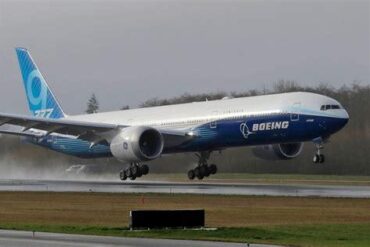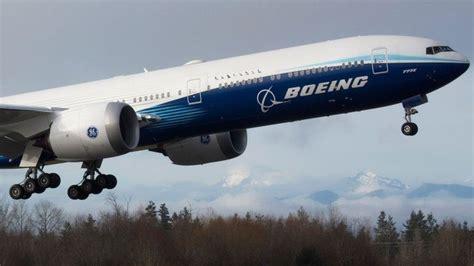
The Boeing 777X sits at the pinnacle of modern commercial aviation—a colossal twin-engine aircraft designed to dominate long-haul travel for decades. Whenever aviation enthusiasts, airline executives, or curious travelers ask the same question—“How much does a Boeing 777X cost?”—the answer is far less straightforward than most people expect.
Aircraft pricing operates in a strange economic universe where official numbers rarely match real transactions. List prices function more like reference points than actual receipts. Airlines negotiate aggressively, deals include engines and support packages, and large orders shift the economics dramatically.
The Boeing 777X illustrates this phenomenon perfectly. Public benchmarks often place the aircraft’s cost near $442 million, yet industry insiders widely acknowledge that airlines rarely pay anything close to that number.
Understanding the true cost of the 777X requires stepping into the complex world of aircraft manufacturing, airline procurement strategies, and the technological ambition behind one of the most advanced passenger aircraft ever built.
The Boeing 777 Legacy That Led to the 777X
Before discussing price, it helps to understand the lineage behind the aircraft. The Boeing 777 family transformed long-haul aviation when it entered service in the mid-1990s.
At the time, airlines relied heavily on large four-engine aircraft such as the Boeing 747 and Airbus A340. These giants delivered range and capacity but came with steep fuel and maintenance costs. Boeing’s idea was simple yet revolutionary: create a massive twin-engine jet capable of flying intercontinental routes previously dominated by four-engine aircraft.
The gamble worked spectacularly.
The 777-300ER, in particular, became one of the most successful long-haul aircraft in history. Airlines loved its blend of passenger capacity, operational reliability, and fuel efficiency. With typical seating approaching 400 passengers, it allowed carriers to serve dense international routes while keeping operating costs under control.
Another major pillar of the 777 family has been cargo operations. The 777 Freighter carries more than 224,900 pounds of payload, making it one of the most capable long-range cargo aircraft on the market. Logistics companies and cargo airlines continue to rely heavily on the aircraft to transport goods across continents.
This legacy created the foundation for the 777X, a next-generation evolution rather than a complete redesign. Airlines already trusted the platform. The new aircraft simply promised to make it bigger, quieter, and far more efficient.
What Exactly Is the Boeing 777X?
The Boeing 777X represents Boeing’s attempt to push the limits of twin-engine aircraft design. It includes two primary passenger variants:
- Boeing 777-8
- Boeing 777-9
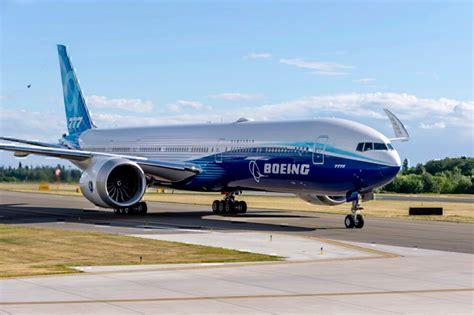
The 777-9 is the larger of the two models and is expected to become the most common version. Boeing lists a typical two-class capacity of around 426 passengers, making it the largest twin-engine passenger aircraft ever built.
The slightly smaller 777-8 sacrifices some seating capacity in exchange for longer range. Airlines planning ultra-long-haul flights—routes exceeding 8,700 nautical miles—are particularly interested in this variant.
Both aircraft rely on a technological centerpiece: the General Electric GE9X engine, the largest and most powerful commercial jet engine ever produced. Its enormous 134-inch fan diameter contributes to significantly improved fuel efficiency.
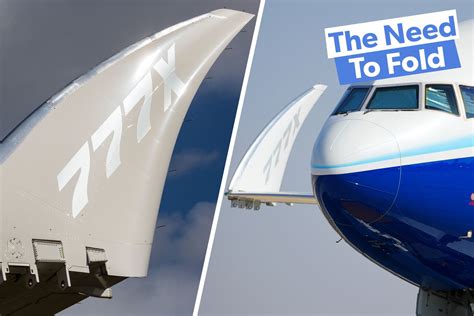
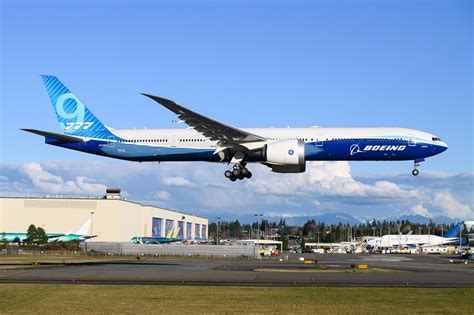
Perhaps the most visually striking feature of the aircraft is its folding composite wingtip. During flight the wings extend fully, improving aerodynamics and lift. On the ground, the tips fold upward, allowing the aircraft to fit into standard airport gates designed for smaller jets.
The Official List Price of the Boeing 777X
Historically, aircraft manufacturers published official price catalogs for each model. These list prices served as reference points during negotiations and helped analysts estimate the value of large aircraft orders.
Before Boeing stopped publishing these catalogs, the Boeing 777-9 carried an official list price of approximately $442 million.
That number quickly became the headline figure used across aviation media. Even today, many reports casually describe the aircraft as a “$450 million airplane.”
But here is where the economics of aviation become fascinating.
Airlines almost never pay the list price.
In reality, the sticker price functions more like the starting number in an extremely complicated negotiation. Airlines purchasing dozens of aircraft gain enormous leverage, often securing massive discounts that reduce the final price dramatically.
For a program as large and strategically important as the 777X, those negotiations can reshape the economics of the deal entirely.
The Real Market Price Airlines Actually Pay
Industry estimates suggest that real-world transaction prices for a Boeing 777X may fall near $198 million per aircraft in some large deals. That number is less than half of the historical list price.
Such discounts may sound shocking at first glance, but they are normal within the commercial aviation industry.
Several factors influence the final negotiated price:
- Order size
Airlines buying dozens or even hundreds of aircraft receive steep bulk discounts.
- Timing of delivery slots
Early production positions are often priced differently than later ones.
- Engine packages and maintenance agreements
Many contracts bundle engines, spare parts, and servicing programs.
- Training and support packages
Pilot training, technical support, and spare components can be included.
- Financing structures
Export credit agencies, leasing arrangements, and deferred payments influence the final figure.
Because these variables differ for every airline, two carriers ordering the exact same aircraft may pay significantly different prices.
Why Boeing Stopped Publishing Aircraft List Prices
In 2024, Boeing and Airbus both stopped releasing official list prices for new aircraft. This move surprised many observers but reflected a long-standing industry reality: the published prices were becoming increasingly meaningless.
When discounts regularly exceeded 40 to 60 percent, the list price no longer represented the real value of an aircraft sale. Analysts had begun treating the numbers as symbolic rather than practical.
By removing public price catalogs, manufacturers eliminated the confusion.
Now when massive aircraft deals are announced—sometimes worth tens of billions of dollars—the totals typically include engines, service agreements, training packages, and other components. Without a public list price, those announcements become harder to reverse-engineer.
This shift has made estimating the true cost of a Boeing 777X more complicated than ever.
The Technological Features That Drive the 777X Price
A major reason the 777X carries such a high price tag lies in the extraordinary technology packed into the aircraft.
The GE9X engines alone represent a monumental engineering effort. Built with advanced ceramic matrix composites and 3D-printed components, they deliver roughly 10 percent lower fuel consumption compared to the GE90 engines used on the earlier 777-300ER.
Fuel efficiency matters enormously for airlines. A small improvement in fuel burn can save millions of dollars per aircraft each year, especially on ultra-long-haul routes.
The aircraft’s carbon-fiber composite wing also contributes to its performance advantages. Unlike the aluminum wings used on older 777 models, the new composite structure reduces weight while improving aerodynamic efficiency.
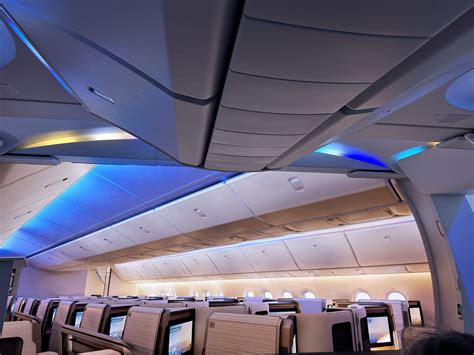
Inside the cabin, Boeing redesigned the passenger experience with:
- Larger windows
- Higher cabin humidity
- Lower cabin altitude
- Wider cabin architecture
These changes aim to make long flights more comfortable while maintaining the aircraft’s impressive seating capacity.
When these innovations are combined with advanced avionics and flight systems, the aircraft becomes one of the most technologically sophisticated commercial jets ever produced.
Airlines That Have Ordered the Boeing 777X
Despite years of delays, the Boeing 777X program has attracted strong interest from major international airlines.
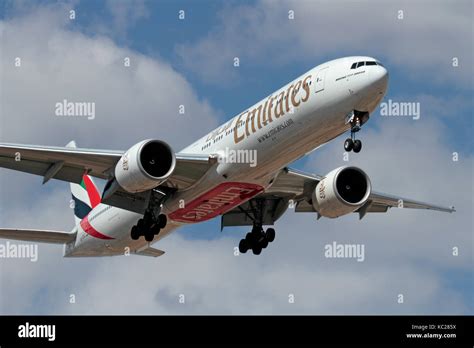
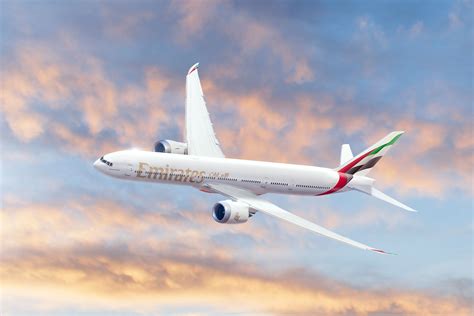
The largest customer by far is Emirates, the Dubai-based airline known for operating massive long-haul fleets. In November 2025, Emirates expanded its order to approximately 270 Boeing 777X aircraft, making it the program’s anchor customer.
Other major buyers include several of the world’s most influential international carriers.
Notable Boeing 777X customers include:
- Qatar Airways – more than 90 aircraft ordered
- Singapore Airlines – early launch customer
- Lufthansa – scheduled to receive the first delivery
- British Airways (IAG) – multiple firm orders
- Cathay Pacific – expansion orders announced in 2025
- Korean Air – significant widebody purchase
- Air India – part of its massive fleet modernization program
- China Airlines – newer entrant to the program
These airlines operate extensive long-haul networks, making them natural customers for such a large and capable aircraft.
The Massive Delays That Shaped the Program’s Economics
While the 777X promises impressive capabilities, its development journey has been anything but smooth.
Originally expected to enter service in the early 2020s, the aircraft has faced repeated certification delays. Boeing now expects the first delivery in 2027, several years later than originally planned.
These delays have been extraordinarily expensive.
The company has absorbed around $15 billion in program charges, reflecting development costs, schedule disruptions, and regulatory challenges. Aviation certification standards tightened significantly after the Boeing 737 MAX crisis, creating additional scrutiny for all new aircraft programs.
Delays also affect airlines waiting for the aircraft. Carriers planning fleet upgrades must adjust schedules, extend the life of older jets, or temporarily lease alternative aircraft.
The economic ripple effect spreads across the entire aviation ecosystem.
Why the Boeing 777X Exists in the First Place
The aviation industry has been moving steadily away from very large four-engine aircraft toward more efficient twin-engine designs.
Aircraft such as the Airbus A380 and Boeing 747-400 once symbolized long-haul travel. Yet operating these giants became increasingly expensive as fuel prices fluctuated and maintenance costs climbed.
Twin-engine aircraft changed the equation.
Advances in engine reliability and regulatory approvals—particularly ETOPS, which allows twin-engine aircraft to fly long routes over oceans—made it possible for large twins to replace four-engine jets.
The Boeing 777X represents the ultimate expression of that trend. It offers:
- The capacity once associated with jumbo jets
- The efficiency of modern twin-engine designs
- Lower maintenance complexity than four-engine aircraft
In other words, it bridges the gap between the fuel-efficient Boeing 787 Dreamliner and the massive airliners of the jumbo jet era.
The Role of the 777-8 Freighter
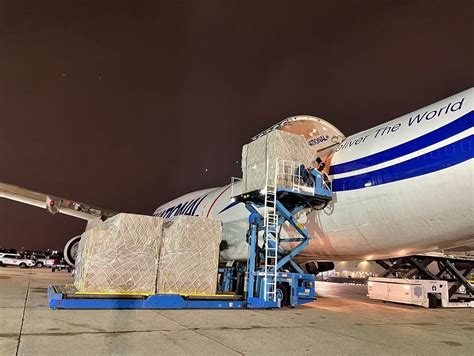
The passenger versions of the 777X attract the most attention, but Boeing also designed a dedicated cargo variant: the 777-8F freighter.
Cargo aviation has grown dramatically in recent years, driven by e-commerce and global logistics demand. Many freight operators currently rely on aging 747-400 freighters, which are gradually approaching retirement.
The 777-8F offers a modern replacement.
With impressive payload capability and long range, the aircraft allows cargo airlines to transport enormous volumes of goods while benefiting from modern fuel efficiency. Qatar Airways became the launch customer for the freighter version.
Cargo aircraft may not grab headlines like passenger jets, but they often generate stable long-term demand—something Boeing values deeply for the economics of the program.
The Bottom Line: What Does a Boeing 777X Really Cost?
After untangling all the variables, the most honest answer to the question “How much does a Boeing 777X cost?” lands somewhere between two very different numbers.
The historical public benchmark places the aircraft around $442 million, reinforcing its reputation as one of the most expensive commercial jets ever built.
Yet real-world transactions often land far lower, with some estimates suggesting around $198 million per aircraft in large negotiated deals.
That enormous gap highlights a defining truth about the airline industry: aircraft pricing is less about sticker numbers and more about relationships, timing, and negotiation power.
What ultimately matters for Boeing is not the theoretical list price but the ability to deliver the aircraft successfully. Once the 777X finally enters service—expected in 2027—its real value will be measured in fuel savings, operational performance, and the routes it enables airlines to fly.
And if the aircraft performs as Boeing promises, the 777X could define the next era of long-haul travel—an era where giant twin-engine jets quietly inherit the throne once held by the legendary jumbo jet.