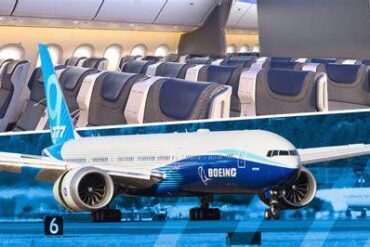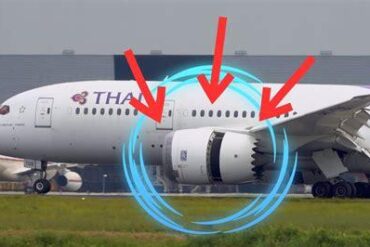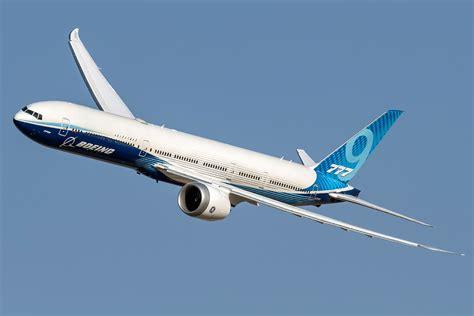
The arrival of a modern widebody aircraft is a sensory experience—a firm touchdown, a sudden roar as engines reverse, and the unmistakable deceleration pressing passengers gently forward. For decades, this sequence has shaped a widely held belief: that reverse thrust is essential for bringing a massive airliner to a halt. When it comes to the Boeing 777X, that belief becomes even more compelling. After all, how could one of the largest and heaviest twin-engine jets ever built possibly stop without reversing its engines?
The truth is both counterintuitive and deeply rooted in aviation engineering discipline. The Boeing 777X does not need reverse thrust to come to a full stop. This is not a loophole, a design shortcut, or a technological miracle unique to this aircraft. It is, in fact, a fundamental certification requirement for all modern commercial airliners governed by authorities like the Federal Aviation Administration and the European Union Aviation Safety Agency.
Understanding why—and how—this is possible requires a deep dive into aircraft braking systems, certification protocols, and the extreme testing regimes that define modern aviation safety.
Why Reverse Thrust Is Not Required for Certification
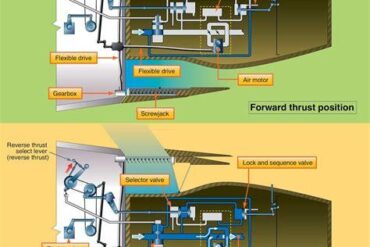
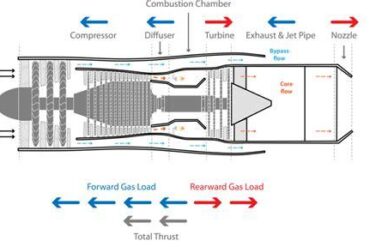
At first glance, reverse thrust appears indispensable. When engines deploy thrust reversers, they redirect airflow forward, creating a powerful decelerating force. It’s dramatic, loud, and highly visible—making it easy to assume it carries the bulk of the stopping workload.
In reality, regulatory authorities deliberately exclude reverse thrust from critical stopping calculations. This ensures that an aircraft can safely land and stop even if reversers fail or are unavailable. The philosophy is simple: primary stopping capability must come from systems that are always reliable and independent of engine performance.
This means the Boeing 777X, like every modern transport-category aircraft, must demonstrate that it can:
- Land at maximum weight and come to a complete stop using only brakes and aerodynamic drag
- Abort a takeoff at high speed without any reverse thrust assistance
- Maintain directional control and stability throughout the stopping process
Reverse thrust, therefore, becomes a supplementary safety layer, not a primary one.
The Physics Behind Stopping a Giant Aircraft
To understand how the Boeing 777X achieves this, it’s essential to break down the three primary forces responsible for deceleration after touchdown.
First comes aerodynamic drag. As the aircraft touches down, spoilers deploy across the wings, disrupting lift and forcing the aircraft’s weight onto the landing gear. This not only increases friction but also adds significant drag, slowing the aircraft even before the brakes fully engage.
Second is wheel braking, the true workhorse of deceleration. The 777X uses advanced carbon brake systems designed to convert enormous kinetic energy into heat. These brakes are capable of handling extreme loads far beyond what passengers ever experience in routine operations.
Third is rolling resistance, a smaller but still meaningful factor created by the interaction between tires and runway surface.
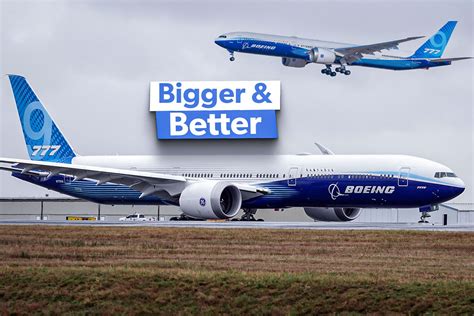
Together, these forces create a layered and redundant stopping system that does not depend on engine thrust reversal. In fact, under certification conditions, reverse thrust is intentionally disabled to prove that the aircraft’s braking system alone is sufficient.
Inside the Boeing 777X Advanced Braking System
The braking system of the Boeing 777X represents a refined evolution of proven technology, rather than a radical reinvention. Developed by Safran, the system builds on decades of experience with earlier 777 variants while introducing critical enhancements.
At its core are next-generation carbon brakes, engineered for:
- Higher energy absorption capacity
- Improved thermal resistance
- Reduced weight and maintenance requirements
Key innovations include a titanium torque tube, which improves strength while reducing mass, and clipless stators, which simplify maintenance and increase reliability. The system also incorporates advanced oxidation protection, extending brake lifespan even under extreme heat cycles.
This is not just about stopping power—it’s about consistency, durability, and predictability under the harshest conditions imaginable.
The Three Critical Certification Tests That Prove It
To certify the Boeing 777X braking system, regulators mandate a series of rigorous, worst-case scenario tests defined under federal aviation law. These tests are designed not to simulate typical operations, but to push the aircraft to its absolute limits.
Design Landing Stop: Proving Everyday Reliability
This test simulates a standard landing at maximum weight, ensuring that the braking system performs reliably under routine conditions. Engineers evaluate braking efficiency, heat generation, and system response across different levels of brake wear.
Most Severe Landing Stop: Stressing the Limits
Here, the aircraft is subjected to the most demanding combination of speed and weight possible during landing. This scenario represents a rare but plausible extreme case, ensuring the brakes can handle the worst landing pilots might ever encounter.
Maximum Kinetic Energy Accelerate-Stop: The Ultimate Challenge
This is the defining test—a high-speed rejected takeoff at maximum weight. The aircraft accelerates to near takeoff speed and then abruptly aborts, relying entirely on its braking system to stop.
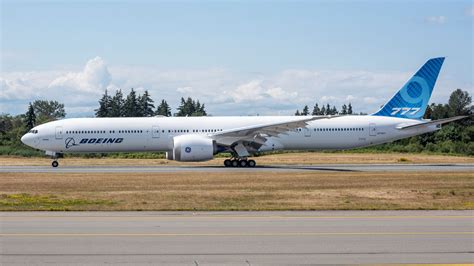
During this test:
- The aircraft reaches speeds of approximately 190 knots
- Brakes are intentionally worn to their maximum allowable limits
- Reverse thrust is not used at all
The energy absorbed by the brakes in this scenario is staggering—equivalent to hundreds of megajoules, generating temperatures exceeding 2,500°F (1,370°C). This is not just a test of stopping power; it is a trial by fire for the entire braking architecture.
The Oklahoma Campaign: Precision Under Pressure
A significant portion of the 777X braking certification took place at Clinton-Sherman Airport in Oklahoma, where engineers conducted dry runway testing under tightly controlled conditions.
Wind limits were extremely strict, often below ten knots, to ensure that the data reflected pure braking performance rather than environmental influences. This created logistical challenges, as weather disruptions frequently forced test teams to adapt their schedules or relocate entirely.
Despite these challenges, the campaign successfully validated both design landing and severe landing scenarios, confirming that the aircraft’s braking system performs as expected under real-world conditions.
Edwards Air Force Base: The Most Extreme Test
The most dramatic milestone occurred at Edwards Air Force Base, where Boeing conducted the maximum brake energy test.
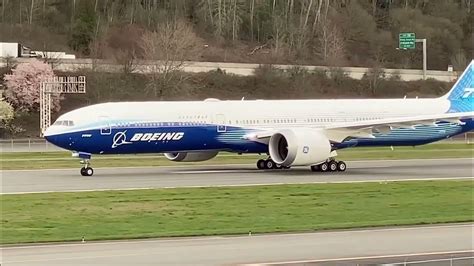
In this scenario, the aircraft was loaded to maximum takeoff weight and accelerated to near rotation speed before the takeoff was aborted. What followed was an intense demonstration of engineering resilience.
The braking system generated:
- Over one billion foot-pounds of torque
- Temperatures exceeding 2,500°F
- Controlled tire deflation via fuse plugs, preventing catastrophic failure
Emergency crews waited several minutes before approaching, mirroring real-world safety procedures. The aircraft came to a complete stop without any reliance on reverse thrust, conclusively proving compliance with certification requirements.
Wet Runway Testing: Where Complexity Increases
While dry runway tests answer the core question, wet runway conditions introduce a new layer of complexity. Reduced friction, increased stopping distances, and the need for precise anti-skid control all become critical factors.
Under wet conditions, regulators shift focus toward:
- Anti-skid system performance
- Braking efficiency loss compared to dry surfaces
- Directional stability during deceleration
Interestingly, reverse thrust may be included in certain wet runway calculations, reflecting its practical role in real-world operations. However, the aircraft must still demonstrate that its core braking system remains robust and reliable even when runway conditions are less than ideal.
Why Pilots Still Use Reverse Thrust in Practice
If the Boeing 777X doesn’t need reverse thrust, why do pilots use it so consistently?
The answer lies in operational efficiency and safety margins. Reverse thrust provides:
- Shorter landing distances
- Reduced brake wear
- Lower brake temperatures, minimizing maintenance demands
In everyday operations, using reverse thrust is simply good airmanship. It enhances safety margins, especially on shorter or contaminated runways, and helps preserve the longevity of braking components.
The Road to Certification and Entry Into Service
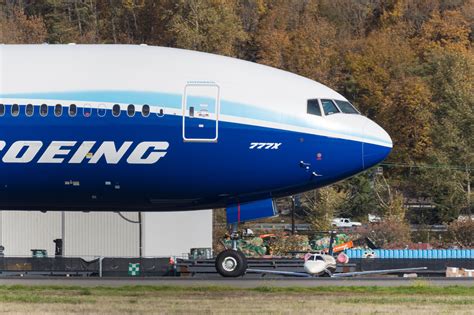
The Boeing 777X program is currently progressing through the final stages of certification, with regulators closely monitoring every aspect of its performance. The next major milestone involves production-standard aircraft entering flight testing, a critical step toward delivery.
The first deliveries are expected around 2027, marking the culmination of years of development, testing, and refinement. By that point, the aircraft will have demonstrated—beyond any doubt—that it can safely and reliably stop under the most extreme conditions without relying on reverse thrust.
The Real Story Behind the Myth
The idea that the Boeing 777X doesn’t need reverse thrust is not just true—it is a testament to the rigorous engineering standards that define modern aviation. Every component, from carbon brakes to anti-skid systems, is designed to perform under conditions far more extreme than any passenger flight will ever encounter.
What makes the 777X remarkable is not that it defies expectations, but that it embodies a philosophy of redundancy, resilience, and uncompromising safety. Reverse thrust remains a valuable tool, but it is no longer a necessity.
In the end, the spectacle of roaring engines and dramatic deceleration may capture attention, but the real story happens quietly beneath the aircraft—in the immense, invisible forces managed by a braking system engineered to handle the unimaginable.