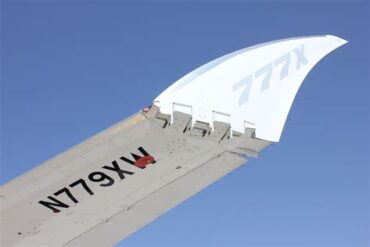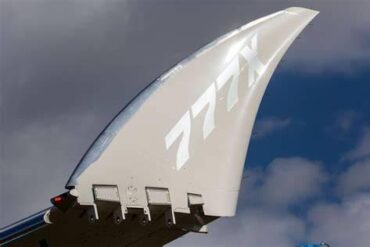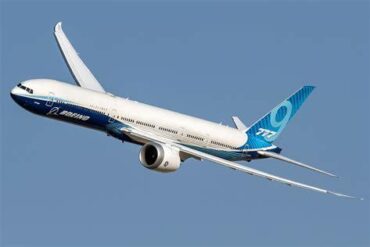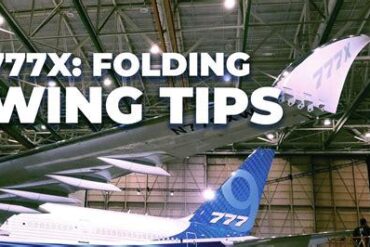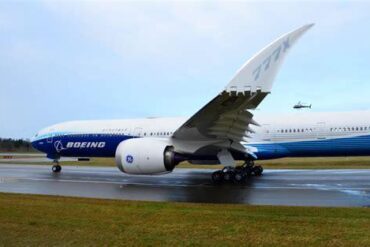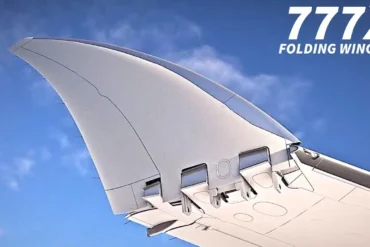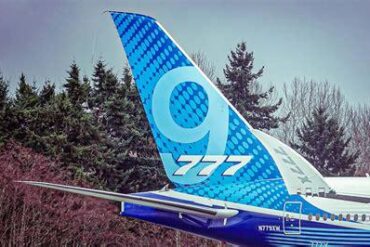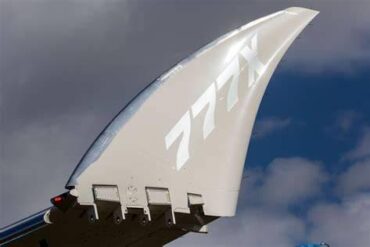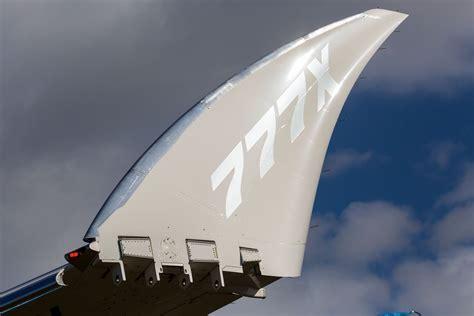
The Boeing 777X looks familiar from a distance, but up close it hides a quiet revolution in how large airliners think about mistakes. The aircraft was born from a contradiction: airlines wanted a much wider, more efficient wing to slash fuel burn and extend range, yet airports around the world were built for narrower generations of jets. The solution was elegant and slightly sci-fi—outer wing sections that fold up on the ground and stretch to full span for flight. That single design choice did more than solve gate compatibility. It forced a rethink of how modern aircraft should prevent configuration errors before they become unrecoverable physics problems.
The 777X’s folding wingtips are not a gimmick bolted onto a classic wing. They are baked into the load-bearing structure of a massive composite airfoil designed to wring every bit of lift-to-drag efficiency out of long-haul operations. When extended, the wingspan pushes into territory once reserved for the largest commercial aircraft ever built. When folded, the aircraft fits neatly into airport layouts meant for earlier 777 variants, sparing airlines and airports from billions in concrete and steel upgrades. The visual drama of the tips moving in the cockpit window is only the surface story. Underneath sits a safety architecture that regulators treated as a new species of risk.
At first glance, the hazard seems obvious in a cartoonish way: taking off with the wings folded would be bad. Aviation safety rarely fails in cartoonish ways. It fails through ordinary human patterns—interruptions during taxi, checklist flow broken by a radio call, fatigue at the end of a long duty day, or the quiet creep of routine. The 777X introduces a new configuration state that did not exist on previous widebodies: a primary lifting surface that can be in a ground-only shape. That meant the usual “warning horn and carry on” philosophy was no longer good enough. The system had to behave like a stern adult who takes the car keys away before the engine turns over.
Why Folding Wingtips Created a New Safety Problem
The new wing is a composite structure optimized for long, slender lift. Its efficiency comes from span, and span comes with a practical tax at the airport gate. Folding the tips trims the footprint so the aircraft can taxi, park, and maneuver within Code E airport geometry used by existing 777 fleets. On paper, that is a tidy compromise. In certification terms, it opened a box that regulators had never fully explored for large commercial transports.
A wing is not a door or a fairing. It is the thing that keeps the aircraft out of the ground. When a wing’s geometry changes, so does lift distribution, stall margin, and obstacle clearance performance. On takeoff, those margins are already tight. Heavy fuel loads, hot-and-high airports, contaminated runways, and short runway lengths compress the window for error. A reduced span at the moment of rotation would change the lift curve at precisely the moment when the aircraft is committed to flying. The margin for recovery is not philosophical; it is measured in a few seconds and a shrinking ribbon of asphalt.
Regulators did not need to invent a nightmare to justify caution. Aviation history is littered with accidents where aircraft attempted departure with a critical surface locked or misconfigured. Gust lock incidents in smaller aircraft are the textbook parallel: crews advanced thrust, discovered the controls were constrained, and ran out of runway or lift. The 777X wingtip is not a gust lock, but the failure mode rhymes. In safety engineering, rhymes matter because humans repeat patterns even when the hardware changes.
From Clever Geometry to Certification Headache
The 777X became the first commercial widebody to certify folding wingtips as part of its primary structure. That single fact forced regulators to write special conditions because existing rules assumed wings were immutable slabs of aluminum and composite once you lined up on the runway. The certification logic had to answer uncomfortable questions. How do you ensure the wingtip is not just extended, but locked? How do you make the crew unmistakably aware of the wing’s state during taxi, not merely at the moment thrust levers go forward? How do you prevent a single sensor failure from lying convincingly enough to let an unsafe configuration sneak through?
Boeing responded with design discipline rather than gadgetry. The folding sections were kept free of fuel tanks and primary flight controls, reducing the number of systems that cross the hinge line. That decision shrinks the universe of failure modes. The structure itself had to carry the same aerodynamic loads in cruise as a continuous wing, which meant the locking mechanism could not be a polite latch. It had to be a structural handshake strong enough to survive turbulence, gusts, and decades of cyclic fatigue.
The Takeoff Lockout: Turning a Warning Into a Barrier
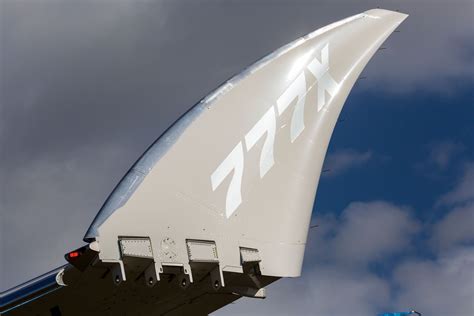
Traditional takeoff configuration systems are talkative but permissive. If flaps or trim are wrong, the aircraft complains loudly, and the crew is expected to abort if there is runway to spare. The 777X moves beyond scolding. Its folding wingtip logic is woven into the takeoff permission itself. The aircraft continuously cross-checks wingtip position and lock status through independent signals. If the system detects a folded or unlocked state, it does not merely wag a digital finger. It inhibits takeoff progression. The machine refuses to let the human proceed into a high-energy mistake.
This is a philosophical shift in how modern airliners think about human error. Warnings assume a timely, calm response under pressure. Barriers assume that pressure makes humans brittle. By preventing the takeoff from even beginning in the wrong configuration, the 777X shrinks the space in which panic can happen. The design goal is not to save a botched takeoff at 120 knots. The goal is to prevent the botch from ever getting that far.
The cockpit makes wingtip status obvious early in the flow. During taxi, crews see whether the tips are folded, extending, fully extended, or locked. The transition itself is quick, but the system does not treat quickness as permission to be casual. The state is persistent, visible, and tied to logic that grows more insistent as the aircraft approaches the runway. By the time the jet lines up, the machine has already decided whether the geometry is flight-worthy.
Human Factors: Designing for Real Pilots, Not Ideal Ones
Aviation safety lives and dies by human factors—the study of how real people behave in real cockpits. Checklists are elegant on paper. Real taxiways are noisy, cluttered with radio calls, traffic, and last-minute changes. Crews are not careless; they are human. The 777X wingtip system is built around that truth. It assumes that someone, someday, will be distracted at the wrong moment. Instead of asking that person to perform heroics under time pressure, the aircraft acts like a stubborn co-pilot who refuses to roll until the wing is right.
That design stance is not anti-pilot. It is pro-pilot. Automation that removes brittle failure points frees crews to focus on higher-order judgment rather than wrestling with edge-case physics. The 777X does not erase responsibility; it reshapes it so the consequences of a single missed step do not escalate into catastrophe.
Ground Operations, Wind, and the Unromantic Details
Folding wingtips are not only about gates. On the ground, large wings become sails. Certification had to account for high-wind scenarios with the tips folded, including gust environments that can shove parked aircraft around. The structure and locking mechanisms are designed to keep the folded configuration stable under punishing crosswinds, while the extended configuration is secured so the wing behaves as a continuous lifting surface once airborne. In flight, the system is electrically and hydraulically isolated from casual movement. The wing is meant to be boring at 35,000 feet, and in aviation, boring is the highest compliment.
Maintenance and dispatch reliability also shaped the design. The system must perform the same choreography thousands of times over decades. Every fold and unfold is a structural event. The locking mechanism cannot age into ambiguity. Sensors must not drift into polite lies. This is where composite engineering and redundancy strategy quietly earn their keep. The hinge is not a novelty joint; it is a load path with a hinge in it, and that is a much harder thing to make trustworthy.
Why This Matters Beyond One Airplane
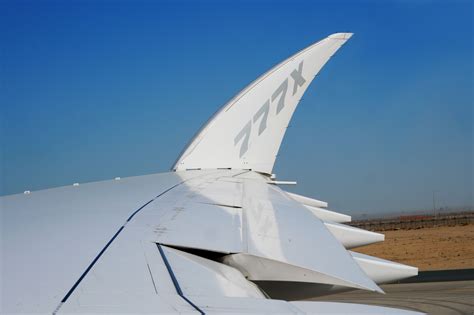
The 777X wingtip system sets a precedent. Regulators now have a framework for certifying movable primary structures on large transport aircraft. That matters because the next wave of efficiency gains will likely demand unconventional geometry. Ultra-high aspect ratio wings, morphing surfaces, and airport-friendly folding concepts are not science fiction. They are the natural response to fuel economics and emissions pressure. The 777X shows that clever aerodynamics must be matched by clever safety architecture. You do not get to invent new shapes without inventing new guardrails.
The longer certification timeline of the 777X is often framed as a story of delays. The deeper story is about standards catching up to imagination. Legacy rules were written for wings that stayed put. Writing new rules takes time because the consequences of getting them wrong are measured in lives. The takeoff lockout is the most visible outcome of that slow, careful work. It is the point where software, structure, and regulation converge into a simple promise: this aircraft will not let you make this particular mistake.
A Subtle Shift in How Airliners Enforce Safety
The 777X embodies a subtle cultural shift in cockpit design. Instead of stacking warnings higher and louder, it places a physical boundary in the path of error. This does not infantilize the crew. It acknowledges that high-workload environments are hostile to perfection. The system is not about distrusting pilots; it is about distrusting the idea that any human can be flawless when physics is impatient.
The broader implication is that future aircraft will likely carry more of these “refuse to proceed” constraints. They will be controversial in the abstract and quietly loved in practice. Nobody misses the ability to make a mistake that ends a career. The takeoff lockout is a small piece of logic with a big philosophical footprint. It treats safety not as a series of alarms to be managed, but as a set of states that are simply not allowed to exist when the stakes are highest.
The folding wingtip began as a way to fit a big idea into small gates. It ended as a new way to fit human fallibility into a system that refuses to gamble with it. The result is not just a wider wing. It is a narrower corridor for disaster, carved by design rather than hope.