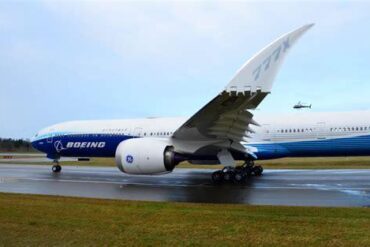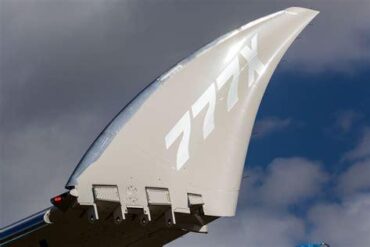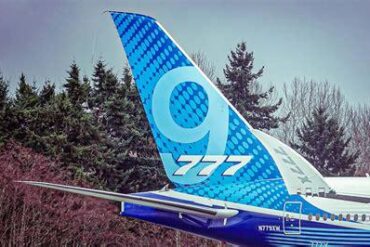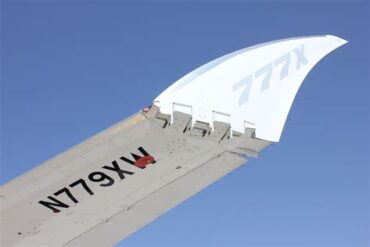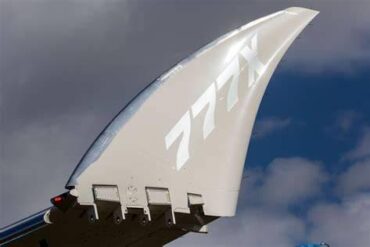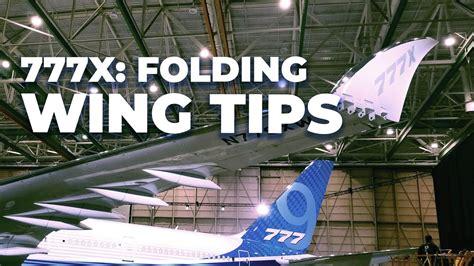
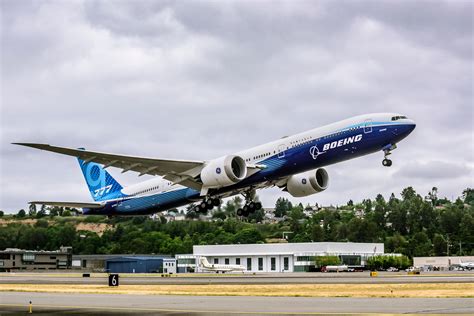
The Boeing 777X, the latest evolution in Boeing’s celebrated 777 family, stands as a technological masterpiece in commercial aviation. It is an aircraft built not only for performance but also for the stringent demands of modern airport infrastructure. One of its most defining and visually striking innovations is its extraordinarily long wingspan, paired with folding wingtips—a feature unseen in commercial aviation until now. This advancement is not merely a matter of aesthetics or novelty; it is a solution grounded in engineering precision, operational necessity, and global airport compatibility.
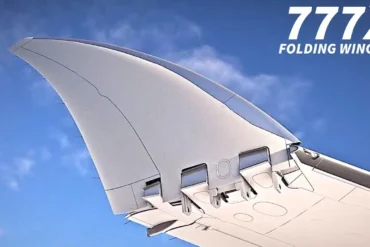
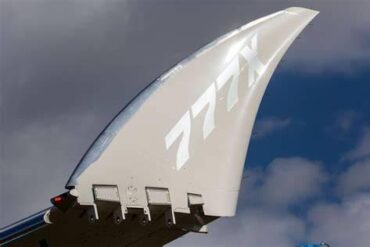
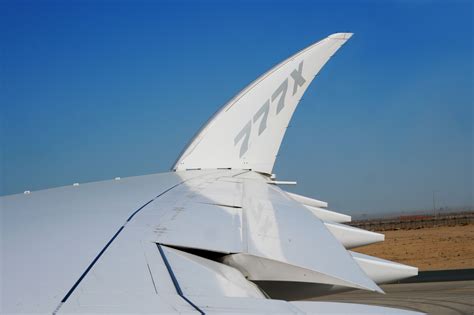
The 777X boasts a wingspan of 235 feet and 5 inches when fully extended, longer than almost any other twin-engine jet in history. But once parked or taxiing at airports, the wingtips fold up, reducing the wingspan to 218 feet and 8 inches, which allows it to fit into the same gates as older wide-body aircraft. This transition from Category F to Category E is a pivotal enabler for widespread airport access.
Engineering Excellence: Why Longer Wings Make a Difference
Aircraft wings are not arbitrary in size—they’re calculated extensions of aerodynamic theory and practical demands. Longer wings provide a higher aspect ratio, which directly improves lift-to-drag efficiency. This means that the 777X, with its sweeping carbon-fiber composite wings, benefits from reduced fuel burn, greater range, and smoother ride quality.
These elongated wings are not just extensions of the past; they are inspired by the raked wingtip technology previously seen on the Boeing 787 Dreamliner. Raked wingtips curve more gently upward and backward than traditional winglets, creating a laminar flow that reduces aerodynamic drag and significantly enhances fuel economy.
Folding Wingtip Mechanism: A High-Tech Answer to Ground Limitations
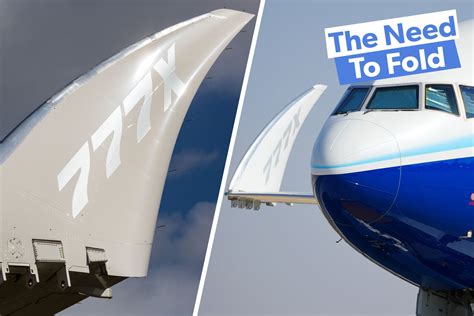
Airport infrastructure is a limiting factor for aircraft design. Taxiways, gates, and ramps are built with standard aircraft dimensions in mind. For the Boeing 777X to operate globally without being restricted to only a handful of Category F airports (as is the case for the Airbus A380), Boeing needed a solution.
Thus, the folding wingtips were born. In just 20 seconds, these wingtips pivot from horizontal to vertical after landing and return to flight position just before takeoff. Pilots activate and monitor the wingtip systems via iconography on the EICAS (Engine-Indicating and Crew-Alerting System) displays. The folding mechanism is not cosmetic—it’s deeply integrated into the aircraft’s structure and approved under stringent FAA regulations, given its absence in traditional regulatory frameworks.
From Concept to Reality: A Dormant Innovation Revived
The idea of folding wings isn’t new. Boeing originally conceived the concept back in the 1990s during early 777 development, but back then, airlines were unconvinced of its necessity. However, with airport congestion, expanding international networks, and airlines demanding greater flexibility, the folding wingtip has transformed from an interesting concept into an essential feature.
Strategic Dimensions: Category F vs Category E
Aircraft categories defined by the ICAO (International Civil Aviation Organization) are based on wingspan and outer main gear wheel span. Category F aircraft, like the Airbus A380 with a wingspan of nearly 262 feet, are restricted to specially equipped airports. By folding its wingtips, the 777X comfortably slots into Category E, enabling access to a broader network of global airports.
Had Boeing not included this capability, the 777X might have suffered from the same operational limitations that plagued the A380. Airlines today prioritize fleet flexibility and route versatility—the 777X delivers both, without sacrificing performance.
Aerodynamic Brilliance and Material Science
The 777X’s wings are not only longer—they’re stronger and lighter. Built almost entirely from carbon-fiber reinforced polymer composites, they offer an ideal balance of durability and weight reduction. This material advantage contributes to the aircraft’s improved fuel economy, expected to be 10% more efficient than its predecessor, the Boeing 777-300ER.
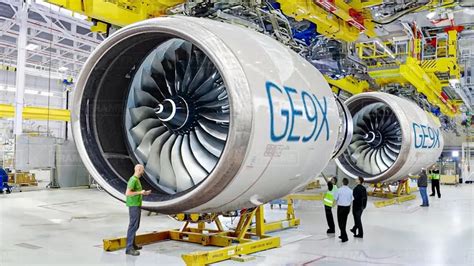
These wings, along with GE’s new GE9X engines, contribute to superior aerodynamic performance. The engines feature ceramic matrix composites and higher bypass ratios, reducing both noise and emissions while maintaining high thrust output.
Operational Efficiency and Global Reach
The Boeing 777X is designed with long-haul performance in mind. The 777-9 variant can travel up to 7,285 nautical miles, while the 777-8 can extend this to 8,745 nautical miles—opening new non-stop routes across oceans and continents. Its range, combined with efficient fuel burn and capacity, makes it the perfect solution for hub-and-spoke as well as point-to-point network models.
Emirates, the largest customer of the 777X with over 200 orders, emphasized the need for the aircraft to fit in a wider range of airports. This was not merely preference—it was a commercial imperative. With delayed deliveries, Emirates had to reinvest in retrofitting its A380 fleet to maintain its global footprint, showing how critical the 777X’s flexibility truly is.
Cabin and Passenger Experience: Beyond the Wings
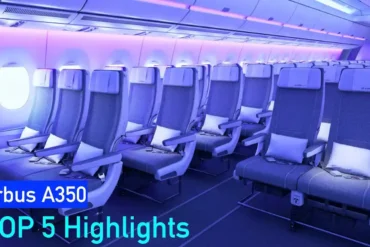
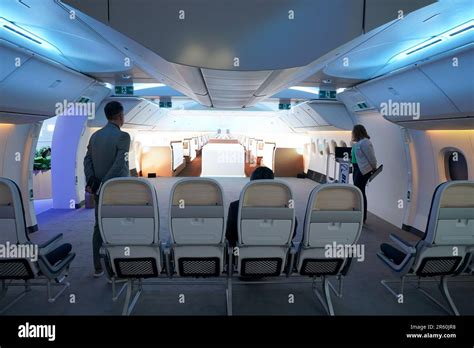
While the aircraft’s wings get most of the engineering spotlight, passengers onboard the 777X will notice dramatic interior improvements. The cabin borrows comfort innovations from the 787, including:
- Lower cabin altitude for reduced fatigue
- Higher humidity levels for improved skin and respiratory comfort
- Larger, dimmable windows offering better views and natural light
- Mood lighting systems to mimic circadian rhythms
- Next-generation overhead bins that can fit four roller bags each
Regulatory Approval and Safety Measures
As the first commercial aircraft to feature automated folding wingtips, the 777X demanded a new category of certification from the FAA. Boeing had to prove that the folding mechanisms could withstand operational stress, handle redundancy, and offer fail-safe protections. Special conditions were set to ensure the system’s structural integrity, aerodynamic stability, and flightworthiness even in extreme scenarios.
This level of regulatory rigor adds another layer of confidence and safety, a necessity in an industry where passenger trust is paramount.
Launch Operators and Future Outlook
Lufthansa is expected to be the launch customer of the Boeing 777X, with a fleet of 27 aircraft on order, including both passenger and freighter versions. Singapore Airlines, Qatar Airways, Etihad, and ANA are also among early adopters. These airlines operate vast long-haul networks, and the 777X will serve as a cornerstone for their future expansion.
With more than 500 firm orders already placed, Boeing’s gamble on reinventing the 777 series with folding wingtips appears poised to pay off. The technology is already generating buzz not just for its innovation, but for the practical economic and operational flexibility it provides.
Conclusion: The Future of Twin-Jet Travel Is Here
The Boeing 777X represents a convergence of visionary engineering, market responsiveness, and technological bravery. Its extended wingspan with folding tips is not just an engineering marvel—it’s a necessity for modern aviation, allowing the aircraft to be both giant in capability and agile in deployment. In an era where sustainability, economics, and efficiency are king, the 777X offers a blueprint for the future of wide-body air travel.
The folding wingtip is no gimmick—it is a symbol of adaptability, a practical innovation that could redefine how future aircraft interact with a world of aging airports and ever-expanding travel demand.