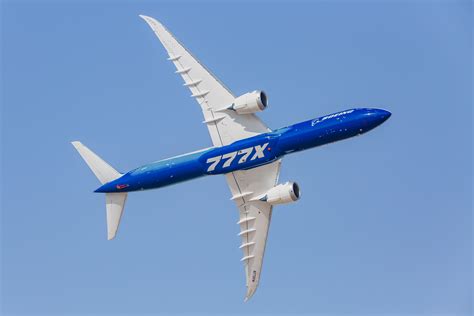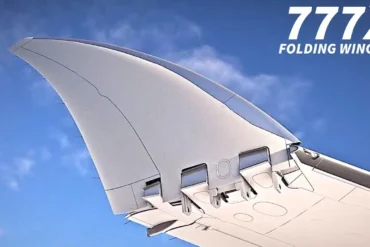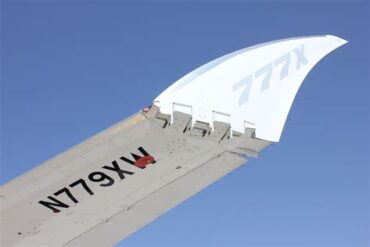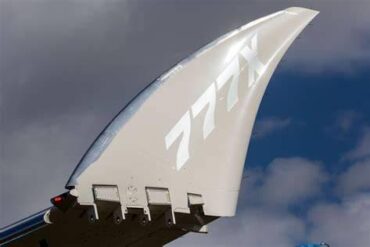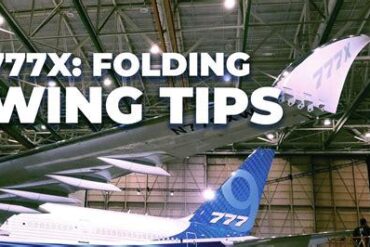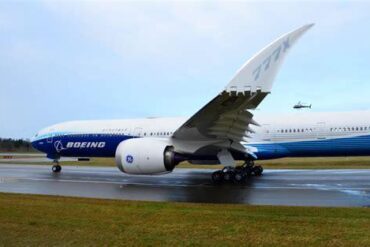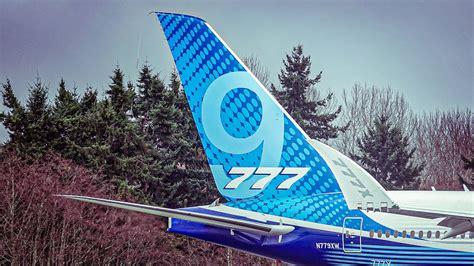
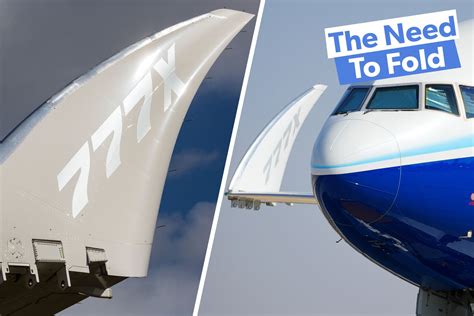
The Boeing 777X stands as a pinnacle of modern aviation innovation, merging cutting-edge aerodynamics with groundbreaking engineering. Among its many advancements, the folding wingtips are undoubtedly the most eye-catching and technically sophisticated feature. Designed to reconcile the aircraft’s enormous wingspan with existing airport infrastructure, this mechanism exemplifies how modern aircraft balance performance and practicality. The 777X, with a wingspan stretching an astounding 235 feet, 5 inches in flight, required a solution to navigate gates, taxiways, and hangars designed decades earlier for smaller aircraft. The ingenious answer: wings that fold.
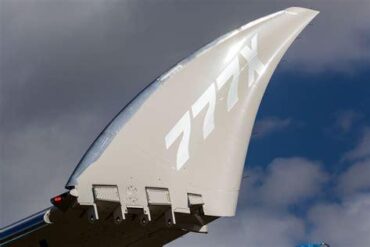
The concept of folding wings is not entirely new, often seen in military carrier-based aircraft to save deck space. Yet, implementing it in a commercial airliner presents an entirely different set of challenges. During the Dubai Airshow in November 2025, a Boeing test pilot walked Flightradar24 through the mechanics of this unique system, revealing a combination of electronic precision and mechanical reliability. Pilots control the wingtips via a dedicated overhead switch in the cockpit, making the extension process as routine as setting the flaps. Once extended, a visual confirmation appears in the cockpit, providing an immediate check that the wings are properly deployed. To guarantee safety, the wingtips are electronically isolated and mechanically locked using a large physical bolt, ensuring they cannot fold in flight under any circumstance. This combination of electronic oversight and mechanical fail-safes reflects Boeing’s rigorous approach to redundancy.
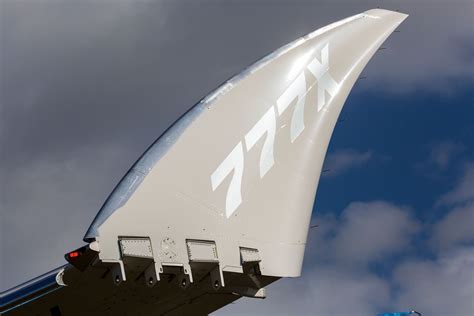
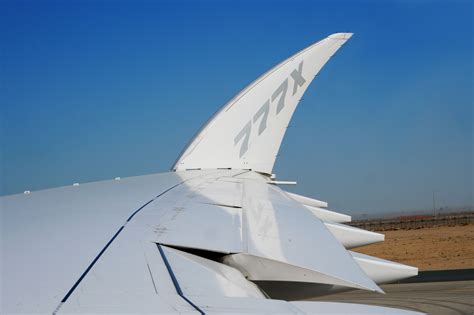
The folding action on the ground is automated to reduce pilot workload. After landing, when the aircraft slows to 50 knots, the wingtips fold automatically. This allows the plane to clear gates and taxiways without manual intervention, simplifying operations at airports with limited space. Such automation is essential given the size of the 777X; without it, many existing airports would require costly infrastructure modifications to accommodate the aircraft. The wingtip itself is crafted from advanced composite materials, offering the dual benefits of strength and reduced weight, critical for maintaining the aircraft’s impressive lift-to-drag ratio. Boeing’s engineers had to design a structure robust enough to withstand in-flight stresses yet light enough to avoid compromising fuel efficiency.
The rationale behind this innovation ties directly to the design philosophy of the 777X. Its wings are larger than those of any previous 777 variant, optimized for a high aspect ratio to enhance aerodynamic efficiency. Longer wings reduce drag and increase lift, boosting fuel economy and enabling longer non-stop flights. For airlines, this translates into the ability to operate ultra-long-haul routes more economically. However, such large wings would naturally exceed standard airport limits without folding technology. By integrating folding wingtips, Boeing has allowed airlines to deploy the 777X at airports that were previously off-limits to aircraft of its size.
The Boeing 777X family encompasses multiple variants tailored to meet diverse market demands. The 777-8 seats 395 passengers in a two-class configuration and offers a range of 8,745 nautical miles, positioning it as a competitor to Airbus’ A350 series. The larger 777-9, with 426 seats, has a slightly shorter range of 7,285 nautical miles, comparable to the Boeing 747-8. A freighter variant, the 777-8F, boasts a payload capacity of 112 tonnes, highlighting the flexibility of the platform for both passenger and cargo operations. Across all variants, the wingspan remains identical at 235 feet, 5 inches in flight, reducing to 212 feet, 9 inches on the ground thanks to the folding mechanism. These dimensions demonstrate Boeing’s commitment to combining scale with operational practicality.
Technical specifications are impressive not just in size but also in propulsion. The 777X exclusively employs GE9X engines, an evolution of the GE90 family. These engines are designed to deliver immense thrust while maintaining efficiency and reliability over ultra-long routes. Unlike its predecessor, which offered airlines engine options from different manufacturers, the 777X adopts a single-engine supplier strategy, streamlining maintenance and performance predictability. This choice emphasizes Boeing’s confidence in GE Aerospace’s ability to deliver bespoke powerplants for a new generation of high-capacity jets.
The cockpit experience for pilots is familiar yet modernized. While the 777X maintains the core layout of previous 777 variants, the integration of folding wingtips adds a critical operational step to pre-flight checks. Pilots must confirm wingtip deployment before takeoff, and the aircraft enforces strict safety protocols. Escalating alerts ensure that the plane cannot begin its takeoff roll if the wingtips are not fully extended, blending human oversight with automated control. This system demonstrates the balance between pilot authority and safety automation, critical for a commercial aircraft of this size and complexity.
Airline adoption of the 777X has been dominated by Middle Eastern carriers. Emirates, with 270 orders for the 777-9, accounts for nearly half of the total 619 aircraft on backlog. Qatar Airways follows with 124 orders, including 90 for the 777-9 and 34 for the 777-8F. Other notable customers include Cathay Pacific (35), Singapore Airlines (31), and Lufthansa (27), illustrating the global appetite for large, fuel-efficient twinjets. These airlines’ investments underscore confidence in the 777X’s combination of capacity, range, and operational versatility. However, production delays have pushed first deliveries to 2027, forcing carriers to adjust fleet strategies and extend the service life of existing aircraft such as the Boeing 747.
Looking ahead, Boeing is exploring a potential 777-10 variant, which could add approximately 50 passengers over the 777-9, stretching the fuselage by roughly 16 feet. This expansion raises technical and certification challenges, particularly concerning engine-out performance during takeoff. The aircraft’s structural weight, payload-range balance, and climb performance are all under review to ensure compliance with aviation safety standards. Additionally, the commercial feasibility of a 777-10 depends heavily on airline interest, with Emirates positioned as the likely primary customer given its fleet strategy and growth ambitions. Such feasibility studies exemplify Boeing’s methodical approach to scaling aircraft while mitigating operational risks.
The engineering behind the folding wingtip is particularly noteworthy. The wingtip hinge incorporates high-strength composites and precision mechanical joints capable of withstanding aerodynamic forces that can exceed several thousand pounds per square foot at cruising altitude. Hydraulic actuators, controlled via the cockpit interface, drive the folding motion, with redundancy built into the system to account for potential failures. The locking mechanism, a massive physical bolt, ensures that once deployed, the wingtips behave as a continuous part of the wing, with zero flex or compromise to aerodynamic performance. The automation of ground folding at 50 knots is a delicate orchestration, balancing speed, safety, and mechanical endurance.
From a maintenance perspective, the foldable wings introduce new inspection requirements. Technicians must routinely check hinge integrity, actuator function, and locking mechanisms. Given that the 777X is designed for decades of service, Boeing has integrated maintenance accessibility into the wing design, allowing for efficient inspections without significant downtime. This attention to operational lifecycle management reflects the company’s understanding that innovation must coexist with practicality.
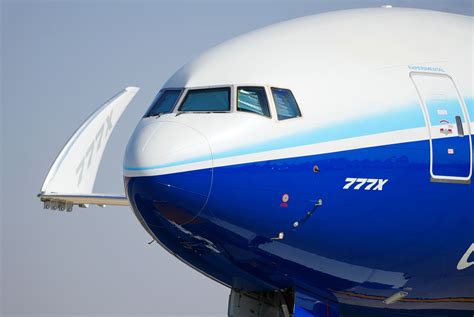
Beyond engineering, the folding wingtip represents a strategic decision in global aviation infrastructure. Airports around the world face constraints due to legacy design, including narrow taxiways, tight gate spacing, and compact hangars. By introducing a mechanism that allows wings to fold without manual intervention, Boeing enables airlines to operate the 777X at a wide range of airports without expensive renovations. This solution extends the commercial viability of the aircraft, ensuring it can serve both primary and secondary hubs efficiently.
The wings also contribute significantly to fuel efficiency. The 777X’s high aspect ratio wings reduce drag, enabling longer ranges while consuming less fuel per passenger. For airlines, this translates into a lower cost per seat-mile and enhanced competitiveness on ultra-long-haul routes. The folding wingtips, while mechanically complex, do not compromise aerodynamic performance in flight, thanks to the meticulous integration of locking mechanisms and structural reinforcements. The system represents a rare instance where mechanical ingenuity and aerodynamics converge seamlessly in commercial aviation.
In terms of program development, the 777X has faced delays, with the first delivery now projected for 2027. These delays stem from certification processes, production challenges, and the complexities inherent in novel technologies such as the folding wingtips. Nevertheless, the aircraft has continued to attract strong orders, indicating robust market confidence. Carriers like Emirates and Qatar Airways are willing to adjust fleet schedules and accommodate delays, a testament to the anticipated operational and economic benefits the 777X promises.
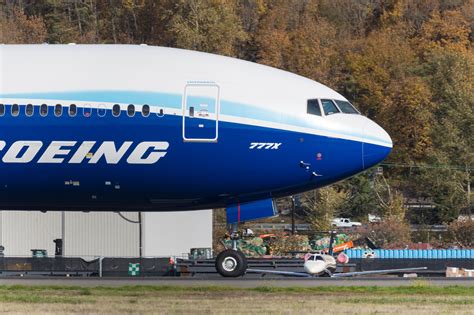
The broader impact of the 777X program extends to the aviation industry’s understanding of large commercial aircraft operations. By implementing foldable wings in a passenger jet, Boeing has set a precedent that could influence future designs, particularly as airlines seek larger, more efficient aircraft capable of accessing existing airport infrastructure. The folding mechanism not only solves a logistical challenge but also opens avenues for design innovations that prioritize operational flexibility without sacrificing performance or safety.
In conclusion, the Boeing 777X’s folding wingtips are far more than a mechanical novelty—they are a carefully engineered solution that harmonizes aerodynamics, automation, and operational practicality. From the cockpit, pilots interact with a system designed for safety, redundancy, and simplicity, while ground operations benefit from automatic folding that minimizes logistical headaches. The aircraft’s wings enhance lift and fuel efficiency, and the folding technology ensures compatibility with existing infrastructure. Coupled with powerful GE9X engines, advanced composite materials, and a range of variants catering to different airline needs, the 777X exemplifies the future of long-haul commercial aviation. As airlines prepare to integrate the aircraft into their fleets, the folding wingtip stands as a symbol of how thoughtful engineering can overcome physical constraints while pushing the boundaries of what is possible in passenger aircraft design.