Understanding Automatic Terminal Information Service (ATIS)
The Automatic Terminal Information Service (ATIS) is an indispensable pillar of modern aviation communication, delivering real-time, pre-recorded broadcasts of aeronautical information critical to safe and efficient aircraft operations within airport environments. This service is continuously updated and plays a vital role in reducing radio congestion, streamlining communication between air traffic control (ATC) and pilots, and enhancing situational awareness.
From weather conditions to active runway designations, the ATIS is a compact, audio-based data stream that supplies pilots with the necessary field conditions before establishing direct contact with controllers. As airspace becomes increasingly congested and operations grow in complexity, the ATIS ensures standardized dissemination of critical data without overburdening communication channels.
ATIS broadcasts are available at virtually every controlled airport and are accessible via Very High Frequency (VHF) radio or telephone hotlines, depending on operational procedures and infrastructure. Every message is typically labeled with a phonetic alphabet identifier (e.g., ATIS “Bravo”), enabling efficient updates and acknowledgment of message receipt by the flight crew.
Key Components of an ATIS Broadcast
An ATIS broadcast includes a concise, fixed structure, allowing pilots to anticipate the order of information and quickly absorb it. The standard content of a broadcast may vary slightly by region but commonly includes:
-
Airport name and time of report (UTC time format)
-
Current weather: wind direction and speed, visibility, temperature, dew point, cloud coverage, and altimeter settings
-
Active runways and runways closed
-
Runway conditions, braking action reports, and NOTAMs (Notices to Airmen)
-
Approach and departure procedures
-
Instructions for initial contact with ATC, such as frequency changes and transition points
The seamless distribution of this information is critical in reducing the verbal workload of controllers and enhancing flight safety by ensuring pilots have uniform and up-to-date information before they begin communications.
Types of ATIS Systems in Use
Technological evolution in avionics has led to three main types of ATIS systems, each tailored to the operational demands of airports:
1. PC-Based ATIS
These systems are built using commercial-grade computers equipped with multi-channel, high-performance soundcards. The broadcast messages are digitally recorded by a controller or technician and are either scheduled or updated manually when needed. They are common at smaller regional airports, where traffic is less dense, and automation needs are limited.
2. Solid-State ATIS
Solid-state systems consolidate speech synthesis and data processing capabilities within a singular device. These compact systems are robust, reliable, and optimized for environments where durability and operational efficiency are required. Because of their architecture, they minimize points of failure and deliver consistent audio clarity.
3. Digital ATIS (D-ATIS)
Highly advanced and used at high-traffic international hubs, digital ATIS systems automatically generate broadcast messages using text-to-speech technology. Controllers input data via terminals, and the system dynamically converts the text into voice messages. D-ATIS can also integrate with other airport data systems for real-time updates, ensuring messages reflect current field conditions with minimal human intervention.

Operational Efficiency and Safety Benefits
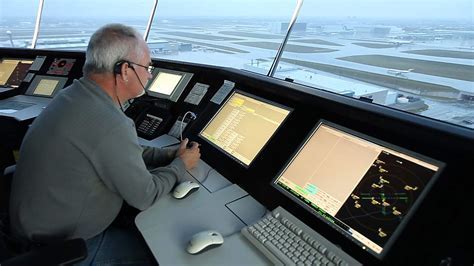
The presence of ATIS not only enhances pilot situational awareness but significantly boosts air traffic controller efficiency. By offloading repetitive communication tasks, ATIS minimizes radio frequency usage and allows controllers to focus on dynamic air traffic management. This is especially vital during peak periods of arrival and departure, where every second counts in maintaining safety margins.
Additionally, standardized message formats adopted globally—whether under ICAO, FAA, or EASA guidance—ensure international pilots receive consistent data formats regardless of their origin. This contributes to cross-border operational clarity, essential in today’s interconnected aviation environment.
Integration with Aircraft Systems
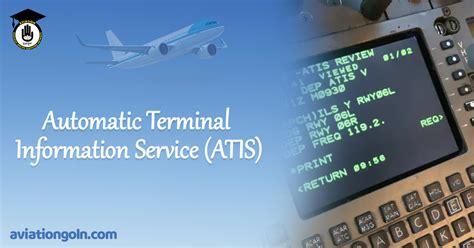
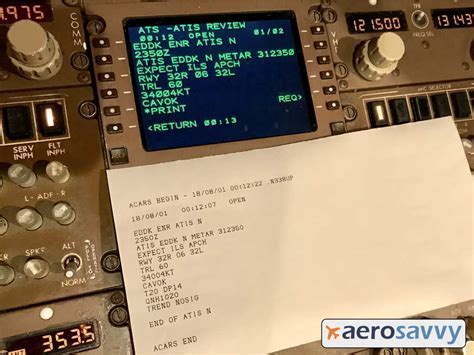
Modern avionics suites and Electronic Flight Bags (EFBs) increasingly integrate ATIS reception via ACARS (Aircraft Communications Addressing and Reporting System). This text-based transmission of ATIS messages allows flight crews to read and store the data electronically before arrival, minimizing verbal miscommunication and increasing pre-landing preparation.
In combination with Flight Management Systems (FMS), ATIS data also supports automatic configuration of approach parameters, fueling the next generation of automated, predictive cockpit environments.
ATIS and Air Traffic Control Workload Management
At large-scale hubs such as Hartsfield-Jackson Atlanta International Airport or London Heathrow, controller workload is immense. Here, D-ATIS systems not only streamline communications but also operate in synchronization with departure sequencing tools, arrival managers, and surface management systems. By allowing pilots to tune in to the most recent ATIS broadcast before calling ground control, these systems avoid redundant exchanges, thereby maintaining communication discipline on congested frequencies.
Furthermore, ATIS systems provide a consistent buffer for last-minute changes, such as temporary runway closures, taxiway incidents, or rapidly deteriorating weather. Broadcasting these immediately ensures no pilot is left uninformed, regardless of whether they’re parked, taxiing, or entering the airspace.
ATIS in the Global Context
Although the implementation details may differ slightly by jurisdiction, ATIS remains a global aviation standard. In the United States, the FAA mandates its use at controlled airports handling commercial traffic. In Europe, EUROCONTROL guidelines align ATIS use across member states, while ICAO Annex 11 ensures its application in controlled airspace globally.
Some airports also use Data Link ATIS (D-ATIS) to provide pilots with typed ATIS messages via VHF Data Link Mode 2 (VDL Mode 2) or SATCOM, reducing dependency on voice broadcasts and improving accessibility in noise-sensitive environments or remote routes.
ATIS Message Cycle and Maintenance
Each ATIS broadcast is assigned an alphabetical designator, progressing through the ICAO phonetic alphabet with each new message cycle. For example, ATIS “Alpha” becomes “Bravo” upon update. This allows pilots and controllers to verify synchronization by simply referring to the alphabetic code during communication:
“We have ATIS Bravo.”
Updates are issued on a regular schedule, typically hourly, or immediately following any of the following:
-
Sudden shifts in wind direction or intensity
-
Significant changes in runway availability
-
Updated braking action reports
-
New approach procedure implementations
-
Onset of hazardous weather phenomena
These timely updates are crucial for minimizing in-flight decision ambiguity and optimizing landing and taxiing procedures.

Future Directions and Innovations in ATIS
The future of ATIS is embedded within the digital transformation of airport operations. With AI-driven speech synthesis, enhanced natural language processing, and real-time weather integration, next-generation ATIS will go beyond static messages. Soon, ATIS may include customized pilot alerts, aerodrome congestion forecasts, and even flight-specific recommendations based on aircraft type and operational history.
Moreover, as urban air mobility (UAM) emerges with drones and electric vertical takeoff and landing aircraft (eVTOLs), ATIS-like systems will be essential in coordinating low-altitude, high-density air corridors. These micro-ATIS systems, potentially operating via mobile networks and edge computing nodes, will ensure that unmanned aircraft systems (UAS) receive real-time aeronautical data just like traditional aircraft.
The confluence of cloud computing, edge AI, and cyber-secure data links will form the backbone of intelligent ATIS solutions that dynamically respond to evolving operational environments.
Frequently Asked Questions (FAQs)
What is the main purpose of ATIS?
ATIS provides continuous, standardized broadcasts of airport information to reduce air traffic control frequency congestion and deliver critical data—such as weather, active runways, and NOTAMs—to pilots in a timely and efficient manner.
How often is ATIS updated?
ATIS broadcasts are typically updated every hour, or immediately when a significant change occurs—such as weather deterioration, runway status changes, or updated approach procedures—to ensure pilots have the most current operational information.
Can ATIS be received electronically instead of via radio?
Yes. Many modern aircraft receive ATIS messages electronically via ACARS or Data Link systems like VDL Mode 2, allowing flight crews to review and store messages on onboard electronic devices or Electronic Flight Bags (EFBs).