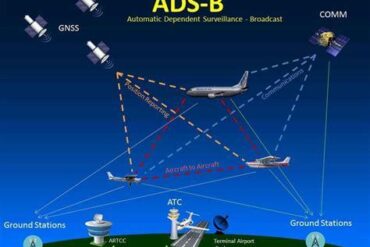
Automatic Dependent Surveillance (ADS) is a method used in aviation where aircraft automatically send data through a data link. This data comes from their navigation and position-fixing systems, providing information like aircraft identification, position in four dimensions, and other relevant details. According to ICAO Doc 4444: PANS-ATM, air traffic control can rely on ADS as long as the aircraft’s identity is clearly established. There are two primary types of ADS in use today.
The first is Automatic Dependent Surveillance-Broadcast (ADS-B). This feature allows an aircraft or surface vehicle to broadcast its position, altitude, speed, and other details for other aircraft, vehicles, and ground facilities to use. ADS-B has become the most common application of the ADS concept.
The second type is Automatic Dependent Surveillance-Contract (ADS-C). This system functions similarly to ADS-B, but the data is sent based on a specific contract between an Air Navigation Service Provider (ANSP) and the aircraft. These contracts can vary; they might be demand contracts, periodic contracts, event contracts, or emergency contracts. ADS-C is particularly useful for providing air traffic services over areas like oceans or remote regions with low traffic levels.
For more detailed information on ADS-B, refer to a dedicated article. ICAO Doc 4444: PANS-ATM states that when using ADS-B, the minimum horizontal separation is the same as it would be if radar were used. ADS-C has various applications, with one of the earliest being in Australia, where it has been employed since 1999 to maintain air traffic surveillance beyond radar coverage.