In the evolving landscape of modern aviation, understanding when ADS-B is required is crucial for compliance, safety, and operational efficiency. Automatic Dependent Surveillance–Broadcast (ADS-B) technology, particularly ADS-B Out, has transformed how aircraft are monitored and managed, both domestically and internationally. As global regulations tighten, pilots and operators must stay informed about ADS-B mandates to ensure legal and efficient operations.
Where is ADS-B Out Required in the United States?
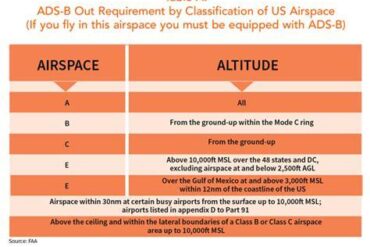
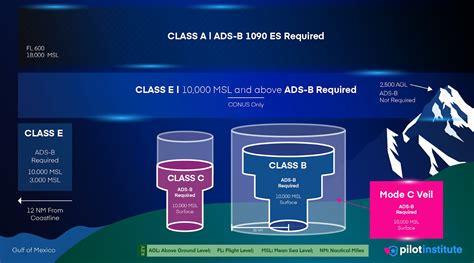
Under Federal Aviation Regulation (FAR) 91.225, the FAA has mandated ADS-B Out capability in specific controlled airspace within the continental United States. This regulation delineates where aircraft must be equipped with certified ADS-B Out systems to operate legally. The airspace requiring ADS-B Out includes:
- Class A, B, and C airspace, covering the most controlled and busiest flight environments.
- Class E airspace at or above 10,000 feet MSL, excluding areas at and below 2,500 feet AGL.
- Within 30 nautical miles of a Class B primary airport, known as the Mode C veil.
- Above the ceiling and within the lateral boundaries of Class B or C airspace, extending up to 10,000 feet MSL.
- Class E airspace over the Gulf of Mexico, at or above 3,000 feet MSL, and within 12 nautical miles of the U.S. coast.
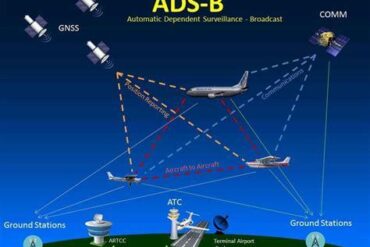
This mandate ensures that aircraft operating in congested or higher-risk environments are broadcasting position and velocity data continuously, significantly enhancing situational awareness for both pilots and air traffic controllers.
Technical Specifications for ADS-B Out in the United States
Aircraft operating in ADS-B mandated airspace must transmit through one of two approved datalinks:
- 1090ES (Extended Squitter) transponders are required for operations in Class A airspace and are highly recommended for aircraft flying internationally.
- 978 MHz Universal Access Transceivers (UAT) are permissible for aircraft flying below 18,000 feet within the United States only.
The 978UAT frequency provides additional services such as free traffic and weather broadcasts to equipped aircraft, but it is not accepted internationally.
International ADS-B Out Requirements
Outside the United States, 1090ES transponders are the global standard. As aviation authorities worldwide progressively implement ADS-B mandates, pilots intending to operate internationally must equip their aircraft accordingly. Notably, some regions require antenna diversity—that is, transponder antennas mounted on both the aircraft’s top and belly—to ensure full signal visibility to space-based ADS-B receivers.
Countries with current or impending ADS-B Out mandates include:
- Australia: 1090ES required for all IFR operations.
- Canada: Anticipated 1090ES requirement with antenna diversity, utilizing the Aireon space-based ADS-B system.
- Europe: 1090ES mandatory for IFR aircraft with a maximum takeoff weight (MTOW) exceeding 12,566 pounds or capable of cruise speeds above 250 KTAS.
- Hong Kong: 1090ES required in all airspace at FL290 and above.
- Indonesia: 1090ES required at FL290 and above.
- Mexico: Mandate for 1090ES ADS-B compliance effective January 1, 2022; 978 MHz may be an alternative option.
- Singapore: 1090ES required on designated airways.
- South Africa: 1090ES mandatory for IFR operations and for aircraft registered or upgrading transponders, operating in Class A, B, D, or E airspace.
- Sri Lanka: 1090ES required within Colombo TMA at FL290 and above.
- Taiwan: 1090ES required in all airspace at FL290 and above.
- Vietnam: 1090ES required on specified airways.
International operations demand careful attention to equipment specifications to avoid costly grounding or operational restrictions. Operators flying internationally should prioritize installing a 1090ES transponder with antenna diversity to future-proof their aircraft for emerging space-based ADS-B surveillance.
ADS-B Out Compliance Deadlines and Transition Periods
Although the U.S. ADS-B Out mandate took effect on January 1, 2020, several countries are still finalizing or phasing in their requirements. Mexico, for instance, delayed its mandate from 2020 to 2022, while Canada is progressing toward a full regulatory rollout. Nav Canada plans a phased implementation leveraging Aireon’s satellite-based tracking system.
Pilots must consult official aeronautical information publications and Notices to Air Missions (NOTAMs) before any international flight to verify current ADS-B requirements. Failure to comply can result in denied airspace entry, fines, or operational delays.
Operational Exceptions to ADS-B Out Requirements
While most operations in covered airspace must comply, FAR 91.225 does allow some exceptions:
- Aircraft that were originally certified without an electrical system (e.g., vintage aircraft) can request waivers.
- Inoperative ADS-B Out systems may permit flight with special authorization.
- Ferry flights to facilities for ADS-B installation or repair are allowed under special flight authorizations.
However, these exceptions are tightly regulated, requiring prior approval from the FAA or foreign equivalent authorities.
Why Equipping with 1090ES is Strongly Recommended
Given the growing trend toward universal ADS-B requirements, equipping with 1090ES provides substantial operational flexibility. Aircraft equipped solely with 978 UAT systems are restricted to U.S. domestic airspace below 18,000 feet and could face costly retrofits if future operational needs change.
1090ES transponders support both ground-based and space-based ADS-B surveillance, enabling compliance in all countries with mandates. Additionally, they integrate seamlessly with modern cockpit avionics suites and provide real-time surveillance capabilities far beyond traditional radar coverage.

Potential Future Trends in ADS-B Out Regulation
The aviation industry continues to move toward comprehensive, satellite-based surveillance. This trend will likely expand ADS-B requirements to more airspace classes and lower altitudes worldwide. Future regulatory actions could include:
- Mandating ADS-B Out for VFR operations in controlled airspace.
- Expanding ADS-B Out requirements to Class D and Class G airspace.
- Requiring antenna diversity even for smaller aircraft.
Operators who proactively install high-quality, globally compliant systems will minimize future regulatory burdens and maintain uninterrupted access to increasingly regulated airspace.
Conclusion: Strategic Compliance for Future Operations
Understanding when ADS-B Out is required is not merely a regulatory necessity; it is a strategic imperative for modern aviators. The global trend toward space-based surveillance, combined with increasing airspace congestion, mandates that operators equip aircraft appropriately to maintain flexibility and safety. Investing in 1090ES with antenna diversity now ensures broad operational capability, compliance with both current and future mandates, and participation in the next generation of air traffic surveillance.
By staying informed and proactively adapting to these changes, we ensure that our operations remain compliant, efficient, and poised for success in an increasingly interconnected world of aviation.