Private pilot endorsements are the critical legal signatures that allow student pilots to progress from supervised training to autonomous flight operations. At the center of this process is the Certified Flight Instructor (CFI), whose authority to endorse is not just procedural, but a matter of Federal Aviation Administration (FAA) compliance. As representatives of the FAA, CFIs bear the responsibility of issuing accurate, timely, and regulation-aligned endorsements, empowering their students to solo, cross-country, and ultimately certify as private pilots. Understanding the landscape of private pilot endorsements is not optional—it’s essential.
What Are Private Pilot Endorsements?
Private pilot endorsements are official entries made in a student’s logbook by a certified flight instructor. Each endorsement reflects that the student has received and successfully demonstrated proficiency in a specified area of training. These entries are legal validations, necessary for:
- Solo flight privileges
- Practical and knowledge test eligibility
- Flight operations in different airspace classifications
- Extended solo operations, including night and cross-country
Each endorsement must comply with precise regulatory codes outlined in 14 CFR Part 61 and referenced in AC 61-65H, the FAA’s advisory circular.
The Significance of Citizenship Verification
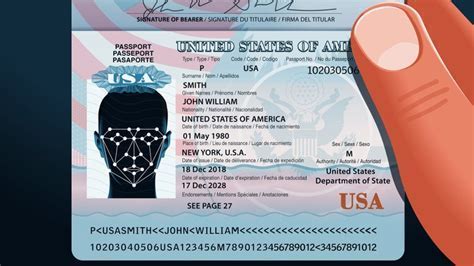
Before a student can even begin flight training, 49 CFR 1552.3(h) mandates that instructors must verify and document U.S. citizenship. Accepted documents include a valid U.S. passport, a birth certificate with a government-issued ID, or a Certificate of Naturalization. A record of this verification must be retained by the instructor for a minimum of five years. For non-citizens, TSA approval through flightschoolcandidates.gov is required instead.
Pre-Solo Knowledge Test: The Gateway to Soloing
According to 14 CFR 61.87(b), a student must pass an aeronautical knowledge test before soloing. The test, typically conducted in two parts—a closed-book written and an open-book take-home section—ensures comprehensive understanding. Instructors must review and correct all missed items before issuing the endorsement.
Required logbook endorsement:
“I certify that [Student Name] has satisfactorily completed the pre-solo knowledge test of § 61.87(b) for the [make and model] aircraft.”
The First Solo Flight: Endorsement Under 61.87(c) and 61.87(n)
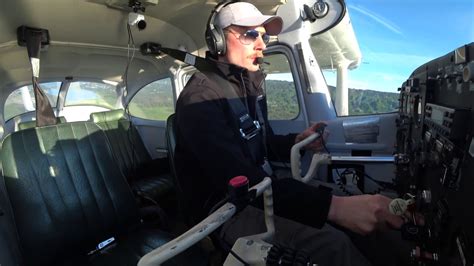
Before the student’s maiden solo, the instructor must assess and confirm their readiness via dual training and evaluation. A 90-day solo endorsement is then issued, tied to the specific make and model of the aircraft.
Required logbook entries include:
- Pre-solo flight training certification (§ 61.87(c))
- 90-day solo endorsement (§ 61.87(n))
If solo operations continue past 90 days, CFIs must update the endorsement under § 61.87(p) with renewed training.
Solo Flight Within 25 NM: Airport Familiarization Endorsement
Instructors must authorize takeoffs and landings at another airport within 25 nautical miles, following specific training under 14 CFR 61.93(b)(1). This ensures students are familiar with local airspace nuances, traffic patterns, and field elevation variations.
Sample endorsement:
“I certify that [Student Name] has received the required training under § 61.93(b)(1). [He/she] is proficient for solo takeoffs and landings at [airport name].”
Solo Cross-Country Endorsements: The 50 NM Rule
For private pilot qualification, a cross-country flight is defined as one extending more than 50 NM straight-line distance from the departure airport (§ 61.1(ii)). Before a student undertakes a solo cross-country flight, multiple endorsements are required:
- Cross-country training endorsement (§ 61.93(c)(1) & (2))
- Cross-country flight planning review endorsement (§ 61.93(c)(3))
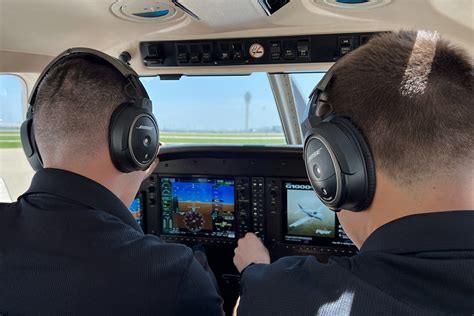
This endorsement confirms the instructor has reviewed the student’s flight plan, navigation log, weather, and contingency decisions, ensuring a safe and prepared solo operation.
If multiple flights over the same route are planned (within 50 NM), § 61.93(b)(2) enables repeated authorizations, reducing redundancy while maintaining oversight.
Class B Airspace Operations: High-Traffic Complexity Requires Specific Training
Flying solo in or around Class B airspace is not permitted without targeted ground and flight instruction. According to 14 CFR 61.95, instructors must issue endorsements specific to both the airspace and airport.
- § 61.95(a) – Solo flight within Class B airspace
- § 61.95(b) – Solo operations to/from a Class B airport
Some Class B airports are prohibited for student pilots under AIM 3-2-3, regardless of endorsements, unless the pilot holds at least a private certificate.
Private Pilot Knowledge Test Endorsement Requirements
Before sitting for the FAA Private Pilot Knowledge Test, students must receive ground instruction covering the required aeronautical knowledge areas (14 CFR 61.105). Instructors must verify the completion of this training or a home-study program under § 61.35(a)(1), 61.103(d), and 61.105.
Endorsement example:
“I certify that [Student Name] has completed the required training of § 61.105 and is prepared for the FAA Private Pilot Knowledge Test.”
Private Pilot Practical Test Endorsements
Instructors must confirm a student’s eligibility to take the practical test (checkride) through a series of endorsements:
- Training within preceding 2 months (§ 61.39(a)(6)(i)-(ii))
- Review of missed knowledge test items (§ 61.39(a)(6)(iii))
- Completion of required instruction (§ 61.103(f), 61.107(b), 61.109)
Typical endorsement:
“I certify that [Student Name] has received the required training and is prepared for the FAA Private Pilot Practical Test for the [aircraft category and class].”

Night Solo Endorsements: Training for the Dark Skies
Night operations introduce new challenges in depth perception, airport lighting identification, and spatial orientation. Before conducting a solo at night, the instructor must provide and endorse night training under § 61.87(o) within the preceding 90 days.
Training must cover:
- Night takeoffs, approaches, and landings
- Navigation in the vicinity of the airport
Retest Endorsements After Failure
If a student fails either the knowledge or practical test, 14 CFR 61.49 requires the instructor to conduct additional training before reauthorization. The endorsement must specify whether it pertains to flight, ground, or both.
For knowledge tests, the endorsement is made directly on the Airman Knowledge Test Report (AKTR). For practical tests, it’s entered on FAA Form 8710-1.
Example:
“I certify that [Student Name] has received the additional [flight and/or ground] training required by § 61.49 and is proficient to retake the [knowledge/practical] test.”
The Legal Weight of a CFI’s Signature
Every endorsement carries with it legal accountability. Incorrect, incomplete, or undocumented endorsements can jeopardize not only the student’s certification but the instructor’s own certificate. Hence, flight instructors must:
- Keep updated with changes in FAA regulations and AC 61-65H
- Issue endorsements with exact language, accuracy, and legal reference
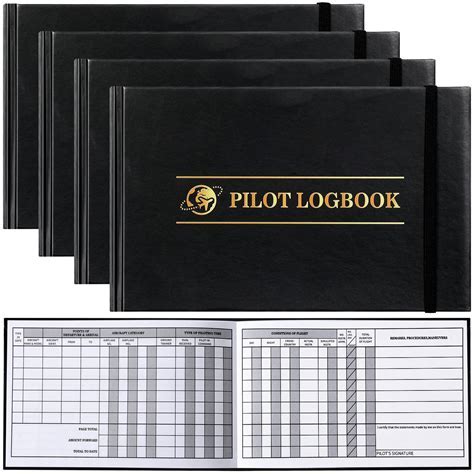
- Use standardized logbooks, like the Gleim Pilot Logbook, for consistency
Conclusion: Endorsements Define a Pilot’s Path
Private pilot endorsements are not mere formalities—they form the spine of the training structure in general aviation. They grant students the right to act as Pilot in Command (PIC), validate their readiness, and offer a documented roadmap to certification. For CFIs, the act of endorsing is not symbolic; it is a federal obligation rooted in trust and law. Mastering the endorsement process ensures not only regulatory compliance but safer skies and competent pilots. Always refer to the current version of AC 61-65H and related FAA documents to ensure your endorsements remain legally sound and operationally effective.