Embarking on the journey to become a private pilot is both an inspiring and intellectually demanding pursuit. The Federal Aviation Administration (FAA) mandates a comprehensive understanding of aviation principles, flight techniques, aeronautical decision-making, and regulatory compliance. To meet these standards, students must immerse themselves in a wide spectrum of educational resources, each tailored to build foundational knowledge and flight proficiency. In this guide, we examine the most critical FAA-approved materials, all of which collectively form the core of private pilot education.
Understanding the FAA’s Structured Learning System
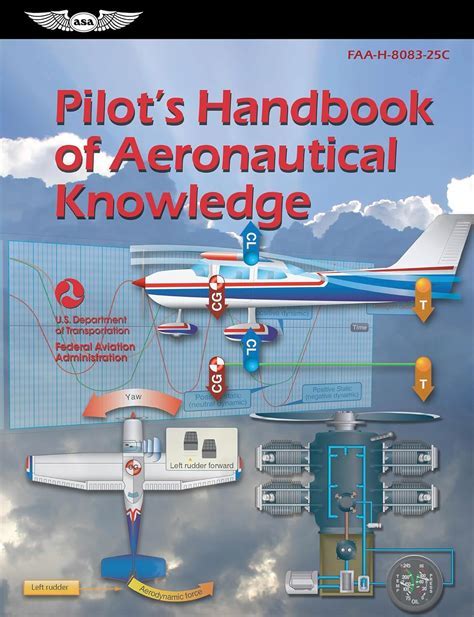
The FAA organizes private pilot certification content through a structured framework involving knowledge handbooks, practical standards, testing supplements, and regulatory references. At the core lies the Pilot’s Handbook of Aeronautical Knowledge (PHAK), the all-encompassing encyclopedia that introduces students to the science and systems of flight.
Pilot’s Handbook of Aeronautical Knowledge (FAA-H-8083-25C) is the essential starting point for every private pilot. It delves into aerodynamics, aircraft performance, flight instruments, navigation systems, airspace classifications, and weather theory, offering the theoretical grounding needed before any real-world flight training.
Following that, the Airplane Flying Handbook (FAA-H-8083-3C) transitions learners from theory to application. It provides step-by-step instruction on basic flight maneuvers, takeoffs, landings, emergency procedures, and complex flight scenarios. Every maneuver expected in checkrides is systematically illustrated and described.
Precision Through Charts and Navigation Tools
Effective navigation is impossible without fluency in chart interpretation. The Aeronautical Chart Users’ Guide is indispensable for this skill. It enables students to interpret Sectional Charts, Terminal Area Charts, VFR/IFR enroute charts, and chart symbology, ensuring spatial orientation and compliance with controlled airspace procedures.
Alongside it, the Airman Knowledge Testing Supplement (FAA-CT-8080-2H) serves as a visual companion during the FAA knowledge test. This supplement features the same graphics, legends, and data charts used in the real test environment, and familiarity with its contents can significantly improve exam performance.
Regulatory Mastery with FAR/AIM
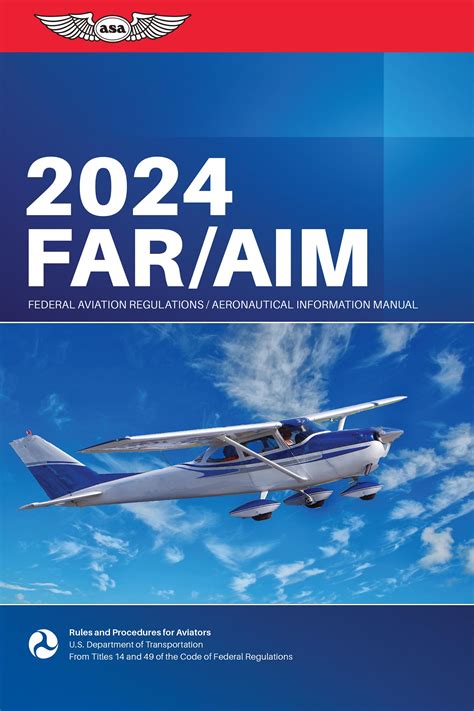
No private pilot can earn their certificate without a firm grasp of aviation law and operational standards. The FAR/AIM (Federal Aviation Regulations and Aeronautical Information Manual) compiles the essential regulatory information governing U.S. aviation.
The 2024 edition incorporates the latest amendments on airspace restrictions, pilot certifications, aircraft operations, and ATC communications. Paired with the AIM, which offers interpretive guidance on these rules, the FAR/AIM becomes the ultimate legal and procedural reference for all aviators.
Weather Knowledge: Forecasting for Safety
A private pilot must predict, interpret, and adapt to changing atmospheric conditions. The Aviation Weather Handbook (FAA-H-8083-28) consolidates several previous advisory circulars into one cohesive manual that explains weather systems, METARs, TAFs, radar imagery, and synoptic analysis.
This handbook is pivotal for understanding how weather phenomena affect aircraft performance, visibility, and decision-making. The ability to accurately interpret weather is crucial for go/no-go decisions and for preparing cross-country flight plans under VFR conditions.
Flight Safety and Risk Management
The Risk Management Handbook (FAA-H-8083-2A) addresses the psychological and cognitive aspects of flight. It guides pilots in identifying hazards, assessing risk, and making sound decisions under pressure. This resource emphasizes Single-Pilot Resource Management (SRM) and the PAVE, CARE, and TEAM models for structured decision-making.
Along with this, Non-Towered Airport Flight Operations (AC 90-66C) provides critical insights for safely operating in uncontrolled airspace. It covers radio call procedures, traffic pattern entries, collision avoidance techniques, and standard phraseology.
Medical Fitness and the BasicMed Option
Maintaining health eligibility for flight is a legal requirement. The Alternative Pilot Physical Examination and Education Requirements (BasicMed – AC 68-1) outline how private pilots can fly without a traditional medical certificate. This guide includes details on aircraft limitations, operating restrictions, physician evaluation requirements, and online education compliance.
Certification Standards and Checkride Preparation
Arguably the most pivotal document for any student nearing completion of training is the Private Pilot Airman Certification Standards (ACS – FAA-S-ACS-6B). It defines exactly what the FAA expects in terms of knowledge, risk management, and flight proficiency. Every checkride examiner uses this document as the benchmark for passing or failing a private pilot applicant.
The ACS integrates theory with practical maneuvers. It outlines every task from preflight preparation and VOR navigation to steep turns and emergency approach landings, accompanied by corresponding standards of performance.
Testing Supplements and Practical Simulations
FAA knowledge tests demand familiarity with tabular data and aeronautical charts. The Airman Knowledge Testing Supplement includes the same figures and tables used in real tests, ensuring students aren’t surprised during the exam. Practicing with this document alongside test prep books such as Gleim, ASA, or Sporty’s reinforces chart-reading speed and accuracy.
Instrument and Commercial Expansion for Future Training
Even though the focus is on the private pilot certificate, many students pursue further training. Early exposure to the Instrument Flying Handbook (FAA-H-8083-15B) and the Commercial Pilot Airman Certification Standards (FAA-S-ACS-7A) can provide insight into the advanced expectations ahead.
Understanding the basics of instrument navigation, holding patterns, and commercial-level flight planning early on makes future progression smoother. Moreover, exposure to these texts helps students develop a more holistic view of what safe, professional flying truly requires.
Study Strategy: How to Master the Material Efficiently
Given the volume and depth of required study material, we recommend the following structured approach:
- Begin with the PHAK and Airplane Flying Handbook for foundational knowledge.
- Rotate weekly focus areas: weather, regulations, navigation, communications, and performance.
- Use the Aeronautical Chart Users’ Guide and the Testing Supplement simultaneously while doing mock exams.
- Integrate Risk Management Handbook concepts into scenario-based training flights.
- Practice radio calls aloud using Radio Communications Phraseology and Techniques (P-8740-47).
- Regularly reference the FAR/AIM for flight rule clarifications and cross-checks.
Studying isn’t just about reading. We advocate for active application. For example, during each flight lesson, challenge yourself to identify a relevant regulation, forecast weather implications, and assess the risk involved.
Final Thoughts: Building the Pilot’s Mindset
Mastering private pilot study material is more than a prerequisite for passing a test — it is about cultivating a mindset of safety, discipline, and lifelong learning. The FAA’s materials are comprehensive, accessible, and updated regularly to reflect the evolving aviation landscape.
By committing to a deep understanding of each manual, guide, and supplement, future aviators can rise confidently to the standards expected in the air. The best pilots aren’t just those who can land in crosswinds or navigate airspace cleanly — they are those who understand why they do what they do, every time they take to the skies.