Aspiring commercial pilots must prepare for a comprehensive and challenging journey that demands both theoretical knowledge and practical skill. This guide is designed to walk candidates through the core study areas, regulatory knowledge, aircraft systems, and operational limitations that must be mastered to pass the FAA Commercial Pilot tests and fly with confidence and competence.
Understanding the Scope of Commercial Privileges
The commercial pilot certificate enables holders to fly for compensation or hire. However, privileges come with limitations unless certain qualifications are met. One crucial restriction applies to those without an Instrument Rating (IFR) — such pilots cannot carry passengers for hire beyond 50 nautical miles or during night operations.
It is vital to distinguish between common carriage and private carriage. Common carriage involves transporting passengers or property for compensation after “holding out” to the public, typically through advertising or a known reputation for service. Private carriage, in contrast, means transportation for a limited clientele, without public solicitation.
Regulatory Requirements and Pilot Documentation
Every commercial pilot must have specific documents in possession while acting as Pilot in Command (PIC):
- A valid Photo ID
- A Commercial Pilot Certificate
- A current medical certificate — a Second-Class Medical Certificate is mandatory and valid for 12 calendar months when exercising commercial privileges
If a certificate is lost or destroyed, the FAA allows the pilot to apply for a replacement by submitting a written request. A temporary faxed certificate, valid for 60 days, may be issued in the interim.
Pilots must notify the FAA within 30 days of a change in permanent address to avoid certificate invalidation.
Logging Flight Time and Currency Requirements
While not all flight time must be logged, any time used to meet certification or currency requirements must be recorded. A commercial pilot must stay current, which includes:
- Completing a biennial flight review
- Conducting three takeoffs and landings within the past 90 days to carry passengers — if flying at night, those takeoffs and landings must be done at night
Logging Second-in-Command (SIC) time is only permissible when the aircraft requires two pilots, and the SIC holds the necessary ratings and qualifications.
Aircraft Types, Endorsements, and Equipment Knowledge
To operate certain aircraft as PIC, specific endorsements are required:
- High-Performance Aircraft (engines > 200 HP): Requires ground and flight training and a logbook endorsement
- Tailwheel Aircraft: Requires flight training and endorsement
- Pressurized Aircraft (service ceiling above 25,000 feet): Requires training and endorsement
Ratings are also necessary for:
- Turbojets
- Aircraft over 12,500 lbs. gross weight (excluding lighter-than-air)
- Any aircraft the FAA specifies
Aircraft Documentation and Inspections
FAA rules require that specific documents be onboard and displayed at all times:
- The Airworthiness Certificate, displayed in the cabin or cockpit
- The Aircraft Flight Manual (AFM), or an equivalent combination of placards and markings
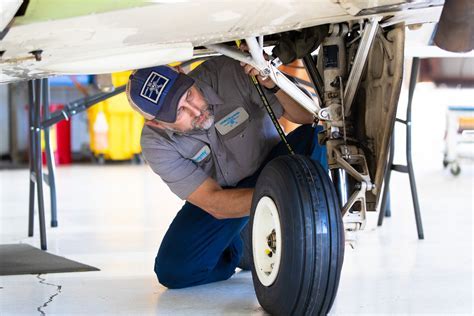
Aircraft must undergo regular maintenance:
- Annual Inspections — required for all aircraft
- 100-hour Inspections — only for aircraft used for hire
- The annual inspection can substitute for the 100-hour if conducted on time
- A 10-hour grace period is allowed to reach the inspection facility, but this time is included in the next interval
Preventive maintenance tasks — such as oil changes or replacing hydraulic fluid — can be performed by private pilots on non-commercial aircraft.
Airworthiness Directives and Special Flight Permits
The FAA issues Airworthiness Directives (ADs) to notify aircraft owners of unsafe conditions. These directives can be emergency or scheduled and require mandatory compliance.
If an aircraft is unairworthy but safe for a specific flight — for instance, a relocation to a repair station — a Special Flight Permit may be obtained from the local FSDO (Flight Standards District Office).
Avionics, Transponders, and Flight Controls
Identifying whether an aircraft has a Mode C transponder involves reviewing the equipment list in the weight and balance documentation. Transponders are essential for airspace compliance and altitude reporting.
Typical flight control systems include:
- Rod and cable mechanisms
- Flaps, such as the single-slot system on Cessna aircraft, which deploy in 10°, 20°, and 30° increments and are protected by circuit breakers
Landing Gear, Hydraulic Systems, and Backup Features
Aircraft equipped with retractable landing gear use a hydraulic power pack, generally located behind the firewall. Gear locking mechanisms include:
- Mechanical down-locks
- Hydraulic pressure (up to 1500 psi) for maintaining the gear in the up position
- A nosewheel pressure switch to prevent gear retraction on the ground
Landing gear systems include electrically driven hydraulic pumps, emergency hand pumps, and warning horns triggered by manifold pressure drops. The total gear extension/retraction time typically ranges from 5 to 7 seconds.
Engine Management: Propellers, Turbochargers, and Detonation
Aircraft may use fixed-pitch, climb, or variable-pitch propellers. A climb propeller offers higher RPM and better low-speed performance, while a variable-pitch propeller maintains constant engine RPM for efficient operations.
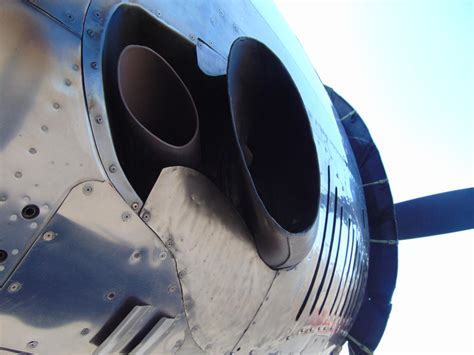
Turbochargers compress thin air at higher altitudes to maintain power. They are driven by exhaust turbines, improving engine performance in low-density environments.
Proper mixture leaning is essential. The procedure involves leaning until peak power, continuing until the engine runs rough, then enriching for smooth operation. Incorrect leaning can lead to detonation, characterized by rough engine operation and potential mechanical damage.
Cowl Flaps and Temperature Regulation
Cowl flaps regulate engine temperature by controlling airflow through the engine compartment. Typically, cowl flaps are:
- Open during taxi, takeoff, and climbs
- Closed during descent and low-power phases
This helps maintain optimal engine temperature and prevent overheating or shock cooling.
Understanding Ceiling and Climb Dynamics
- Service Ceiling: The altitude at which the aircraft’s climb rate falls to 100 ft/min
- Absolute Ceiling: The altitude at which no climb is possible
Knowing these limits is critical for flight planning, particularly in mountainous terrain or hot and high conditions.
Environmental and Emergency Considerations
Decompression at high altitudes poses significant hazards:
- Hypoxia
- Rapid cabin depressurization
- The Bends
- Exposure to cold and wind blast
Some aircraft include backup vacuum systems — either electric pumps or parallel vacuum designs — in case the primary system fails.
Circuit breakers must be treated with caution. If one pops, it should be allowed to cool for two minutes, then reset once. If it pops again, do not reset it.
Aerodynamics and Flight Performance
Induced drag is directly linked to lift production and decreases with increasing airspeed. Understanding this aerodynamic relationship helps optimize performance during takeoff and climb.
Flaps and spoilers play unique roles:
- Flaps: Increase lift and drag, allowing slower airspeeds and steeper descents
- Spoilers: Decrease lift and increase drag, used during descent and on ground roll
Certain speeds, while important, are not marked on the airspeed indicator, including:
- Va (maneuvering speed)
- Vlo (landing gear operating speed)
- Vle (landing gear extended speed)
Traffic Patterns and Controlled Airspace
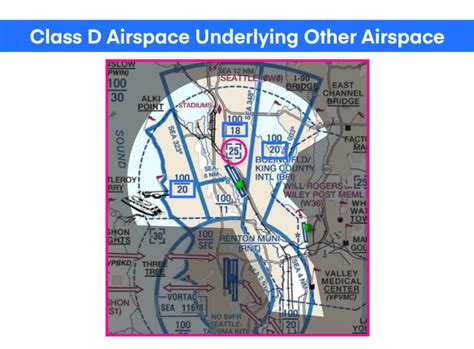
In Class D airspace, traffic pattern altitude for turbine-powered or large aircraft is 1,500 feet AGL. If the control tower closes, the airspace reverts to Class E, starting at 700 feet AGL.
Final Thoughts on Mastery and Readiness
Becoming a commercial pilot demands more than just time in the cockpit — it requires technical knowledge, regulatory awareness, and a commitment to aeronautical precision. By thoroughly studying these areas, candidates will be well-equipped to handle the responsibilities of commercial aviation, pass the FAA written and oral exams, and operate safely in the national airspace system.