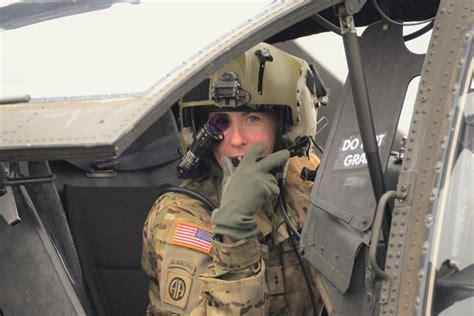
The Boeing AH-64 Apache is widely regarded as one of the most capable attack helicopters ever built. Designed to operate in hostile environments, hunt armored targets, support ground troops, and survive intense battlefield threats, the aircraft places extraordinary demands on its crew. Flying an Apache is not simply about controlling a helicopter. It requires the ability to make split-second decisions while managing advanced sensors, weapons systems, navigation equipment, and mission objectives under extreme pressure.
For that reason, Apache pilot training is among the most rigorous programs in military aviation. Crews spend countless hours preparing for scenarios that test not only their technical skills but also their judgment, discipline, and ability to remain calm when conditions become dangerous. Among the many challenges they face, three situations stand out as some of the most demanding and potentially deadly.
Flying in Complete Darkness Using Only Infrared Systems
One of the most intimidating situations Apache pilots train for is operating in total darkness while relying almost entirely on infrared imagery. Modern military operations do not stop when the sun goes down. In fact, many missions are deliberately conducted at night because darkness can provide a tactical advantage and reduce the risk of detection by enemy forces.
Unlike civilian pilots who depend heavily on visual references, Apache crews frequently train to fly without being able to see the terrain with their own eyes. Instead, they use the helicopter’s sophisticated Pilot Night Vision Sensor (PNVS), a system that projects infrared imagery directly into the pilot’s field of view.
This technology allows pilots to identify terrain features, obstacles, vehicles, and potential threats that would otherwise be invisible. However, operating through a sensor is far different from seeing the world naturally. The image can appear narrow, creating what many pilots describe as looking through a tunnel while moving at high speed.
Training often takes place inside a completely darkened cockpit environment known as “the bag.” In this setting, pilots are denied all external visual references and must trust the aircraft’s sensors entirely. Every turn, altitude adjustment, and navigation decision depends on interpreting infrared imagery accurately.
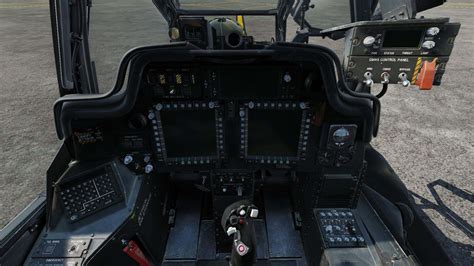
The challenge becomes even greater because Apache helicopters frequently fly at low altitudes. Low-level flight helps reduce exposure to enemy radar and increases mission effectiveness, but it leaves little margin for error. Trees, power lines, hills, and other obstacles can appear suddenly, requiring constant attention and rapid decision-making.
Mastering night operations is critical because many combat missions occur under the cover of darkness. Pilots who become comfortable navigating and fighting in these conditions gain a significant operational advantage while maintaining mission effectiveness when visibility is at its worst.
Responding to In-Flight Emergencies Under Extreme Pressure
Mechanical problems can occur in any aircraft, but when an emergency develops in a combat helicopter, the consequences can be immediate and severe. Apache pilots train extensively to handle situations where systems fail unexpectedly while the aircraft remains airborne.
The key challenge is that emergencies rarely occur during calm and predictable conditions. A malfunction may happen during poor weather, during a nighttime mission, while maneuvering at low altitude, or while coordinating with ground forces. In those moments, hesitation can quickly escalate a manageable issue into a catastrophic event.
Apache training programs place significant emphasis on emergency procedures. Pilots learn to identify warning indicators, diagnose system failures, and execute corrective actions with speed and precision. These procedures are practiced repeatedly until they become second nature.
At facilities such as Fort Rucker, future instructor pilots undergo advanced emergency training designed to prepare them for a wide range of aircraft malfunctions. These scenarios may include engine issues, hydraulic system failures, avionics problems, sensor malfunctions, or damage sustained during combat operations.
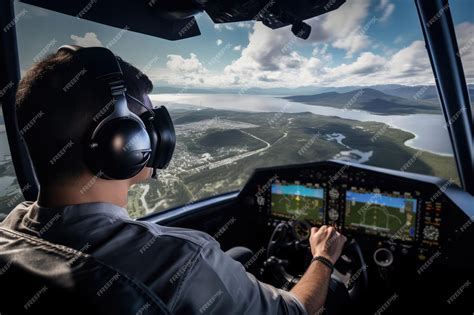
The objective is not merely to memorize checklists. Instead, pilots develop the ability to maintain aircraft control while simultaneously evaluating the problem and selecting the appropriate response. Stress management becomes just as important as technical knowledge.
Military aviation instructors understand that the human mind can become overloaded during a crisis. By exposing pilots to realistic emergency scenarios repeatedly, training helps build automatic responses that function even under intense pressure. This approach allows crews to remain focused, disciplined, and effective when every second matters.
The ability to control fear, process information rapidly, and execute proven procedures can make the difference between a successful recovery and the loss of an aircraft.
Coordinating Complex Combat Missions with Multinational Forces
Modern military operations increasingly involve cooperation between allied nations. As a result, Apache pilots must train for combat situations that extend far beyond simply flying the helicopter or engaging targets.
An Apache crew may be required to coordinate with foreign military units, fixed-wing aircraft, intelligence teams, artillery units, and ground commanders simultaneously. Each participant contributes critical information that influences mission success.
The complexity of these operations creates a demanding environment where situational awareness is essential. Pilots must monitor threats, maintain communication channels, navigate changing battlefield conditions, and execute mission objectives while ensuring coordination remains effective across multiple organizations.
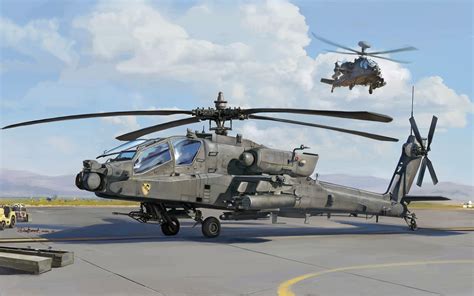
Communication becomes particularly important when working with multinational partners. Different military procedures, operational cultures, and communication styles can introduce challenges that crews must overcome. Training exercises are designed to expose pilots to these realities before they encounter them in actual combat.
Apache crews learn to adapt quickly to unfamiliar teams while maintaining operational efficiency. They practice integrating into joint task forces, sharing intelligence, coordinating target information, and supporting coalition objectives. These exercises mirror real-world deployments where allied forces often work together during international military operations.
The ability to collaborate effectively with multinational partners strengthens overall battlefield performance. It also ensures that Apache crews can contribute immediately when assigned to coalition missions involving countries with different equipment, procedures, and command structures.
Why These Scenarios Define Apache Pilot Training
Apache pilot training is built around preparing aviators for situations where mistakes can have life-or-death consequences. Flying solely through infrared imagery in complete darkness, responding instantly to airborne emergencies, and coordinating highly complex multinational combat operations represent some of the toughest challenges military aviators face.
These scenarios demand far more than technical flying skills. They require exceptional mental discipline, situational awareness, communication abilities, and confidence under pressure. Through relentless training and realistic simulations, Apache crews develop the capabilities needed to operate one of the world’s most powerful attack helicopters in some of the most dangerous environments imaginable.
The result is a pilot force capable of executing missions around the clock, overcoming unexpected emergencies, and integrating seamlessly into complex international operations—qualities that have helped make the AH-64 Apache one of the most respected and feared combat helicopters in military aviation.