Understanding Bingo Fuel: The Critical Threshold in Aviation
In the high-stakes world of aeronautical navigation, understanding fuel thresholds is not just a matter of efficiency—it’s a matter of life and death. Among the crucial concepts pilots must master is the idea of “Bingo Fuel”, a term steeped in military aviation but vital across all professional flight operations.
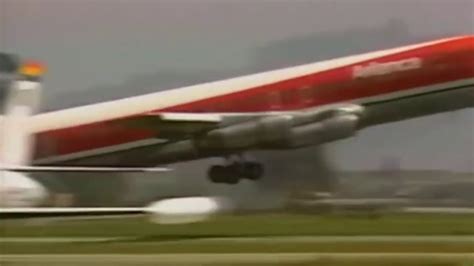
The tragedy of Avianca Flight 52 in 1990 serves as a haunting reminder of the catastrophic consequences of poor fuel load management and unclear communication with Air Traffic Control (ATC). Despite having enough fuel for a standard journey from Medellín to New York JFK, the aircraft crashed just miles from its destination due to mismanagement and a failure to properly declare a fuel emergency. This incident underlines the pressing need for accurate definitions and usage of fuel status terms like Minimum Fuel, Bingo Fuel, and Emergency Fuel.
Defining Minimum Fuel
The Aeronautical Information Manual (AIM) 5-5-15 defines Minimum Fuel as the point where, upon reaching the destination, a pilot cannot accept any undue delay. This designation is not an emergency status—it is an advisory, a signal to ATC that any deviation or additional delay could result in an unsafe fuel state.
Minimum Fuel becomes relevant in situations such as:
-
Holding patterns
-
Extended downwinds
-
Unexpected vectoring
In these circumstances, ATC should prioritize traffic flow, but they are under no obligation to treat the situation as an emergency unless the pilot explicitly declares one. This makes it essential for flight crews to recognize the transition point from Minimum to Emergency Fuel—a distinction at the heart of Bingo Fuel calculations.
What Is Bingo Fuel?
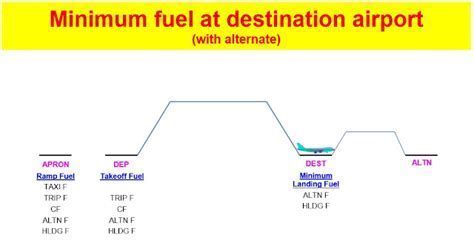
Bingo Fuel is a military-derived term adopted by the airline industry to describe the minimum amount of fuel required to:
-
Reach the destination airport
-
Proceed to the farthest alternate airport
-
Maintain a 45-minute reserve, as per FAA regulation §91.167

The Formula for Calculating Bingo Fuel
The standard formula is:
Bingo Fuel = Reserve Fuel + Farthest Alternate Fuel + Destination Fuel
Let’s explore a practical case study:
-
Onboard Fuel: 5,100 lbs
-
Reserve Fuel (45 min): 1,506 lbs
-
Alternate Airports:
-
CWA: 1,962 lbs
-
LAN: 1,542 lbs (use the farthest, CWA)
-
Fuel to Destination from Fix (LYNNI): 890 lbs
Bingo Fuel = 1,506 + 1,962 + 890 = 4,358 lbs
If the aircraft has 5,100 lbs, the extra fuel available is 742 lbs. With a burn rate of 1,000 lbs/hour, this allows for approximately 45 minutes of holding time. Any further delay would require immediate decision-making—either declaring Minimum Fuel or diverting to the alternate.
Why Bingo Fuel Matters
Understanding your Bingo Fuel value is not just about math—it’s about strategic decision-making. When an aircraft approaches this threshold, every minute in the air counts. ATC advisories become less about courtesy and more about safety assurance.
If a clearance does not arrive in time, or if weather deteriorates at the destination, the flight crew must:
-
Inform ATC about Minimum Fuel status
-
Decide whether to continue or divert
-
Be prepared to declare a fuel emergency if the reserve fuel must be used
The Transition to Emergency Fuel
The concept of Emergency Fuel lacks a precise FAA regulatory definition, but it is addressed in ATB 2012-1. This bulletin defines Emergency Fuel as the point at which a pilot must proceed directly to the airport intended for landing, with no tolerance for delay.
Declaring Emergency Fuel is not a suggestion—it is a formal request for priority handling by ATC. Once declared, the aircraft is moved to the front of the line, ensuring minimal vectoring and immediate approach clearance.
When Should Emergency Fuel Be Declared?
Though not precisely codified, industry norms suggest the following guidelines:
-
Whenever reserve fuel is being used
-
When less than 30 minutes of fuel remains, per IATA standards
-
If another go-around or holding pattern would compromise a safe landing
A Real-World Emergency Fuel Scenario
During a recurrent simulator session, a crew flying from DCA to LGA encountered a sudden drop in visibility at their destination. After one unsuccessful approach, the crew decided that if the second attempt also failed, they would declare an emergency.
The second approach also failed to provide visual contact with the runway. With only 30 minutes of fuel left, the captain declared an emergency. ATC immediately granted priority vectors to JFK’s ILS Runway 22L. The aircraft landed safely—a textbook example of timely and correct emergency declaration.

Why Pilots Hesitate to Declare an Emergency
Despite training and regulations, many pilots hesitate to declare a fuel emergency due to:
-
Fear of regulatory scrutiny
-
Concern about paperwork or internal review
-
Misunderstanding the gravity of the situation
However, failure to declare an emergency—like in the Avianca 52 case—can result in disaster. Fuel is a consumable with no redundancy. Once it’s gone, there is no second chance.
Enhancing Situational Awareness Through Fuel Monitoring
Modern aircraft offer a suite of electronic fuel monitoring tools, including:
-
Real-time fuel burn rates
-
Distance-to-destination data
-
Integrated alternate routing calculators
These systems empower pilots to make accurate Bingo Fuel calculations without complex manual estimates.
But technology cannot replace judgment. Continuous fuel tracking and CRM discussions must remain at the forefront of flight deck procedures.
Conclusion
Bingo Fuel represents a strategic fuel threshold, a calculated decision point that allows a crew to maintain control over the flight’s safety parameters. By clearly understanding how to calculate Bingo Fuel and distinguish between Minimum and Emergency Fuel statuses, flight crews can prevent tragic outcomes.
The ultimate takeaway is simple:
When in doubt, declare.
Lives depend on proactive judgment, clear communication, and fuel discipline. The cockpit is no place for hesitation when thresholds are crossed.
FAQ
What is the difference between Minimum Fuel and Bingo Fuel?
Minimum Fuel is an advisory to ATC indicating that the aircraft cannot accept further delays. Bingo Fuel is a calculated threshold that informs pilots when they must divert to ensure they land with required reserves.
How is Emergency Fuel declared to ATC?
A pilot should explicitly use the word “emergency” and state the remaining fuel in minutes. For example: “Mayday, mayday, mayday, we are fuel emergency, 20 minutes remaining.”
Can an aircraft continue flying after reaching Bingo Fuel?
Technically yes, but it must immediately divert or prepare to declare Minimum or Emergency Fuel if a delay occurs. Continuing past Bingo without action jeopardizes safety.