Takeoff is one of the most demanding phases of flight. While modern aircraft are remarkably reliable, pilots know that the moments spent accelerating down a runway leave little room for error. Engine performance, aircraft weight, wind conditions, runway surface quality, and even wildlife hazards can influence whether an aircraft achieves the speed needed to become airborne safely. To help evaluate takeoff performance in real time, many pilots rely on a simple but highly effective guideline known as the 50/70 Rule.
Understanding the 50/70 Rule During Takeoff
The 50/70 Rule is not a formal regulation, but it is widely recognized as an excellent safety benchmark during takeoff. The concept is straightforward: an aircraft should reach approximately 70 percent of its rotation speed (Vr) by the time it has traveled 50 percent of the required takeoff distance.
The rule is based on fundamental physics. Acceleration and distance are closely related during a takeoff roll, and the aircraft’s speed increases in a predictable manner under normal operating conditions. Since velocity squared is proportional to distance, achieving 70 percent of the target speed at roughly half the takeoff distance indicates that the aircraft is accelerating as expected.
Mathematically, the relationship is easy to understand. Seventy percent squared equals 49 percent, which is essentially half. This creates a practical checkpoint that pilots can use while accelerating down the runway.
If the aircraft fails to achieve 70 percent of its planned rotation speed by the halfway point, it may indicate a problem affecting performance. In such a situation, the safest course of action is often to reject the takeoff and investigate the cause.
Why the Rule Is So Important
During takeoff, pilots must make rapid decisions based on limited time and runway remaining. A delayed acceleration profile can result from numerous factors, including engine issues, excessive aircraft weight, incorrect performance calculations, adverse winds, or braking problems.
The value of the 50/70 Rule lies in its simplicity. Instead of waiting until the aircraft is close to rotation speed and discovering something is wrong, pilots gain an early warning indicator.
By identifying poor acceleration halfway through the takeoff run, the aircraft still has sufficient runway available to stop safely. This additional margin can be crucial in preventing runway overruns and other potentially dangerous situations.
The rule serves as a practical reality check that confirms whether actual aircraft performance matches preflight expectations.
Finding the Halfway Point on the Runway
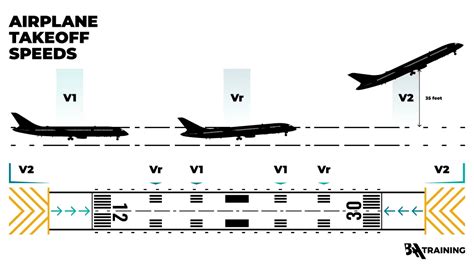
Applying the 50/70 Rule requires pilots to know where the halfway point of the takeoff distance is located. This is not always as simple as identifying the center of the runway.
The key distinction is that pilots are measuring half of the required takeoff distance, not necessarily half of the runway’s total length. A runway may be significantly longer than the distance needed for departure.
Many airports provide distance-remaining markers along the runway edges. These signs typically display the number of thousands of feet remaining before the runway ends. Pilots can also use taxiway intersections, lighting systems, or other visual landmarks as reference points during the takeoff roll.
Proper planning before takeoff helps ensure the pilot knows exactly where the performance checkpoint will occur.
What Is Rotation Speed (Vr)?
To understand the 50/70 Rule fully, it is necessary to understand rotation speed, commonly abbreviated as Vr.
Rotation speed is the designated airspeed at which the pilot begins applying back pressure on the control column or sidestick to raise the aircraft’s nose. This action increases the wing’s angle of attack and allows the aircraft to generate sufficient lift for departure.
Vr is not a fixed number across all aircraft. It varies according to aircraft type, weight, center of gravity, flap configuration, weather conditions, and runway characteristics. A heavily loaded airliner requires a different rotation speed than a lightly loaded training aircraft.
Importantly, Vr is measured in knots of airspeed, not ground speed. Wind conditions can significantly affect the relationship between the two.
The Relationship Between the 50/70 Rule and V-Speeds
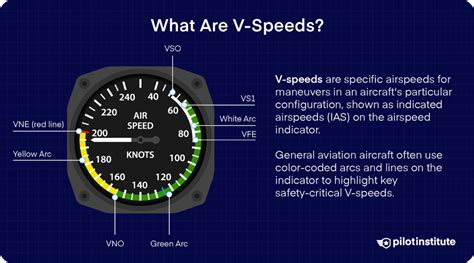
Pilots use a range of critical speeds known as V-speeds throughout flight operations. Among the most important during takeoff are V1 and Vr.
V1 represents the decision speed. Before reaching V1, a pilot can reject the takeoff if a serious issue arises. Beyond V1, stopping may not be possible within the available runway, making continued takeoff the safer option.
Vr, on the other hand, is the speed at which the aircraft begins rotating for liftoff.
For example, if an aircraft’s Vr is 100 knots, the 50/70 Rule suggests it should reach approximately 70 knots by the halfway point of the required takeoff distance. If Vr is 155 knots, the aircraft should achieve roughly 109 knots at the same checkpoint.
These calculations provide pilots with a quick and effective way to assess aircraft acceleration without requiring complex analysis during one of the busiest phases of flight.
A Simple Rule With Major Safety Benefits
Although aviation relies heavily on advanced technology, some of the most valuable safety tools remain surprisingly simple. The 50/70 Rule is a perfect example. By providing an easy-to-remember benchmark for takeoff performance, it helps pilots detect abnormalities early, preserve stopping distance, and make safer decisions when conditions do not match expectations.
In an environment where every second counts, this straightforward rule continues to serve as an important layer of protection, reinforcing one of aviation’s most fundamental principles: recognizing a problem early is often the key to avoiding a much larger one later.