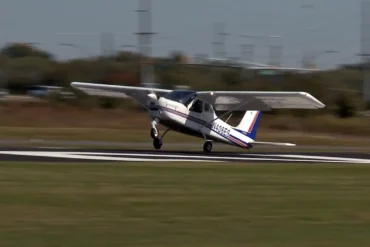
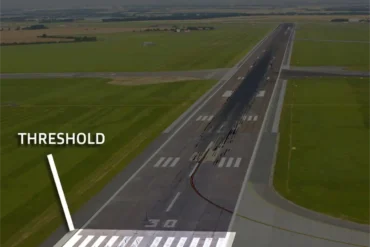
A bounce occurs when an aircraft, typically during landing, makes contact with the runway and immediately lifts off again. This is not a desired or planned maneuver. The physics behind a bounce generally stem from one or more of the following factors: excessive vertical speed at touchdown, too much forward speed, improper aircraft attitude, or an unstalled wing. When the aircraft hits the ground hard, the landing gear compresses and rebounds, propelling the aircraft back into the air.
In less technical terms, a bounce is a failed landing attempt that must be evaluated instantly. Every bounce multiplies risk: risk of structural damage, loss of control, and dangerous runway overruns. The One-Bounce Rule is designed to stop this chain of escalation before it begins.
The One-Bounce Rule Defined
The One-Bounce Rule advocates a simple, clear action: if a bounced landing cannot be stabilized immediately, and a second bounce occurs, go around. No exceptions. Even better, if after the first bounce the aircraft shows signs of any of the following, the safest course of action is to go around immediately:
- Loss of directional control
- Pilot-induced oscillations
- Abnormal nose-high or nose-low attitude
- Long float with runway rapidly disappearing
These indicators point to an unstable recovery and demand prompt corrective action. Attempting to salvage the landing after a second bounce is a gamble—often a losing one. Statistics show that most runway excursions and landing accidents occur when pilots delay the go-around decision after initial instability.
Why Pilots Try to Save a Bounce—and Why That’s Dangerous
Aviation is steeped in discipline, but it’s also governed by psychology. Pilots, especially those with significant hours under their belt, may believe they can salvage a bounced landing with finesse. While skill plays a role, it cannot override physics. After a bounce, kinetic energy and momentum are still acting on the aircraft. Any control inputs at this stage must be finely tuned and immediate.
Unfortunately, even minor delays in response or misjudgments during this split-second window can escalate the situation. The second impact after a bounce is almost always harder than the first, increasing the risk of:
- Landing gear collapse
- Loss of directional control
- Overruns into terrain or obstacles
Moreover, trying to correct the bounce too late introduces pilot-induced oscillations (PIOs)—a vicious cycle where delayed or exaggerated corrections cause even more instability. The aircraft pitches back and forth increasingly until either the pilot goes around or the aircraft sustains damage.
The Physics Behind the Bounce
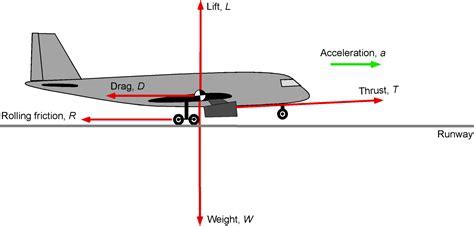
To fully grasp why the One-Bounce Rule is so critical, we must understand what physically happens during a bounce. The initial contact with the runway transfers energy through the landing gear. If the vertical descent rate is too high, the gear rebounds. If the aircraft’s pitch is not properly aligned—say, nose too low or too high—the rebound launches the aircraft at an odd angle. At that point, lift has not been fully dissipated. The wing, still generating partial lift, sends the aircraft skyward again.
This creates a dangerous scenario: the aircraft is airborne at low altitude, low airspeed, and in an aerodynamically unstable condition. It may not have enough energy to flare again or establish a proper glidepath. Worse, the pilot may be forced to make sudden control inputs under stress. All of this plays out in seconds.
Ideal Conditions to Prevent a Bounce
Avoiding a bounce altogether should always be the goal. This is best achieved through a stabilized approach, which includes:
- Being on speed: not too fast, not too slow
- Proper glidepath: following the standard descent angle to the touchdown zone
- Correct alignment: ensuring the aircraft is directly over the centerline
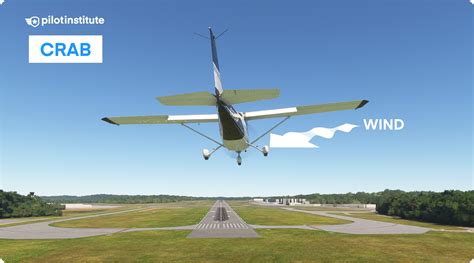
- Minimal drift: eliminating sideways movement during the flare
Pilots who consistently achieve these parameters significantly reduce their chances of bouncing. Yet, even under ideal conditions, environmental factors such as wind gusts, sudden downdrafts, or uneven runway surfaces can cause a bounce.
The Deadly Dominoes of Multiple Bounces
Allowing a second bounce significantly increases the probability of a catastrophic chain reaction. Each successive bounce adds:
- More damage to the landing gear
- Greater loss of energy control
- Higher probability of departing the runway
- Delayed go-around initiation
The tragic element is that many accidents from multi-bounce landings are preventable. Pilots knew they should have gone around, but delayed out of pride, indecision, or overconfidence. The One-Bounce Rule simplifies the decision matrix: there’s no room for negotiation.
Late Go-Arounds: A Hidden Killer
Some pilots reason that going around after a second or third bounce is still safer than continuing. This is often not the case. After multiple bounces, airspeed may be too low, flaps improperly configured, and control surfaces out of trim. Attempting to climb out under these conditions, especially on a short runway or near terrain, can end in disaster.
Initiating a go-around must happen when the aircraft is still under positive control and has enough airspeed and runway remaining. The earlier the decision, the greater the margin for safety.
Case Studies and Accident Reports
Numerous NTSB accident reports illustrate the dangers of ignoring the One-Bounce Rule. One case involved a Cessna 172 that bounced on landing, attempted recovery, and bounced again. The pilot tried to salvage the landing but initiated a go-around too late. The aircraft clipped trees at the departure end of the runway and crashed.
Another involved a Piper Arrow in gusty wind conditions. After the first bounce, the pilot overcorrected, inducing PIOs. By the third bounce, the nose gear collapsed, and the aircraft skidded off the runway. In both cases, had the One-Bounce Rule been followed, outcomes would have been very different.
Training for Bounce Recovery and Go-Arounds
Flight schools and instructors should incorporate bounce scenarios into simulated training. Pilots must be conditioned not just to recognize a bounce, but to execute a go-around reflexively if recovery isn’t immediate. This muscle memory can only be developed through repetition, briefing, and mindset conditioning.
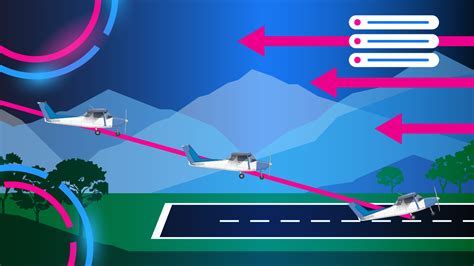
Instructors should emphasize that a go-around is not a failure—it is an indicator of sound aeronautical decision-making. The goal of every flight is a safe landing, not a flawless one.
Final Thoughts: Precision, Judgment, and Humility
The One-Bounce Rule is not just a clever tip. It is an operational threshold rooted in hard-earned experience and aviation safety data. It reinforces the values of precision, judgment, and humility. Every landing must be approached with fresh focus. No matter how many hours a pilot has logged or how routine the route, the aircraft does not care about ego or experience—it responds only to physics.
Bounce once? Try to stabilize immediately. Still bouncing? Go around. That single decision can be the dividing line between an uneventful flight and an accident report.
The One-Bounce Rule should not be a backup plan—it must be a core tenet of safe flight operations. It is simple, effective, and above all, life-saving.