Aeronautical Decision-Making (ADM) is the cornerstone of aviation safety. It is not merely a conceptual ideal but a systematic mental process that determines a pilot’s ability to assess a situation and choose the best course of action. According to the Federal Aviation Administration (FAA), ADM is “a systematic approach to the mental process of evaluating a given set of circumstances and determining the best course of action.” This discipline bridges the gap between technical proficiency and real-time, in-flight judgment.
While controlling the aircraft and possessing aviation knowledge are fundamental, decision-making serves as the binding force that unites these competencies. A well-trained pilot who fails to make effective decisions places the flight—and lives—at significant risk. Conversely, excellent decision-making can compensate, to some extent, for gaps in experience or skill.

The Evolution of Aeronautical Decision-Making
The development of ADM as a formalized discipline emerged in the 1980s. A rise in aviation-related accidents due to human factors, despite well-maintained aircraft and competent crews, prompted a critical shift in training methodology. The result was the introduction of Crew Resource Management (CRM)—a structured approach that emphasized communication, situational awareness, leadership, and decision-making.
Empirical research during this era demonstrated that pilots trained in ADM made between 10% and 50% fewer decision-making errors compared to those without formal ADM instruction. The data was unequivocal: effective ADM training reduced human error, and its incorporation became a standard across civil and military aviation sectors.
The Three Pillars of ADM: The 3-P Model
To operationalize ADM, the FAA introduced the 3-P Model:
Perceive the Situation (PAVE)
To perceive effectively, a pilot must evaluate four primary domains, summarized as PAVE:
-
Pilot: Physical, mental, and emotional readiness.
-
Aircraft: Performance, equipment, and maintenance condition.
-
Vironment: Weather, terrain, airspace.
-
External pressures: Passenger demands, time constraints.
This comprehensive appraisal forms the foundation of situational awareness. It counters cognitive limitations like information filtering and attentional bias.
Process the Situation (CARE)
Once the elements of PAVE are understood, pilots engage the CARE framework:
-
Consequences: What will result from different courses of action?
-
Alternatives: What options are realistically available?
-
Reality: What is actually happening versus what is assumed?
-
External pressures: Are these distorting your judgment?
CARE ensures that decisions are rooted in facts rather than assumptions or desires.
Perform (TEAM)
Actionable decisions follow in the TEAM stage:
-
Transfer: Should responsibility shift to another crew member or ATC?
-
Eliminate: Can the hazard be removed entirely?
-
Accept: Can the risk be accepted under the current conditions?
-
Mitigate: Can the risk be reduced through procedural or equipment changes?
Together, PAVE, CARE, and TEAM structure a repeatable loop that adapts to both static and dynamic flight conditions.
Hazardous Attitudes That Undermine ADM
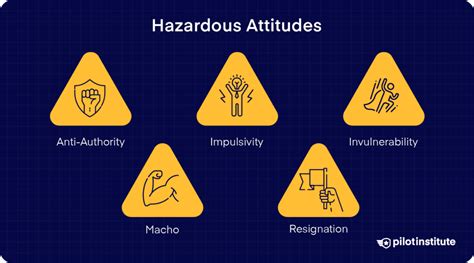
Despite systematic approaches, attitudes can sabotage sound decision-making. The FAA identifies five hazardous mindsets:
-
Anti-authority: “Don’t tell me what to do.”
-
Impulsivity: “Do it quickly.”
-
Invulnerability: “It won’t happen to me.”
-
Macho: “I can do it.”
-
Resignation: “What’s the use?”
Each of these attitudes distorts perception and clouds judgment. A pilot under pressure may default to impulsivity or macho behavior, bypassing rational evaluation. Recognizing these traits in oneself is the first step toward effective mitigation.
Common Decision-Making Errors in Aviation
Cognitive biases frequently interfere with ADM, especially under stress. Pilots must train themselves to identify and override these psychological traps.
Confirmation Bias
After reaching a conclusion, individuals often seek information that supports it, ignoring contradictory evidence. This tendency leads to overconfidence and missed warning signs. The “Reality” check in CARE is specifically designed to challenge this bias.
Filtering
Due to the brain’s limited processing capacity, irrelevant or low-priority stimuli are often ignored. Unfortunately, this can include critical auditory or visual cues. Employing PAVE restores holistic attention to all flight elements.
Patterns and Expectations
The human mind seeks predictability. A pilot transitioning between avionics systems may unconsciously expect one display to behave like another, misinterpreting vital readouts. Mental modeling must be flexible to prevent such misjudgments.
Filling in the Gaps
When information is incomplete, the brain fabricates the rest. For instance, limited visibility might cause a pilot to assume runway alignment. Optical illusions often result from such gaps, making instrument reference essential.
Framing
How a situation is framed significantly influences decisions. For example, continuing a destabilized approach because “passengers expect a landing” rather than “the aircraft is not stable for landing” reframes the problem emotionally rather than operationally. ADM insists on logic-first framing.
Practical Applications of ADM in Flight
In a cross-country flight scenario involving rapidly deteriorating weather, ADM unfolds as a series of micro-decisions rather than one pivotal choice.
First, the pilot perceives:
-
Increasing cloud layers and decreasing visibility (Environment)
-
Fuel levels sufficient for only 45 minutes (Aircraft)
-
Pressing time constraints due to sunset (External Pressure)
-
Personal fatigue (Pilot)
Next, they process:
-
Continuing risks fuel exhaustion and VFR into IMC
-
Alternates include nearby VFR airports
-
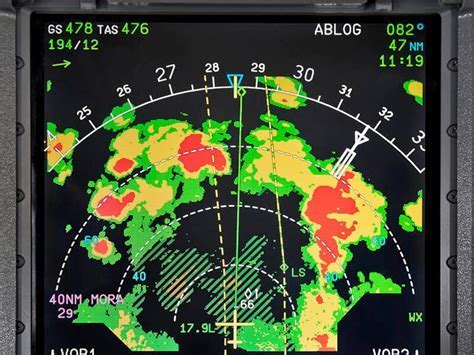
Reality: Weather radar confirms deterioration
-
External pressure: Desire to arrive on time must be set aside
Finally, they perform:
-
Transfer ATC communication to co-pilot (if available)
-
Eliminate route through worsening weather
-
Accept a delay but ensure safety
-
Mitigate pressure by informing passengers and updating ETA
This example showcases ADM’s structured resilience against high-stress situations.
Teaching ADM: From Simulation to Real-World Judgment
The most effective ADM training programs combine simulated flight environments, classroom theory, and debriefing. Pilots must experience:
-
Rapidly changing scenarios
-
Ambiguous data requiring interpretation
-
High workload environments where prioritization is critical
Furthermore, instructors must model good ADM behavior, reinforcing analytical thinking and discouraging snap judgments. Flight simulators have proven especially powerful in helping students rehearse the 3-P Model under controlled pressure.
Conclusion: A Framework for Aviation Excellence
Aeronautical Decision-Making is not innate—it is a learned, practiced, and cultivated skill. In modern aviation, where aircraft are more reliable than ever, human decisions remain the most variable—and potentially dangerous—component. By adopting structured frameworks like PAVE, CARE, and TEAM, and actively countering hazardous attitudes and biases, pilots can transform from operators into true airmen.
The data is unambiguous, and the stakes are absolute. ADM is not a supplement—it is a necessity. Through disciplined application and continuous refinement, it becomes the invisible co-pilot ensuring that each flight reaches its destination safely.
Frequently Asked Questions (FAQ)
What is the primary purpose of Aeronautical Decision-Making (ADM)?
ADM exists to systematically guide pilots through complex or high-risk situations, allowing them to make sound decisions based on logic, training, and structured models, rather than emotion or impulse.
How does ADM training reduce aviation accidents?
By embedding decision-making frameworks and increasing awareness of psychological biases, ADM training helps pilots avoid errors in judgment. Studies have shown ADM-trained pilots make significantly fewer mistakes under pressure.
Can ADM be applied outside the cockpit?
Yes. The principles of ADM—situational awareness, structured evaluation, and risk mitigation—can be applied in various high-stakes fields like emergency response, medicine, and even corporate leadership, making it a universally valuable cognitive tool.