What Is VNO Speed and Why It Matters in Aviation
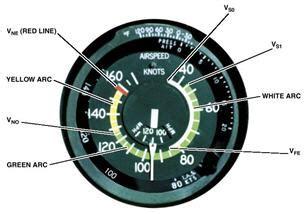
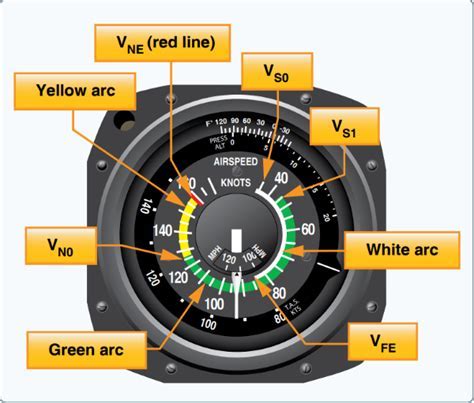
VNO, or Maximum Structural Cruising Speed, is one of the most vital V-speeds in aviation, marking the highest speed at which an aircraft can safely be flown in smooth air. It forms a protective boundary that ensures the structural integrity of the aircraft is not compromised due to unexpected turbulence or aerodynamic stress. Beyond VNO lies the caution zone, marked on the airspeed indicator by the yellow arc, where operations must only be conducted in perfectly smooth conditions.
Understanding VNO is essential not only for pilots but also for aerospace engineers, flight instructors, and aviation safety personnel. It is a regulated limit, deeply embedded in the aircraft’s certification process under 14 CFR Part 23 and Part 25.
The Definition and Determination of VNO
VNO is determined during the aircraft design and testing phase, taking into account various aerodynamic loads, flight envelope margins, and material fatigue limits. It is typically calculated as a percentage of the aircraft’s design maneuvering speed (VA) and gust penetration speed (VB). Specifically, VNO is often set at 90% of VNE (Never Exceed Speed) or based on the maximum speed at which the aircraft can endure a sudden gust of wind without structural failure.
This speed is not arbitrarily assigned. Engineers perform rigorous flight tests and wind tunnel analyses to establish VNO. It represents a safe operational limit for normal flight conditions. Any excursion beyond this threshold, especially in turbulent air, increases the risk of structural failure, particularly in the wings and control surfaces.
VNO in Relation to Other Key V-Speeds
To fully grasp VNO, it is helpful to understand how it fits among other crucial V-speeds:
-
VNE (Never Exceed Speed): The absolute limit. Flying above this speed risks catastrophic failure.
-
VA (Maneuvering Speed): The speed at which you can make abrupt full control inputs without overstressing the airframe. Below VA, the aircraft will stall before breaking.
-
VB (Turbulence Penetration Speed): Typically close to VA, designed for flying in moderate to severe turbulence.
VNO, in this context, is a cruising threshold—it’s safe in calm conditions, but careful monitoring is required in turbulence.
How VNO Appears on the Airspeed Indicator
Every certified aircraft features a color-coded airspeed indicator (ASI):
-
Green Arc: Normal operating range
-
Yellow Arc: Caution zone—fly only in smooth air
-
Red Radial Line: VNE—never exceed speed
VNO is denoted by the upper limit of the green arc, making it immediately visible during flight. Pilots use this visual cue as a real-time operational limit.
What Happens If You Exceed VNO in Turbulent Air
Flying above VNO in turbulent conditions exposes the aircraft to dynamic loading—unpredictable increases in g-force resulting from vertical gusts or sudden pressure changes. These forces can exceed design tolerances and cause:
-
Wing deformation or failure
-
Loss of control surface authority
-
Elevator or aileron flutter
-
Fuselage stress cracking
These risks aren’t theoretical; numerous incidents in general aviation have involved structural failure due to flight beyond VNO in moderate turbulence. Hence, adherence to VNO is a key pillar of aeronautical decision-making (ADM).
Real-World Example: Cessna 172 VNO Limitations
The Cessna 172, one of the world’s most widely used training aircraft, has a published VNO of 129 KIAS (Knots Indicated Airspeed). In practice:
-
Below 129 KIAS: Safe in most conditions
-
Between 129–163 KIAS (yellow arc): Proceed with caution only in smooth air
-
Above 163 KIAS: Exceeds VNE—never permitted
In turbulent conditions, pilots are advised to reduce speed to below VA or VB—typically around 99 KIAS for a lightly loaded C172—to maintain structural integrity.
VNO vs. Mach Limits in Jet Aircraft
In high-speed jets and commercial airliners, speed restrictions are often defined in Mach numbers beyond a certain altitude. For example:
-
Below transition altitude (~25,000 ft): Speeds are expressed in knots (VNO, VMO)
-
Above transition altitude: Speeds transition to Mach numbers (MMO)
However, VNO still applies in lower altitude cruise segments, especially during descent or level-off phases. Jet aircraft typically have a VMO/MMO placard, showing both VNO (in knots) and MMO (in Mach) for operational clarity.
Operational Techniques to Manage VNO
Pilots must apply sound judgment and proactive speed management to prevent inadvertent overspeed conditions:
-
Monitor airspeed closely during descent
-
Use speed brakes or gear extension to manage excess speed
-
Anticipate downdrafts and gusts when flying near VNO
-
Always review VNO during preflight briefings, especially when expecting turbulent or mountainous weather
Autopilot systems, especially in modern glass cockpit aircraft, often include overspeed protection. However, pilots must still manually intervene when conditions approach or exceed limitations.
Aircraft Certification and VNO Regulations
VNO is defined in regulatory standards during aircraft certification. According to FAR Part 23.1505, aircraft must be designed so that:
“VNO does not exceed the design cruising speed or 90 percent of VNE, whichever is less.”
Additionally, the aircraft must withstand gust loads and maneuver loads below this speed without permanent deformation.
These rules ensure that VNO offers a reliable operational buffer, validated through:
-
Flight test data
-
Simulated gust response analysis
-
Structural finite element modeling (FEM)
VNO and Aircraft Weight Considerations
Unlike VA (which varies with weight), VNO is usually fixed for a given aircraft model. It is defined based on maximum takeoff weight (MTOW) during testing. However, at lower weights, the aircraft may be more susceptible to rapid changes in pitch or roll, so caution is still advised even when flying well below MTOW.
Aircraft modifications (such as larger engines or aftermarket wing kits) can alter VNO values. Therefore, after any major modification, V-speed limitations must be re-evaluated and re-certified.
Conclusion: VNO Is a Non-Negotiable Limit
Maximum Structural Cruising Speed (VNO) is more than a guideline—it’s a safety boundary grounded in engineering precision. It separates normal cruise from the cautionary territory and ensures aircraft remain within their structural load tolerances. As turbulence remains one of the most unpredictable in-flight hazards, respecting VNO is essential for maintaining airworthiness, control, and ultimately, lives.
Instructors, maintenance teams, and pilots must consistently reinforce awareness of this limit. In the ever-complex matrix of airspeeds, VNO stands as a guardian of structural safety.
FAQs About VNO Speed
What happens if an aircraft exceeds VNO during flight?
Exceeding VNO, especially in turbulent air, can subject the aircraft to forces it wasn’t designed to handle. This may lead to structural damage to the wings, control surfaces, or fuselage. In extreme cases, it could result in a loss of control or airframe failure.
Is VNO the same for all aircraft?
No. Each aircraft model has a specific VNO, determined during its design and certification process. This value is found in the Pilot’s Operating Handbook (POH) and marked on the airspeed indicator.
Can VNO be exceeded in smooth air?
Technically, yes—but only within the yellow arc, and with extreme caution. However, since turbulence can be unpredictable, it is generally advised to remain below VNO unless perfectly smooth air is confirmed, and the pilot is confident in their situational awareness.